
Loading, please wait...
LOT 1571
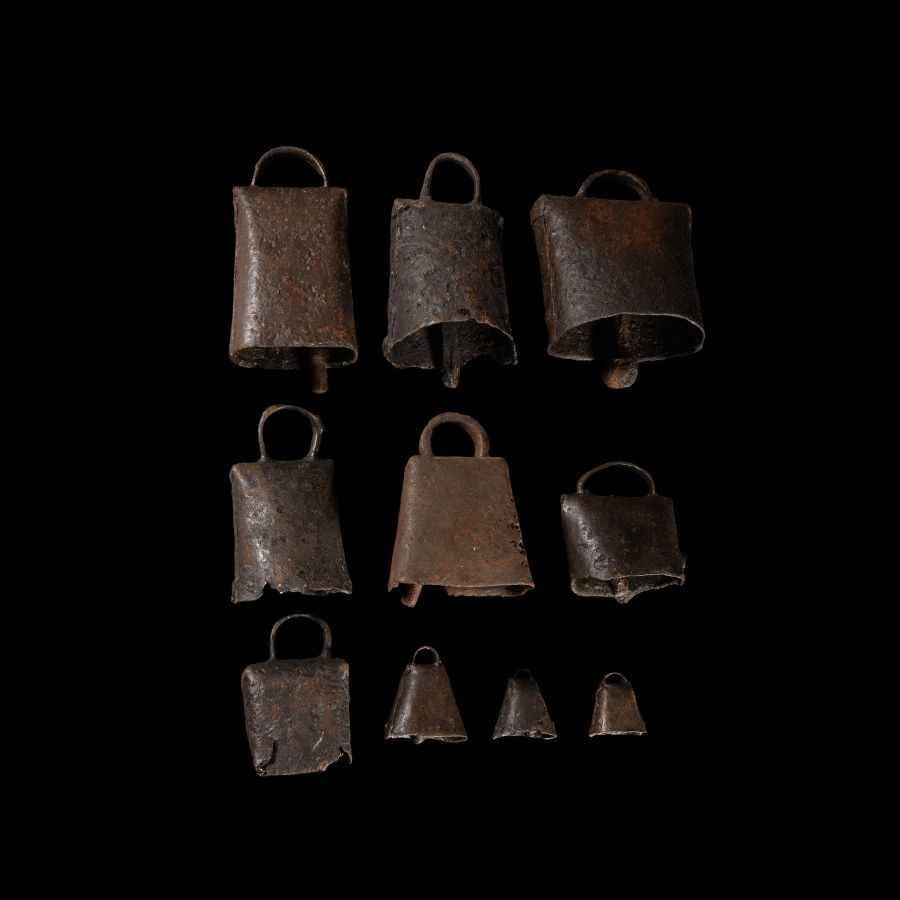
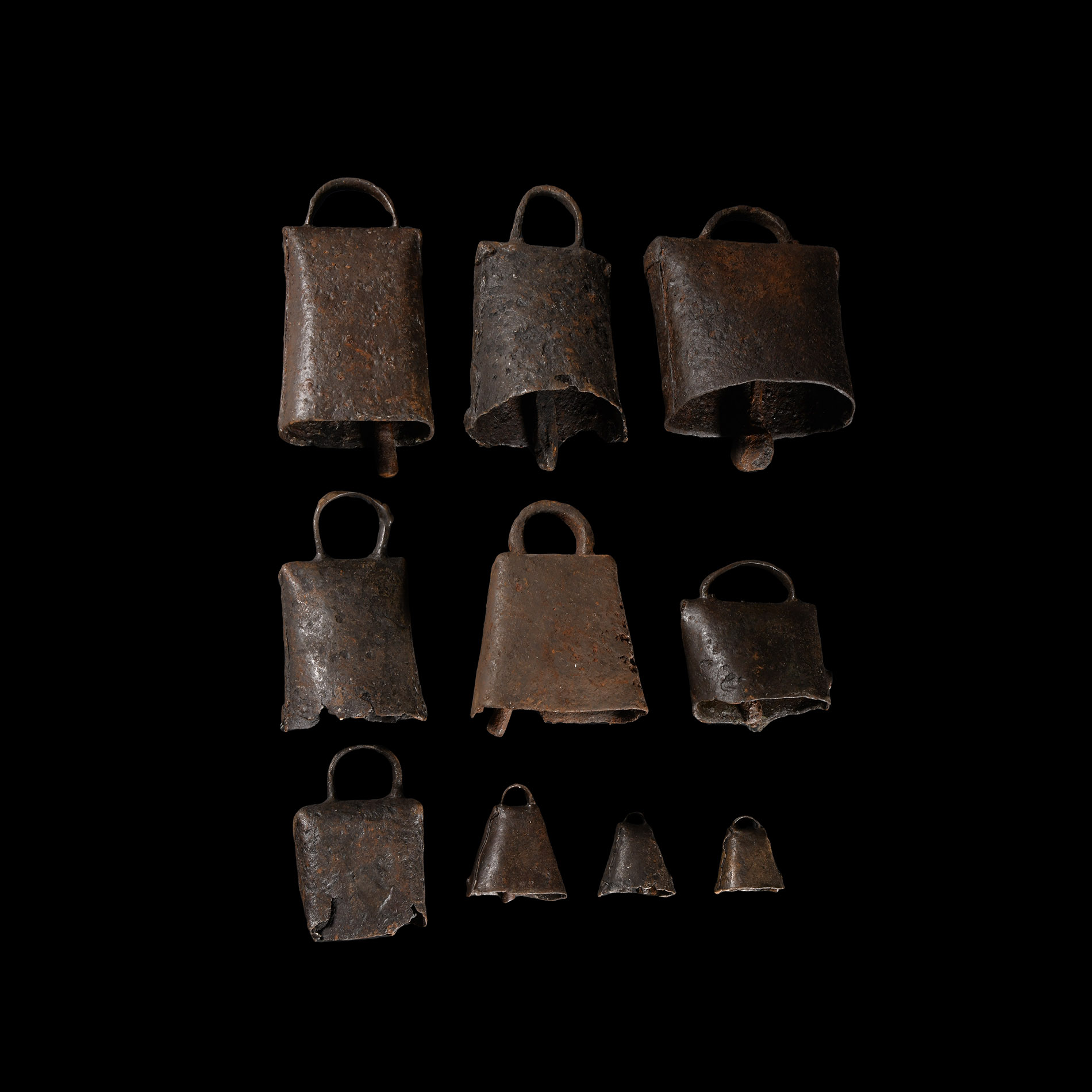
Medieval Iron Bell Group
14TH-16TH CENTURY A.D.
1 3/8 - 4 1/2 in. (1.2 kg total, 3.4-11.4 cm).
Comprising bells of various types and sizes, most retaining their suspension loop and working clapper providing a variety of tones. [7, No Reserve]
ProvenanceAcquired 1990s-early 2000s.
East Anglian private collection.
TimeLine Auctions follows a vetting process to ensure the authenticity and legality of all items, reinforcing our commitment to integrity and responsible trading. Each antiquity, antique, and coin lot undergoes thorough examination by a vetting committee of at least ten external specialists, professional trade association members, scientists, and archaeologists: Our Vetting Process
AUCTIONS:
TimeLine is a leading auction house specialising in antiquities, ancient art, collectables, natural history, coins, medals, and books. Our auctions offer museums, collectors, historians, and enthusiasts the opportunity to acquire unique and historically significant pieces.
-
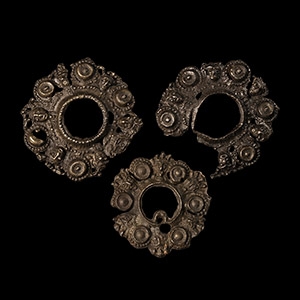
Medieval Pewter Pilgrim's Mirror frame Group
Circa 14th century A.D.Sold for (Inc. bp): £46
The trio comprising delicate circular mirror frames with roundel and pellet ornament. 17.4 grams total, 31-36 mm
European collection, 1990s. Property of a Cambridgeshire, UK, gentleman. -
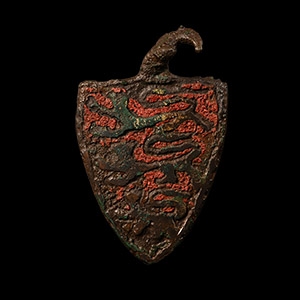
Medieval Knight's Heraldic Horse Harness Pendant with Royal Arms
14th-15th century A.D.Sold for (Inc. bp): £416
Heater-shaped with red enamel field and reserved three lions passant gardant. 5.59 grams, 30 mm
Found Romney Marsh area, 2023. Property of a Kent gentleman. -
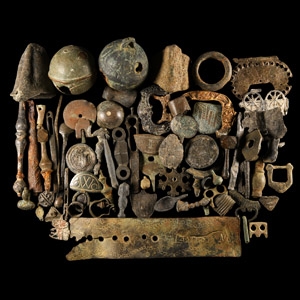
Medieval and Later 'Thames' Artefact Group
14th-19th century A.D.Sold for (Inc. bp): £46
Including crotal bells, a railway wagon appliqué, buckles, punched bronze strap with 'JAMES NOR' legend, dress pins, a snuff spoon and other items. 814 grams total, 0.7-14 cm
Found Thames foreshore spoil, 1980s.
