
Loading, please wait...
_900x900.jpg "Medieval Iron Axehead")
_200x200.jpg "Medieval Iron Axehead")
.jpg "Medieval Iron Axehead")
LOT 1750
Medieval Iron Axehead
14TH-15TH CENTURY A.D.
5 3/8 in. (349 grams, 13.6 cm).
Composed of a sub-triangular-section socket, stamped to one cheek. [No Reserve]
ProvenanceAcquired 1990s-early 2000s.
East Anglian private collection.
See Glosek, M., Późnośredniowieczna broń obuchowa w zbiorach polskich (Late medieval blunt weapons in Polish collections), Warszawa-Łódź, 1996, pl.XXX, letterr B, for a similar axehead.
FootnotesThis type of axehead, with similar specimens found in the territories of the Teutonic Order, was by far the most popular form of axe which remains unchangeable and continues to be used in the Baltic to this day. It appears in East European territories as early as the mid 13th century A.D.
CONDITIONTimeLine Auctions follows a vetting process to ensure the authenticity and legality of all items, reinforcing our commitment to integrity and responsible trading. Each antiquity, antique, and coin lot undergoes thorough examination by a vetting committee of at least ten external specialists, professional trade association members, scientists, and archaeologists: Our Vetting Process
AUCTIONS:
TimeLine is a leading auction house specialising in antiquities, ancient art, collectables, natural history, coins, medals, and books. Our auctions offer museums, collectors, historians, and enthusiasts the opportunity to acquire unique and historically significant pieces.
-
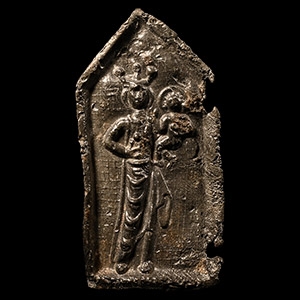
Medieval Pewter Pilgrim Badge of the Virgin Mary
Circa 1300 A.D.Sold for (Inc. bp): £98
Tongue-shaped panel with chamfered rim; standing figure of Mary and infant Jesus modelled in high-relief on a hatched ground; Mary in floor-length robe wearing a crown with three lobes and holding a vessel (chrismal?) in her right hand. 11.8 grams, 53 mm
From the Forgeais (1822-1878) collection, France, thence by family descent. with Gallery 51, 21 June 2013, lot 58. -
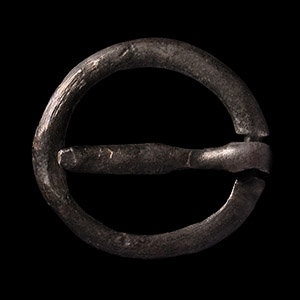
Medieval Silver Ring Brooch
13th-16th century A.D.Sold for (Inc. bp): £21
Featuring a slightly domed upper face and articulate tongue set within a recess. 2.4 grams, 29 mm
Ex Tucker collection, Buckinghamshire, UK; formed in the 1980s. -
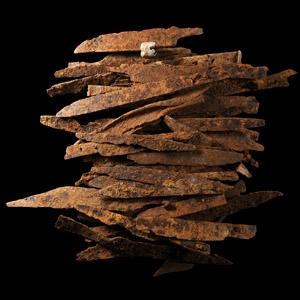
Medieval Iron Knife Blade Group
14th-17th century A.D.Sold for (Inc. bp): £7
Comprising blades of various dates and profiles, including some with fragmentary handles. 1.4 kg total, 10-21.5 cm
Acquired 1990s-early 2000s. East Anglian private collection.
