
Loading, please wait...
LOT 1795
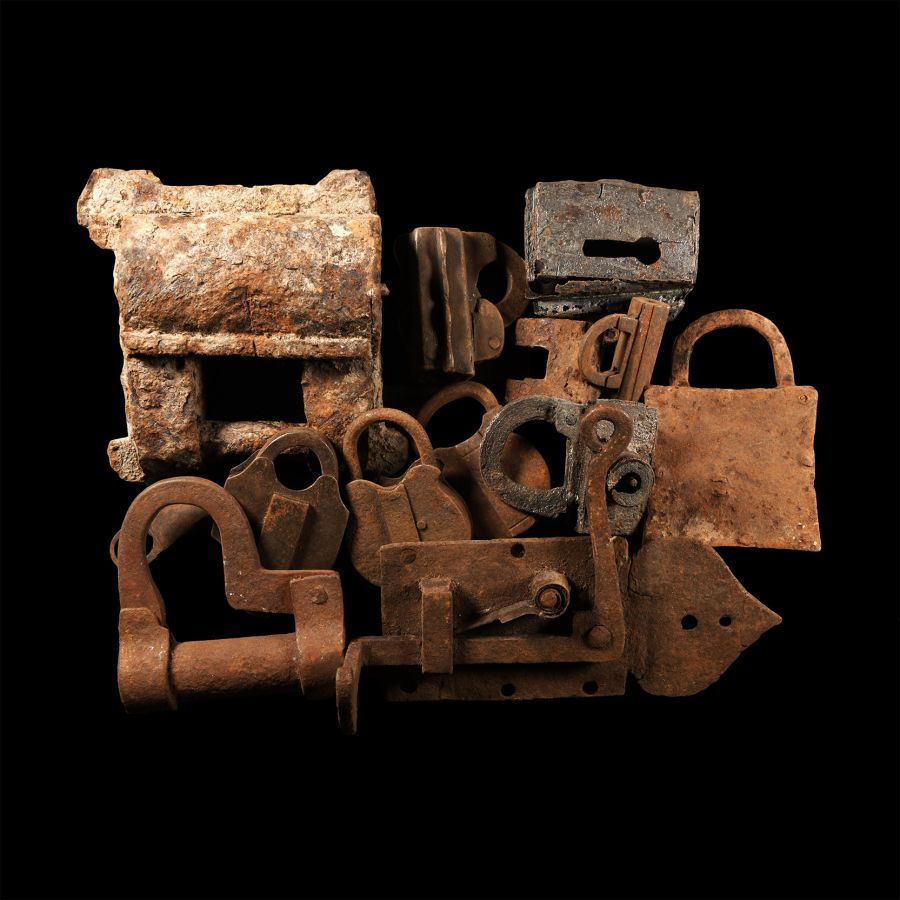
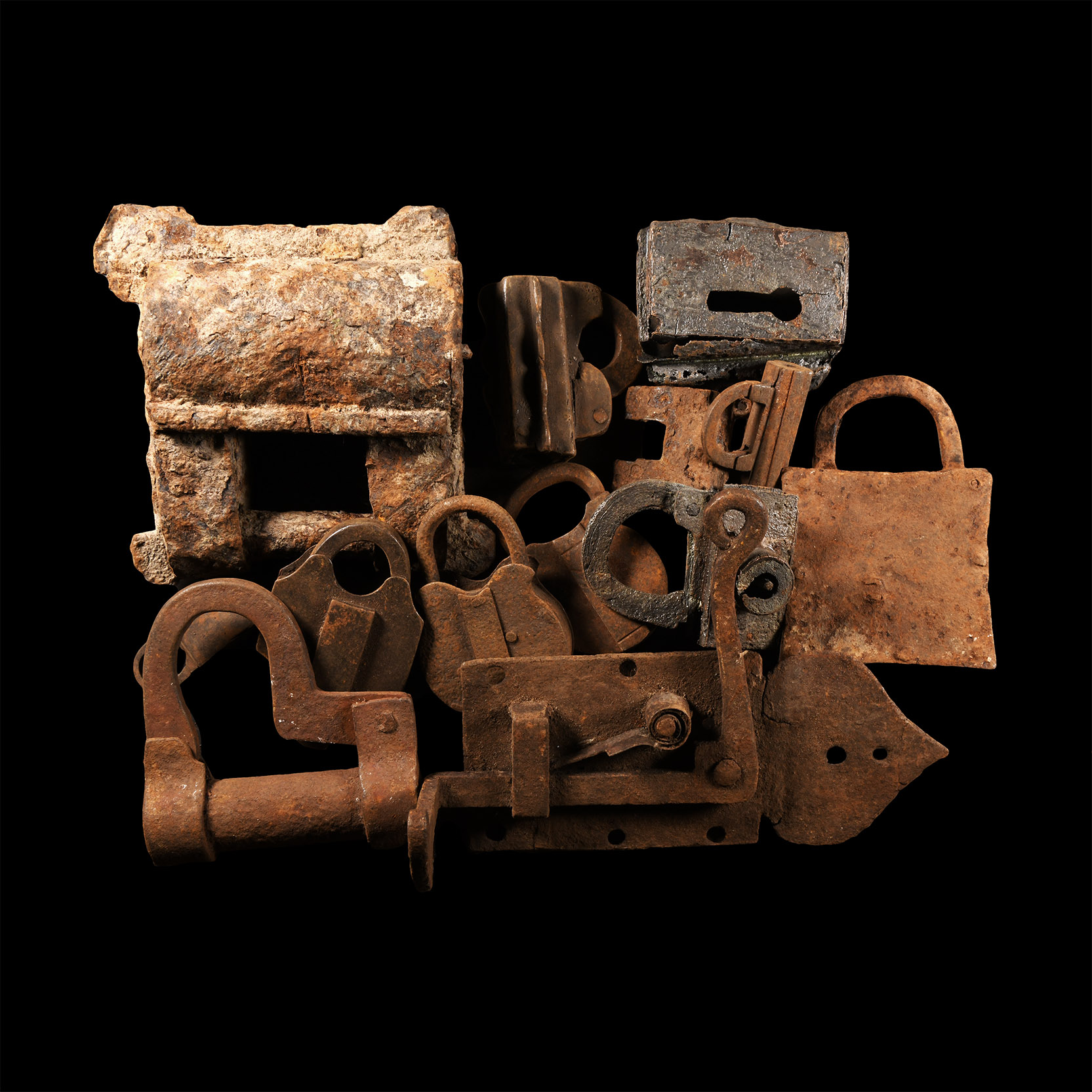
Medieval Iron Artefact Group
14TH-16TH CENTURY A.D.
2 - 7 in. (2.95 kg total, 5-18 cm).
Mainly comprising locks and lock elements of various types. [13, No Reserve]
ProvenanceAcquired 1990s-early 2000s.
East Anglian private collection.
TimeLine Auctions follows a vetting process to ensure the authenticity and legality of all items, reinforcing our commitment to integrity and responsible trading. Each antiquity, antique, and coin lot undergoes thorough examination by a vetting committee of at least ten external specialists, professional trade association members, scientists, and archaeologists: Our Vetting Process
AUCTIONS:
TimeLine is a leading auction house specialising in antiquities, ancient art, collectables, natural history, coins, medals, and books. Our auctions offer museums, collectors, historians, and enthusiasts the opportunity to acquire unique and historically significant pieces.
-

Medieval Knight's Heraldic Horse Harness Pendant
14th-15th century A.D.Sold for (Inc. bp): £130
Heater-shaped with high-relief arms of three lions rampant and an enamelled label, cadency mark for the eldest son. 3.82 grams, 39 mm
Found Romney Marsh area, 2023. Property of a Kent gentleman.
The arms 'three lions rampant' has been used by several families. The Dering Roll includes Willem le Genne, Nicole le Gras, and Grimbald Pauncefoot with such arms. -

Medieval Gold Ring with Cabochon
12th-14th century A.D.Sold for (Inc. bp): £650
Composed of a slender round-section hoop and oval bezel with green glass cabochon in claw setting. 3.29 grams, 21.64 mm overall, 18.38 mm internal diameter (approximate size British L 1/2, USA 6, Europe 11.87, Japan 11)
Acquired 1990s-early 2000s. East Anglian private collection. -
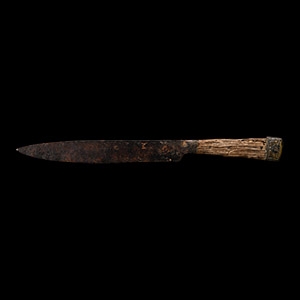
Medieval Iron Knife with Bronze Pommel
Early to mid-15th century A.D.Estimate: £200 - 300 (+bp*)
Opening Bid: £80
Comprising a single cutting edge and scale tang; bifacial pommel engraved with a foliate motif within a border. 46 grams, 20.5 cm
Acquired 1960s-1990s. Late Alison Barker collection, a retired London barrister.
Knife handles were made of wood, horn, bone or metal. Wood, a cheap, readily available and easily worked material, was by far the most common and most of the species used are both hard and flexible.
