
Loading, please wait...
LOT 1406
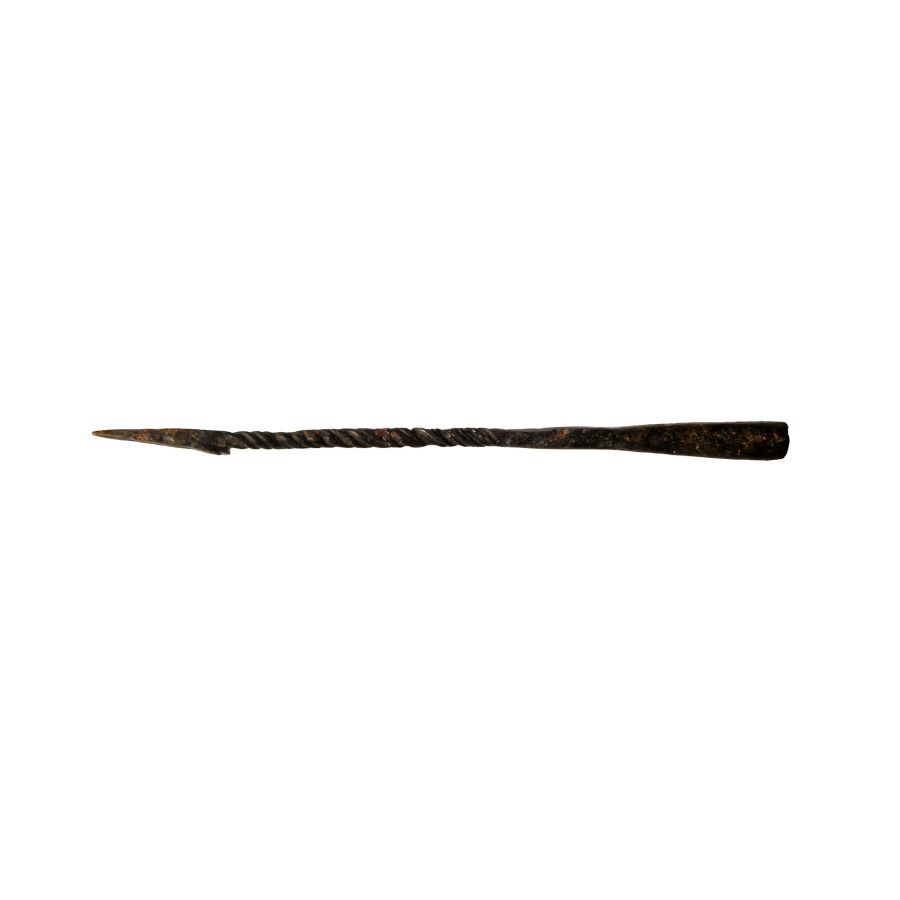
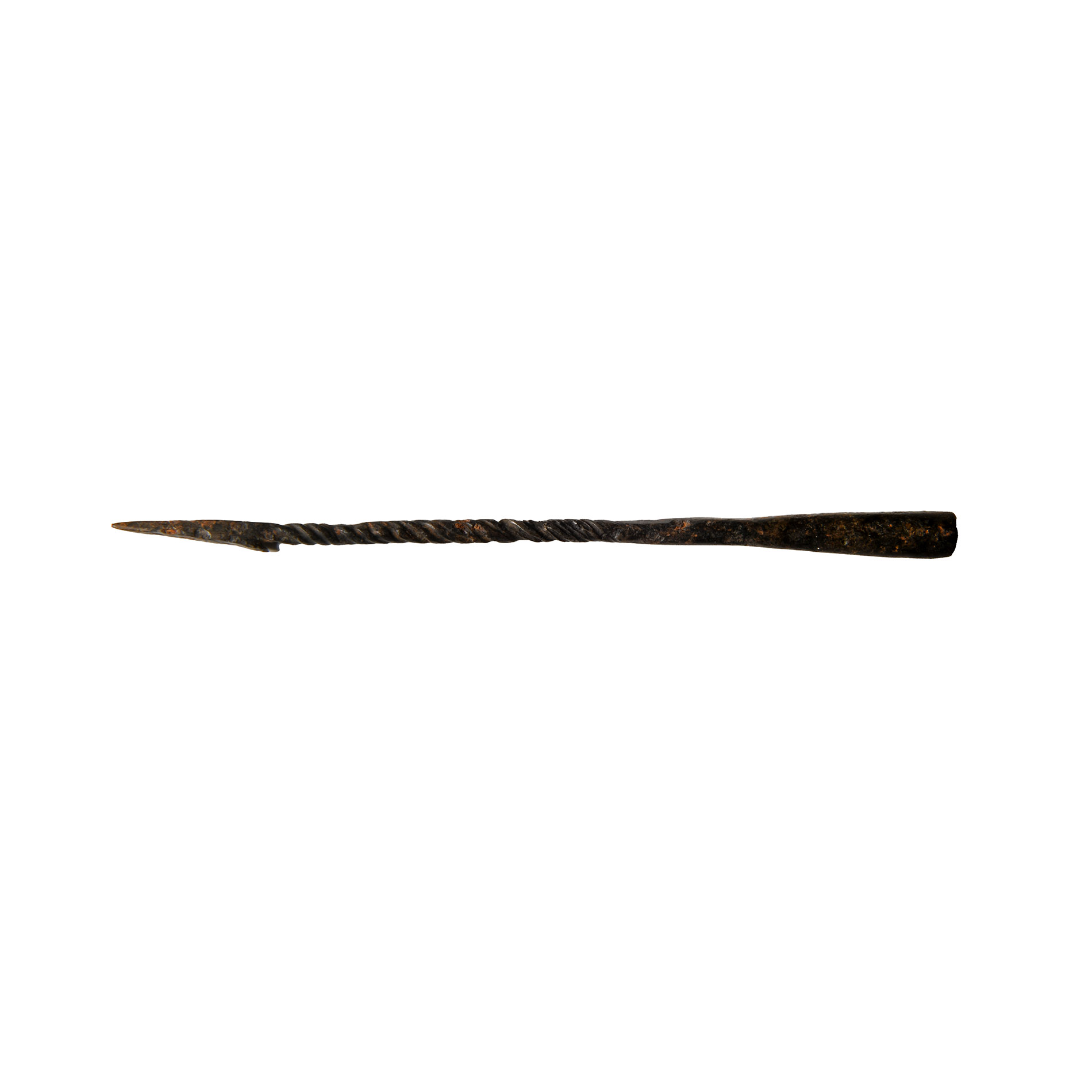
Medieval Iron Arrowhead
CIRCA 14TH-16TH CENTURY A.D.
4 3/4 in. (7.85 grams, 12 cm).
Composed of a rectangular-section tip with a single barb, twisted shank and a tubular socket with a single piercing. [No Reserve]
ProvenanceFound Norfolk, UK.
CONDITIONTimeLine Auctions follows a vetting process to ensure the authenticity and legality of all items, reinforcing our commitment to integrity and responsible trading. Each antiquity, antique, and coin lot undergoes thorough examination by a vetting committee of at least ten external specialists, professional trade association members, scientists, and archaeologists: Our Vetting Process
AUCTIONS:
TimeLine is a leading auction house specialising in antiquities, ancient art, collectables, natural history, coins, medals, and books. Our auctions offer museums, collectors, historians, and enthusiasts the opportunity to acquire unique and historically significant pieces.
-
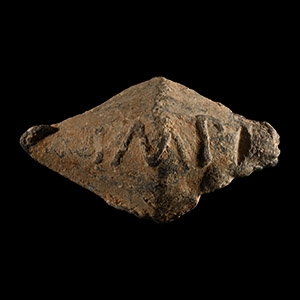
Roman 'Pompey the Great' Lead Slingshot
1st century B.C.Sold for (Inc. bp): £663
Biconical lead slingshot (glans) with inscription in Latin letters 'CN' (Cneius) 'MAG' (Magnus) on one side, and 'IMP' for 'IMPERATOR' (victorious general) to the other side, i.e Gnaeus Pompeius Magnus Imperator (Pompey the Great the victorious general). 67.5 grams, 42 mm
From a Spanish collection. From the collection of an London antiquarian. Accompanied by an academic paper by military specialist Dr Raffaele D'Amato, dated 4th May 2022 and titled 'Roman Res Publica - Lead Slingshots (glandes) of Caesarian Age - 45 B.C circa'. Accompanied by a printed copy of the Spanish cultural export licence 2022/07273.
The shot (Völling type 1C) is marked with the abbreviated name of Gnaeus Pompey; it was used in quantity at the Battle of Monda (or Munda) against Julius Caesar, 17th March 45 BC. The projectiles were made of different materials: lead (glandes) or in pottery or stone (lapides missiles). Sometimes they were signed with the name of the general, like our specimen. -
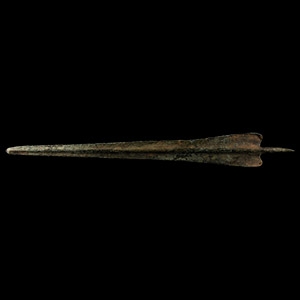
Large Western Asiatic Bronze Rapier Blade
2nd-1st millennium B.C.Sold for (Inc. bp): £234
Composed of a tanged and barbed blade with raised midrib to both faces. 327 grams, 43.5 cm
Acquired 1980-2015. Ex Abelita family collection.
In the last ninety years, many such tanged blades have been considered to be coming from centres of production in Amlash and Marlik. Without context accurate dating is impossible, but the shape recalls the rapiers of the Bronze or Early Iron Age. -
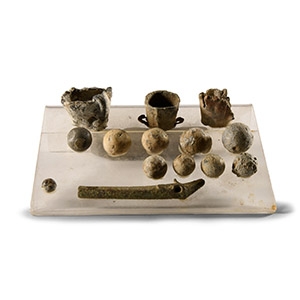
Post Medieval Weaponry Display
17th-18th century A.D.Sold for (Inc. bp): £46
Mixed group comprising: a petronel; lead musket ball and pistol shot in various gauges; three powder-charge containers; mounted on a display frame. 489 grams total, 13 cm wide including stand
From a collection acquired on the UK art market from various auction houses and collections mostly before 2000. From an important Cambridgeshire estate; thence by descent.
