
Loading, please wait...
LOT 1118
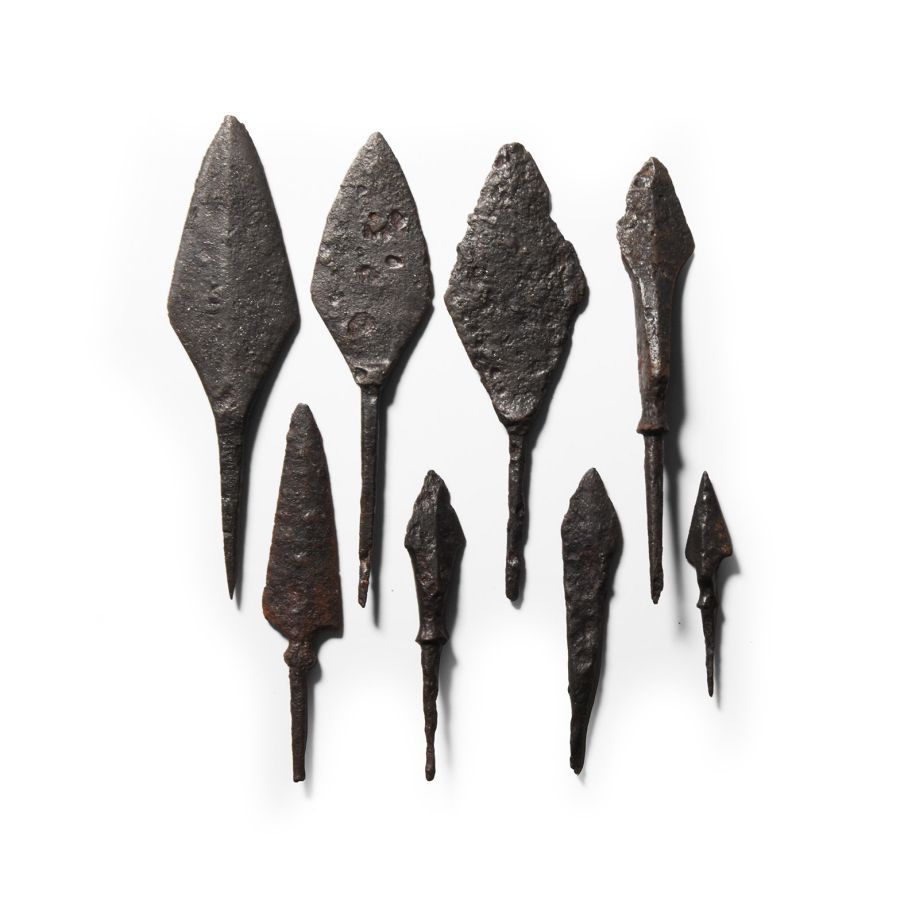
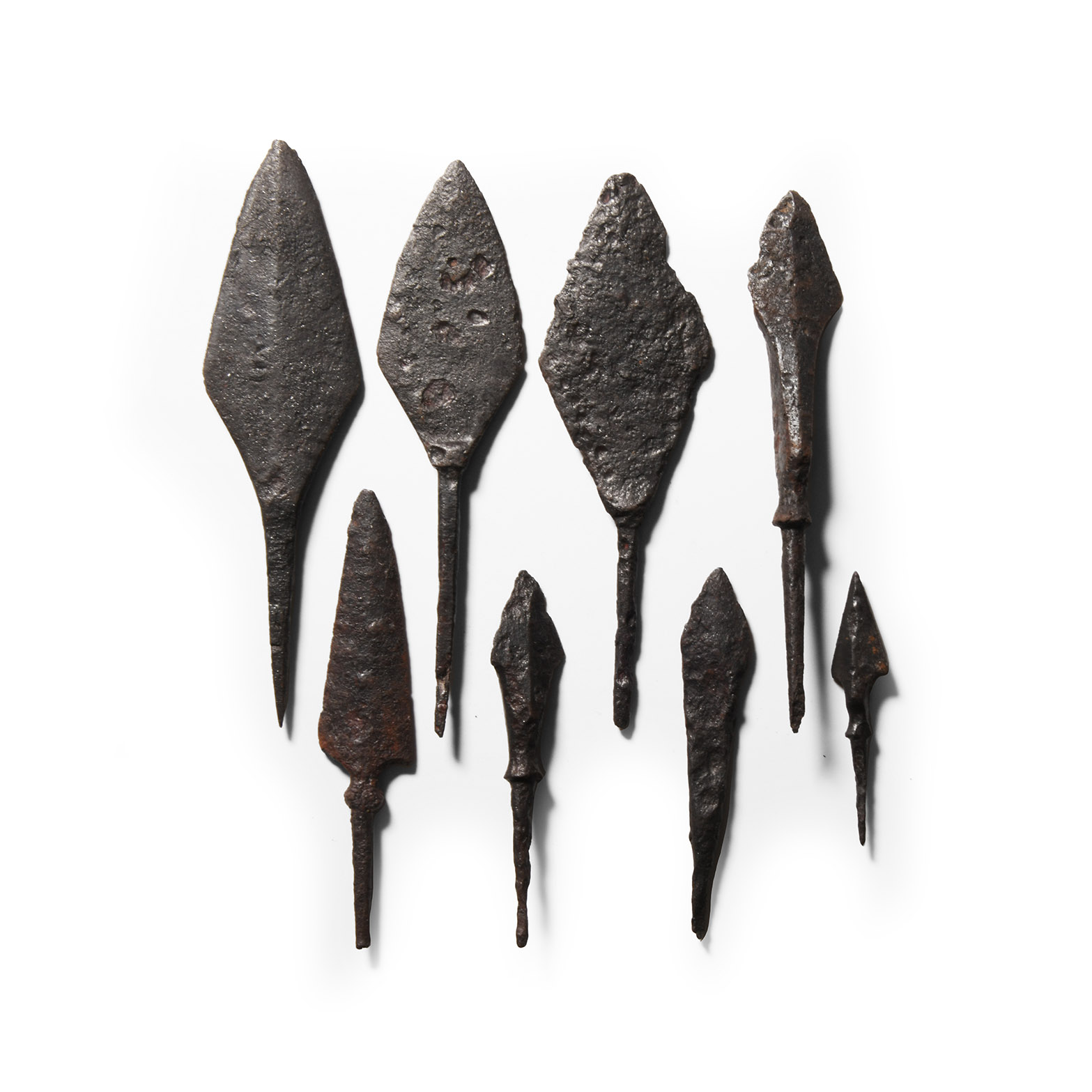
Medieval Iron Arrowhead Group
12TH-15TH CENTURY A.D.
1 5/8 - 3 1/2 in. (66 grams total, 41-88 mm).
Comprising tanged arrowheads of various types, including leaf-shaped, lozengiform, triangular and leaf-shaped examples, together with others. [8, No Reserve]
ProvenanceAcquired on the German art market, before 2000.
Ex German collection.
The Kusmirek Collection, UK.
TimeLine Auctions follows a vetting process to ensure the authenticity and legality of all items, reinforcing our commitment to integrity and responsible trading. Each antiquity, antique, and coin lot undergoes thorough examination by a vetting committee of at least ten external specialists, professional trade association members, scientists, and archaeologists: Our Vetting Process
AUCTIONS:
TimeLine is a leading auction house specialising in antiquities, ancient art, collectables, natural history, coins, medals, and books. Our auctions offer museums, collectors, historians, and enthusiasts the opportunity to acquire unique and historically significant pieces.
-
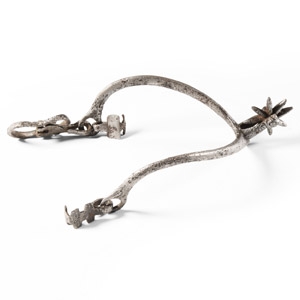
Medieval 'Thames' Iron Rowel Spur
15th century A.D.Sold for (Inc. bp): £104
Composed of an arched heelband, hanging studs and buckle, together with a multi-armed rowel. 104 grams, 14.5 cm
Found in the Thames foreshore at Queenshithe. Acquired from Rusty Old Arms, 2014. The Kusmirek Collection, UK. Accompanied by an ROA invoice and listing. -
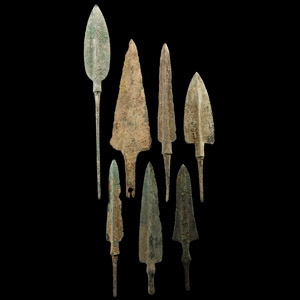
Luristan Bronze Arrowhead
2nd-1st millennium B.C.Estimate: £150 - 200 (+bp*)
Opening Bid: £80
Comprising mainly tanged arrowheads including various types of leaf-shaped heads with midribs. 225 grams total, 12-18.5 cm
Acquired 1990s. From the collection of a late Japanese weaponry collector. -
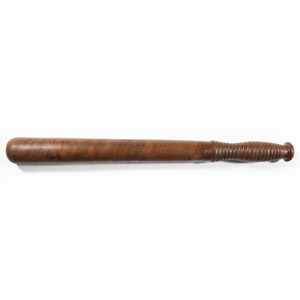
Victorian Police Truncheon
19th century A.D.Sold for (Inc. bp): £124
Composed of a tapering wooden blunt-tipped shaft, waisted grip with raised ribs and 'button' terminal. 309 grams, 43 cm
The Kusmirek Collection, UK.
