
Loading, please wait...
LOT 1042
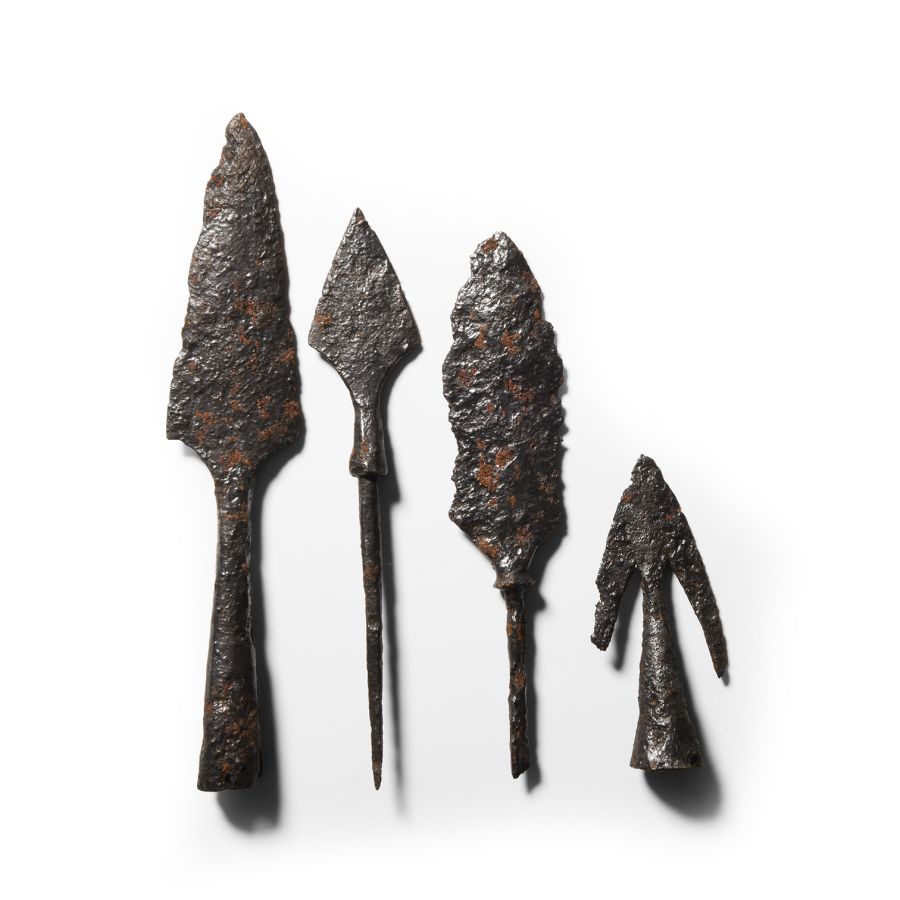
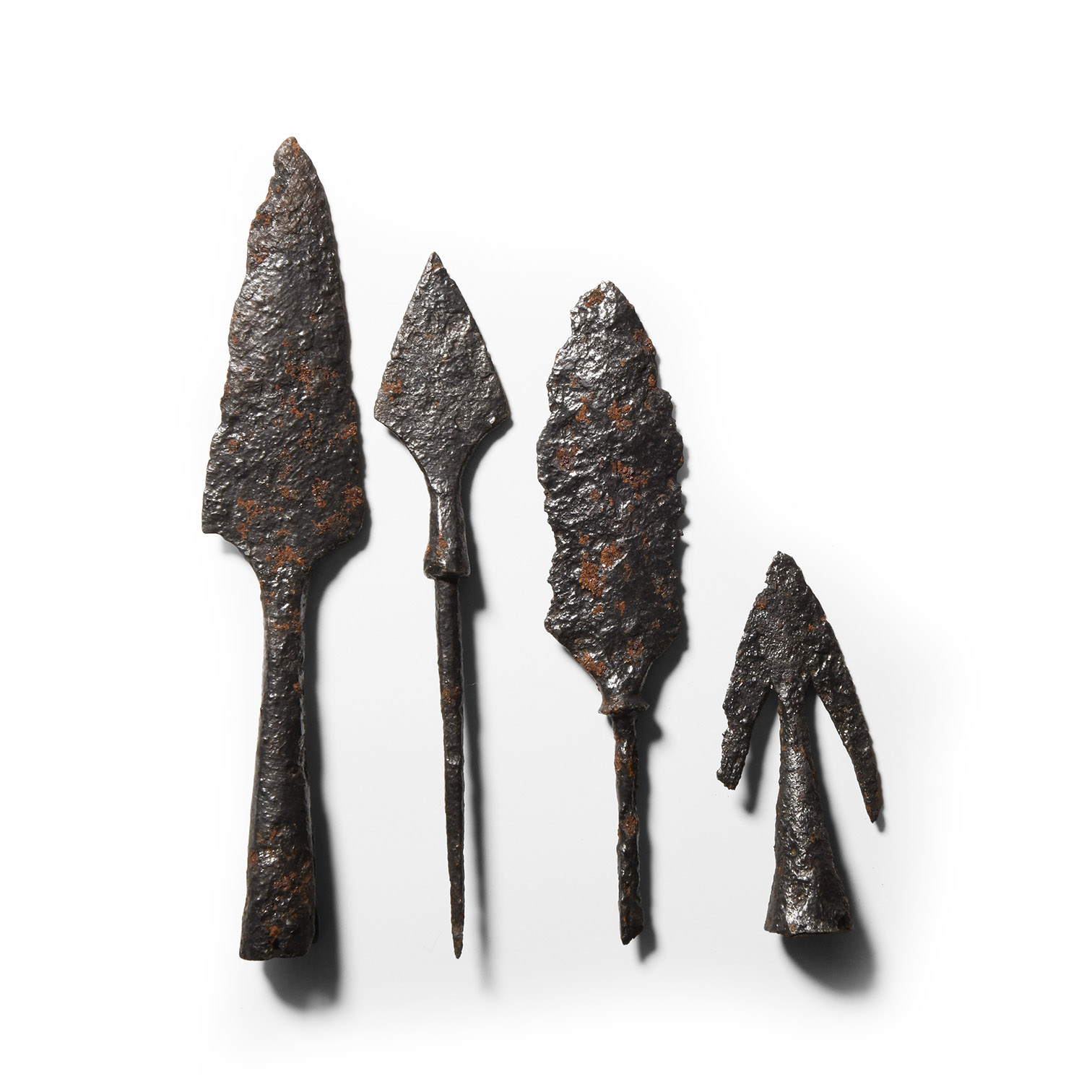
Medieval Iron Arrowhead Group
12TH-15TH CENTURY A.D.
2 - 4 1/4 in. (40 grams total, 5-10.7 cm).
Comprising tanged and socketted arrowheads with triangular, leaf-shaped and barbed examples. [4]
ProvenanceFrom a private European collection, formed in the 1980s.
Acquired from TimeLine Auctions, 2016, lot 72.
The Kusmirek Collection, UK.
TimeLine Auctions follows a vetting process to ensure the authenticity and legality of all items, reinforcing our commitment to integrity and responsible trading. Each antiquity, antique, and coin lot undergoes thorough examination by a vetting committee of at least ten external specialists, professional trade association members, scientists, and archaeologists: Our Vetting Process
AUCTIONS:
TimeLine is a leading auction house specialising in antiquities, ancient art, collectables, natural history, coins, medals, and books. Our auctions offer museums, collectors, historians, and enthusiasts the opportunity to acquire unique and historically significant pieces.
-
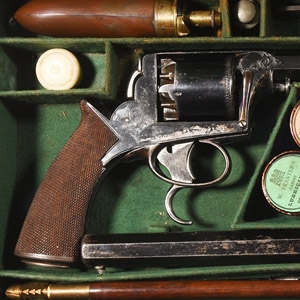
Cased 1st Model Tranter 36 Bore Revolver Pair
1853-1854 A.D.Sold for (Inc. bp): £6,500
With 19.5cm (8¾") octagonal rifled barrels of 36 bore (marked to front of frame), solid Adams patent frames with foliate engraving marked 'ADAMS PATENT ' and serial numbers 20,368Y and 20,832Y with plain loading lever pins to left side, Tranter double trigger (providing single and double action), London proof marks to 5-shot cylinders and barrels, blued finish; in wood case with two hook latches and lock (no key) with accessories including loading lever (stamped 'TRANTERS PATENT 36), wood cleaning rod with extractor screw and two brass cleaning tips), wood handled turnscrew and nipple key, pewter oil bottle, steel wad cutter (marked CAST STEEL), brass-handled double bullet mould (stamped 'TRANTERS PATENT 36); Dixon powder flask, tin of Eley's Superior caps, tin of Tranter's Lubricating Composition, turned bone container with four spare nipples and three pre-made bullets with felt wads. 5.10 kg total, case 43 x 24 cm
Acquired Brighton dealer, 2020. Property of a Kent collector. This lot has been checked against the Interpol Database of stolen works of art and is accompanied by search certificate no.204131.
The Tranter revolvers based on the Adams solid frame were numbered from 20,000 and have the Y suffix. Sold as an exempt item under Section 58 (2) of the Firearms Act, 1968, to be held as a curiosity or ornament. No license required but buyer must be over 18 years of age. Overseas bidders should note that, due to UK regulations governing export of all firearms, overseas buyers will need to make arrangements for shipping this lot out of the UK directly, by air freight, with a specialist company or agent. -
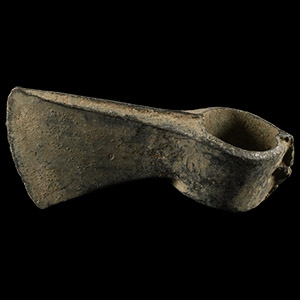
Western Asiatic Bronze Axehead
2nd-1st millennium B.C.Estimate: £100 - 140 (+bp*)
Opening Bid: £50
Featuring an oval-shaped socket, the cheeks with straight upper and sloping lower profiles, chamfered blade with convex cutting edge. 420 grams, 12.9 cm
Acquired 1980-2015. Ex Abelita family collection. -
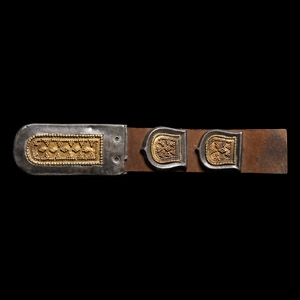
Avar-Byzantine Silver-Gilt Sword Belt Mount Group
7th-9th century A.D.Estimate: £200 - 300 (+bp*)
Opening Bid: £89
Comprising three belt mounts later remounted onto brown leather comprising: a rectangular strap end with rounded terminal, decorated with granulated borders, lozenges and chevrons; two roughly D-shaped mounts with apex flourish and waisted sides, also decorated with granulated lozenges and chevrons. 26.5 grams, 12.2 cm long
Fine condition.
Acquired in the 1980s-1990s. Ex an important central London gallery, London W1.
This type of belt element decorated with granulation, is present in the Avar graves of the second half of the 7th century, and was most likely produced in the workshops of the Eastern Roman Empire, from where they reached the Avar lands as imperial gifts (tomb of Kunbàboni) or spoils of war. They were part of multiple belts, to which sabers and knives were attached, commonly used among Avars, Bulgars and Romans during the 7th and 8th centuries AD.
