
Loading, please wait...
LOT 1059
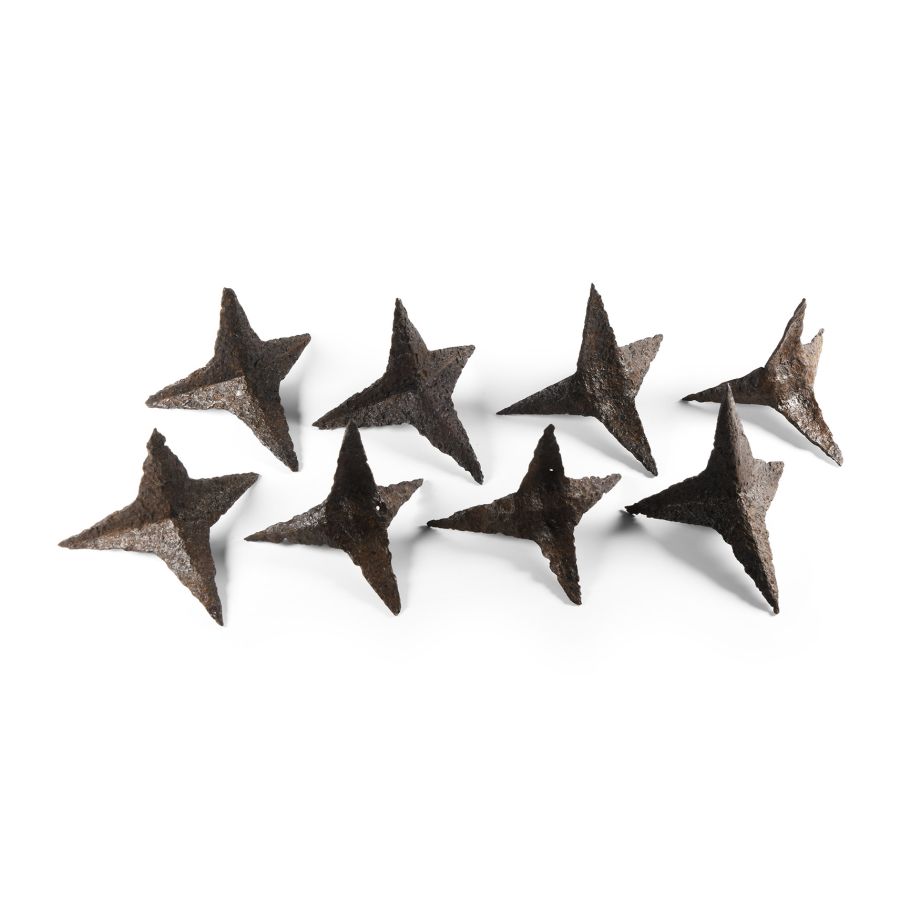
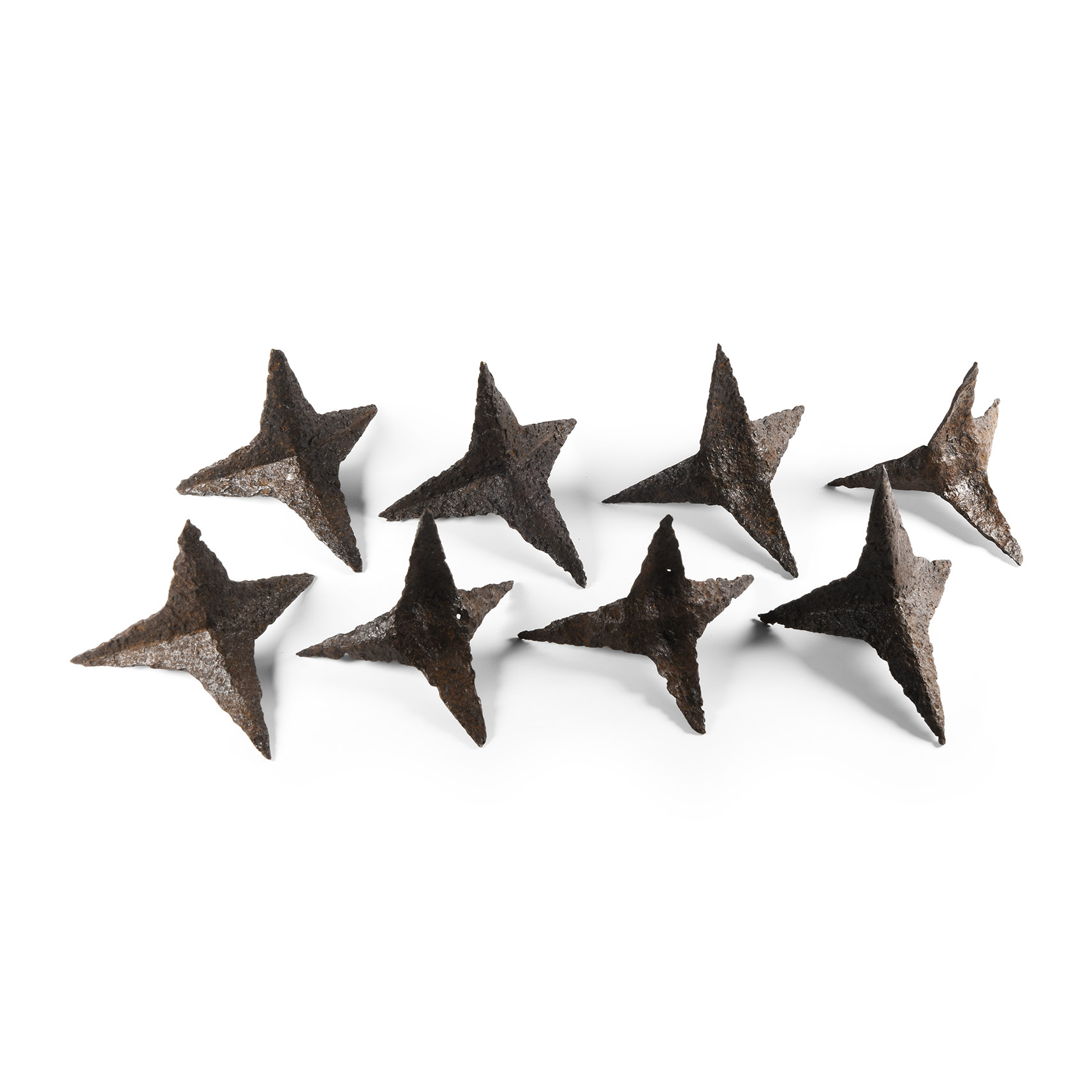
Medieval Iron Anti-Cavalry Caltrop Group
13TH-15TH CENTURY A.D.
3 1/8 - 3 3/8 in. (250 grams total, 79-84 mm).
Comprising eight caltrops, hand-forged with square-section spikes. [8, No Reserve]
ProvenanceAcquired 1971-1972.
From the collection of the vendor's father.
Property of a London, UK, collector.
Cf. Trapp, Graf O., & Scalini, M., L'Armeria Trapp di Castel Coira-The Armoury of the Castle of Chuburg-Die Churburger Rustkammer, Fagnana, 1995-1996, p. 297 (vol. 1), for similar medieval German caltrops.
FootnotesCaltrops were scattered on battlefields in an effort to stop or slow advancing enemy cavalry or foot soldiers; regardless of how a caltrop lands, one spike is always facing upwards.
CONDITIONTimeLine Auctions follows a vetting process to ensure the authenticity and legality of all items, reinforcing our commitment to integrity and responsible trading. Each antiquity, antique, and coin lot undergoes thorough examination by a vetting committee of at least ten external specialists, professional trade association members, scientists, and archaeologists: Our Vetting Process
AUCTIONS:
TimeLine is a leading auction house specialising in antiquities, ancient art, collectables, natural history, coins, medals, and books. Our auctions offer museums, collectors, historians, and enthusiasts the opportunity to acquire unique and historically significant pieces.
-
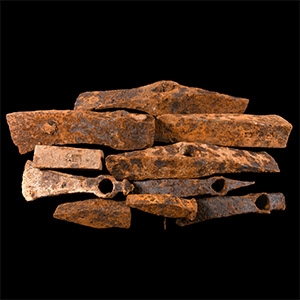
Viking Age And Later Iron Axehead Group
Circa 11th-18th century A.D.Estimate: £100 - 140 (+bp*)
Opening Bid: £50
Composed of socketted axeheads, hammer heads, adze-axes and wedges of various types; including examples stamped with maker's marks. 7.8 kg total, 9.5-26.5 cm
Acquired 1990s-early 2000s. East Anglian private collection. -
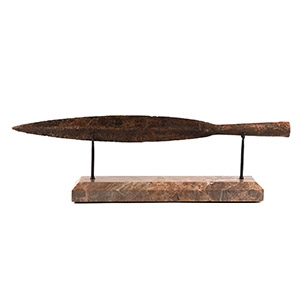
Large Viking Iron Socketted Spearhead
9th-11th century A.D.Sold for (Inc. bp): £442
Comprising a leaf-shaped blade with lozenge cross-section, raised midrib, closed tubular socket; accompanied by a custom-made display stand. 1.76 kg total, 43.5 cm including stand
Acquired 1971-1972. From the collection of the vendor's father. Property of a London, UK, collector.
The spear belongs to the type A of the first main group of Viking spears, the so-called Frankish spearheads, which occur between 750 and 950 A.D., but mainly in the 8th and 9th centuries. The Mediterranean influence is still evident on the foliate shape of the blade. -
.jpg)
British 1796 Pattern Light Cavalry Officer's Sword
19th century A.D.Sold for (Inc. bp): £1,040
Composed of a curved blade with broad fuller, facetted steel stirrup hilt and grip retaining its original wire-bound leather; accompanied by the sword's steel scabbard. 1.7 kg, 1.01 m
Acquired from Military Swords Ltd, UK, 2015. The Kusmirek Collection, UK. Accompanied by a copy of the purchase invoice and item details.
