
Loading, please wait...
LOT 1682
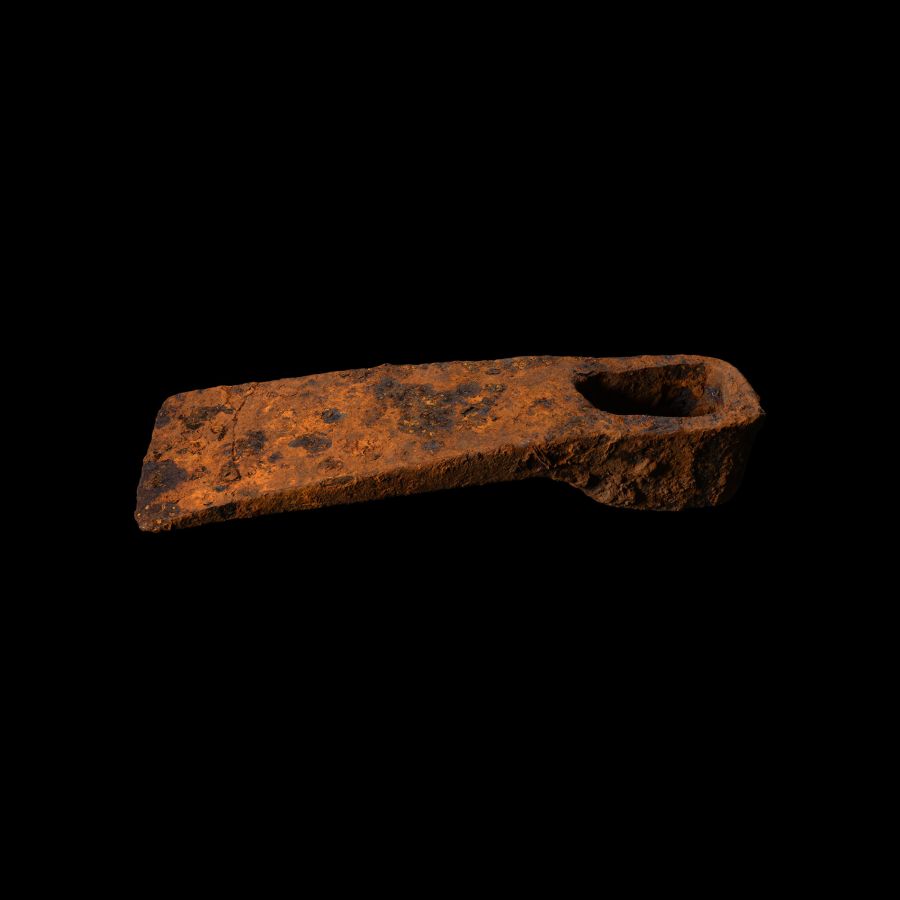
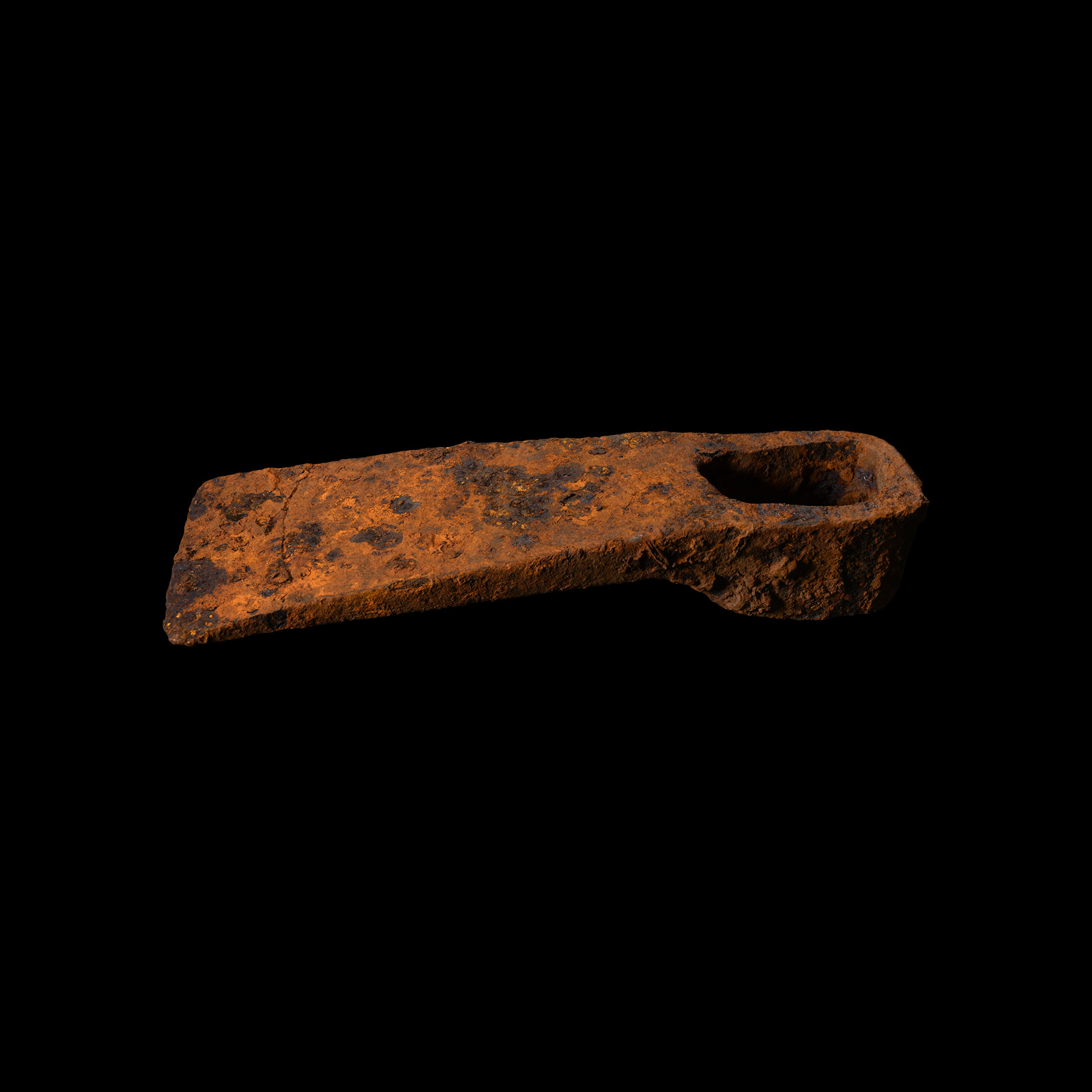
Medieval Iron Adze with Maker's Marks
EARLY 16TH CENTURY A.D.
8 1/4 in. (993 grams, 21 cm).
Stamped to the underside of the head; oblong socket. [No Reserve]
ProvenanceAcquired 1990s-early 2000s.
East Anglian private collection.
TimeLine Auctions follows a vetting process to ensure the authenticity and legality of all items, reinforcing our commitment to integrity and responsible trading. Each antiquity, antique, and coin lot undergoes thorough examination by a vetting committee of at least ten external specialists, professional trade association members, scientists, and archaeologists: Our Vetting Process
AUCTIONS:
TimeLine is a leading auction house specialising in antiquities, ancient art, collectables, natural history, coins, medals, and books. Our auctions offer museums, collectors, historians, and enthusiasts the opportunity to acquire unique and historically significant pieces.
-
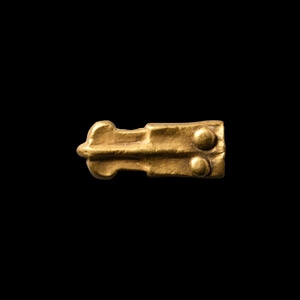
Medieval Gold Strap End
15th century A.D.Estimate: £180 - 240 (+bp*)
Opening Bid: £90
With rectangular-section hollow-form body and two rivets to one edge. 2.49 grams, 22 mm
Very fine condition.
Acquired 1970-2010. Collection of a late Japanese gentleman. -
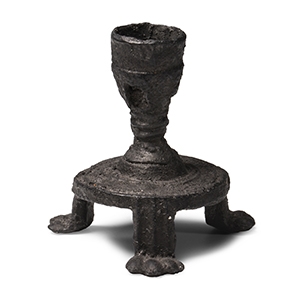
Medieval Pewter Candlestick
15th-16th century A.D.Sold for (Inc. bp): £546
Featuring lion's paw tripod feet and a socket with low relief lozenges decorating the cup. 40 grams, 51 mm high
Acquired 1990s-early 2000s. East Anglian private collection. -
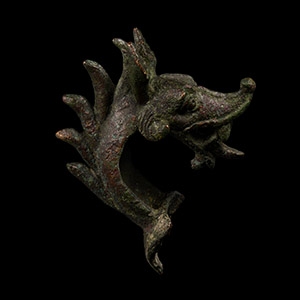
Anglo-Norman Bronze Dragon Head Finial
Mid-12th century A.D.Sold for (Inc. bp): £2,860
Formed with an arched D-section neck and triangular base, row of dorsal spines, pricked ears with notched rims, scooped muzzle with knop finial, open mouth with protruding tongue and teeth. 37.8 grams, 48 mm
‘The Ancient Menagerie Collection’ formerly the property of a Cambridgeshire lady, collected since the 1990s and acquired from auctions and dealers throughout Europe and the USA, now ex London collection. This lot has been checked against the Interpol Database of stolen works of art and is accompanied by search certificate number no.203519.
