
Loading, please wait...
LOT 1868
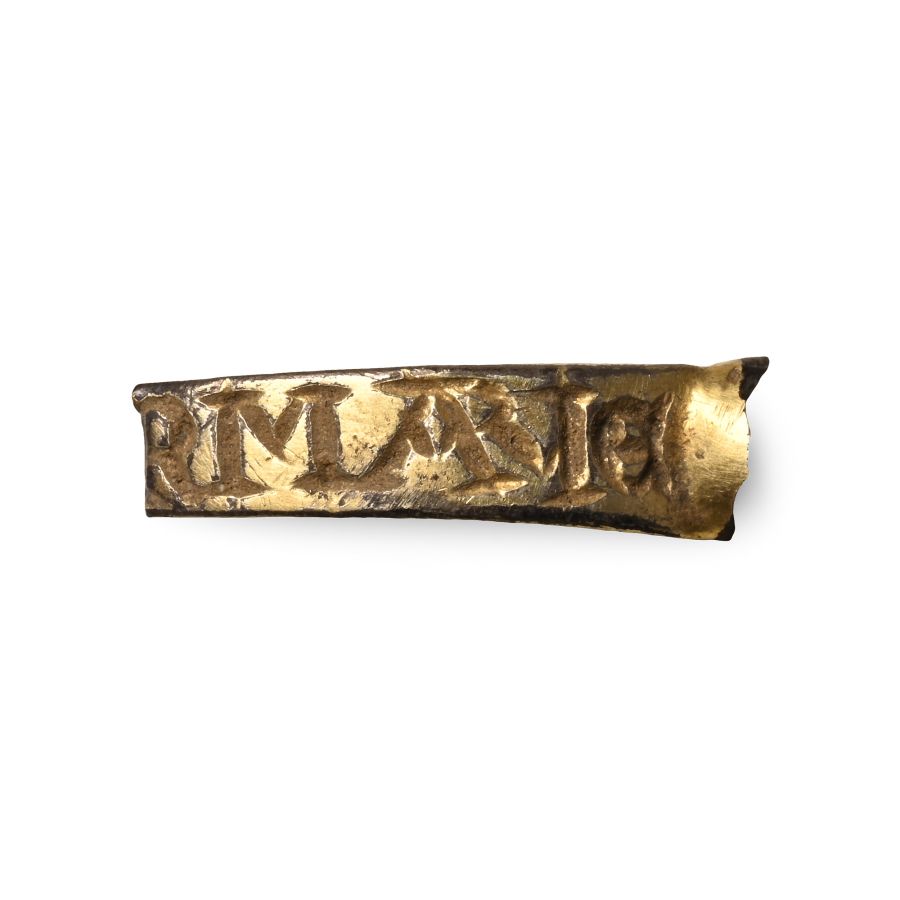
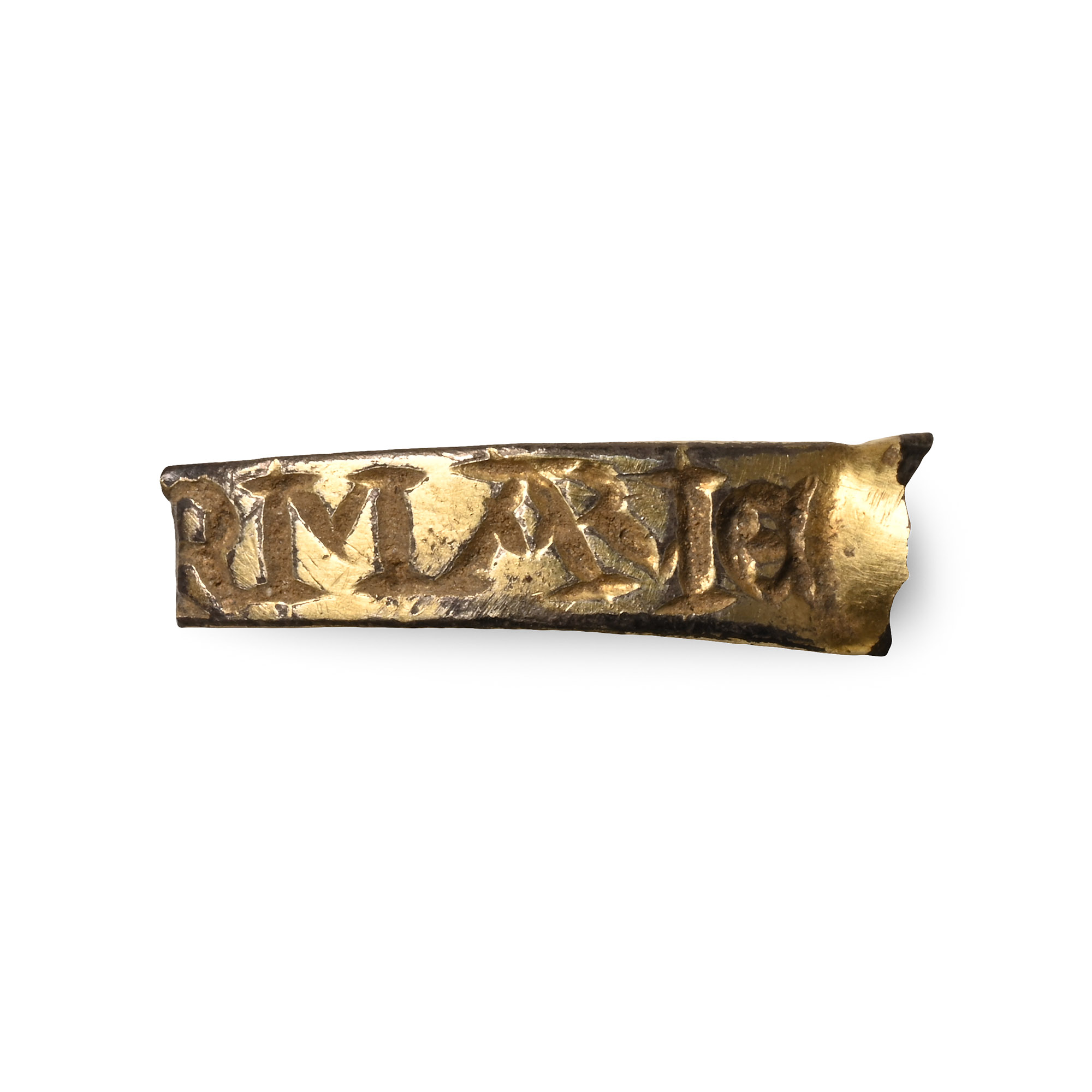
Medieval Inscribed Silver-Gilt Ring Section
14TH CENTURY A.D.
3/4 in. (0.76 grams, 19 mm).
A fragment of an inscribed finger ring; flattened rectangle in cross-section, expanding at one end to form the inner edge of a setting for a stone with residue inside; outer face inscribed ‘…RMARIE’ in Lombardic script. [No Reserve]
ProvenanceFound Somersham, Suffolk, UK.
Declared as treasure under the Treasure Act with reference no.2020T285 and subsequently disclaimed by the Crown.
Accompanied by a copy of the British Museum's Portable Antiquities Scheme (PAS) report no.SF-E260EB.
Accompanied by a copy of the Department for Digital, Culture, Media & Sport Treasure Act receipt dated 19 February 2020.
TimeLine Auctions follows a vetting process to ensure the authenticity and legality of all items, reinforcing our commitment to integrity and responsible trading. Each antiquity, antique, and coin lot undergoes thorough examination by a vetting committee of at least ten external specialists, professional trade association members, scientists, and archaeologists: Our Vetting Process
AUCTIONS:
TimeLine is a leading auction house specialising in antiquities, ancient art, collectables, natural history, coins, medals, and books. Our auctions offer museums, collectors, historians, and enthusiasts the opportunity to acquire unique and historically significant pieces.
-
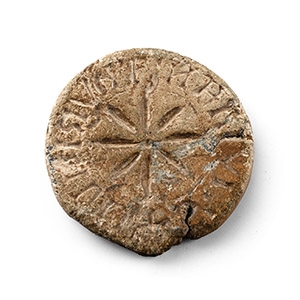
Medieval 'Thames' Lead Bifacial Seal Matrix for William
Circa 13th century A.D.Sold for (Inc. bp): £39
Discoid in plan with central floret to each face and legend to the border; Side A: '* + S'VILL DE VVE[..]' (seal of William of WE[..]); Side B: '+ [S]' [.]VIAN[.]NVR[.]LL'. 11.4 grams, 24.8 mm
Found Thames, UK. From the later Peter Hooper Pewter and Lead collection, who was a guest lecturer at West Dean College and was a longtime member of the Pewter Society who contributed to the Pewter Society Magazine. -
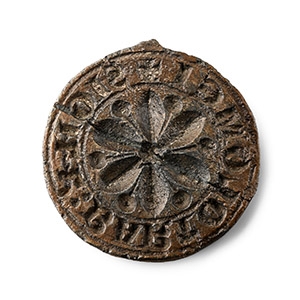
Large Medieval Lead Seal Matrix of Bartolomeus
Circa 13th century A.D.Sold for (Inc. bp): £26
Discoid with incised border and central hexafoil with pellets between the petals; Lombardic script legend '+ SIGILL : BARTOLOMEI' (seal of Bartholomew'. 28.7 grams, 40 mm
Found Lincolnshire, UK. -
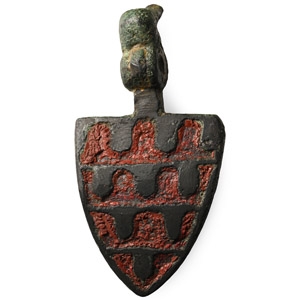
Medieval Knight's Bronze Heraldic Horse Harness Pendant
14th-15th century A.D.Sold for (Inc. bp): £208
Heater-shaped with hinged suspender and stud; enamelled field vair all over, gules and or. 15 grams, 52 mm
Ex Graham Slater collection, Cambridge, 1980s-1990s.
