
Loading, please wait...
_900x900.jpg "Medieval Gold Ring with Cabochon Garnet")
_200x200.jpg "Medieval Gold Ring with Cabochon Garnet")
.jpg "Medieval Gold Ring with Cabochon Garnet")
LOT 0386
Medieval Gold Ring with Cabochon Garnet
15TH CENTURY A.D.
1 in. (4.79 grams, 26.41 mm overall, 18.45 mm internal diameter (approximate size British Q, USA 8, Europe 17.49, Japan 16)).
Comprising a slender D-section hoop with balustered shoulders, ellipsoid cell with garnet cabochon.
ProvenanceAcquired on the European art market in the 1990s.
UK collection of a European gentleman.
Cf. Chadour, A.B., Rings. The Alice and Louis Koch Collection, volume I, Leeds, 1994, item 676, for type.
CONDITIONTimeLine Auctions follows a vetting process to ensure the authenticity and legality of all items, reinforcing our commitment to integrity and responsible trading. Each antiquity, antique, and coin lot undergoes thorough examination by a vetting committee of at least ten external specialists, professional trade association members, scientists, and archaeologists: Our Vetting Process
AUCTIONS:
TimeLine is a leading auction house specialising in antiquities, ancient art, collectables, natural history, coins, medals, and books. Our auctions offer museums, collectors, historians, and enthusiasts the opportunity to acquire unique and historically significant pieces.
LOT 0386
Medieval Gold Ring with Cabochon Garnet
Estimate £1,200 - 1,700€1,390 - 1,970 (for guidance only)$1,620 - 2,300 (for guidance only)
-
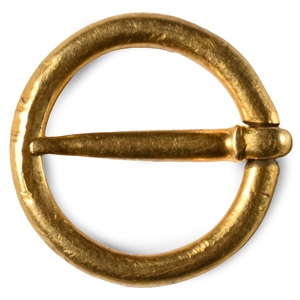
Medieval 'Published' Gold Annular Brooch
13th-14th century A.D.Sold for (Inc. bp): £338
Ring brooch with sword-shaped pin. 1.3 grams, 13 mm
From the collection of the famous author, writer and speaker, Gordon Bailey, Essex, UK; formed since 1968. -
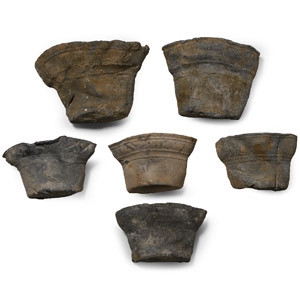
Medieval Lead Pilgrim's Holy Water Container Group
14th-15th century A.D.Sold for (Inc. bp): £65
D-shaped in section, bell-shaped containers, some with low-relief detailing; many of these objects are published in the Detector Finds book series. 489 grams total, 54-79 mm
From the collection of the famous author, writer and speaker, Gordon Bailey, Essex, UK; formed since 1968. -
.jpg)
Medieval Bronze Plate Section Group
12th-16th century A.D.Sold for (Inc. bp): £3
Mixed group of irregular fragments of sheet bronze castings, mostly 2-4mm in thickness. 4.67 kg total, 1.9-12.2 cm
UK gallery, early 2000s.
