Loading, please wait...

Use mousewheel to zoom in and out, click to enlarge

Details

LOT 1734

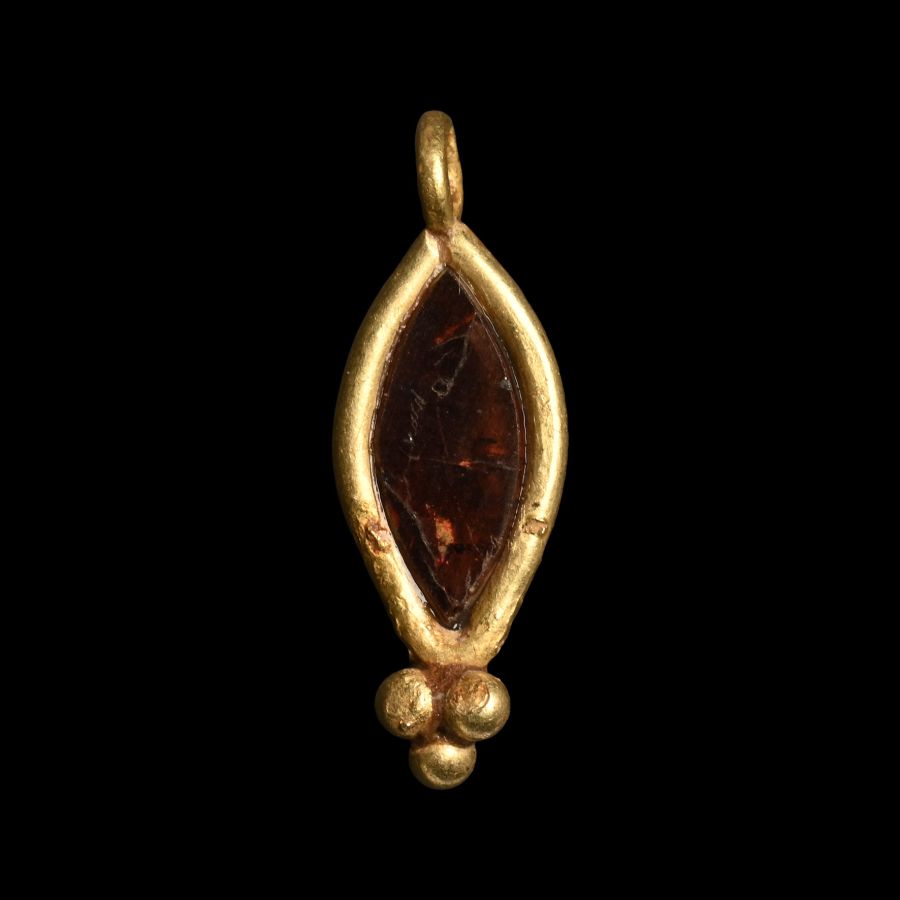
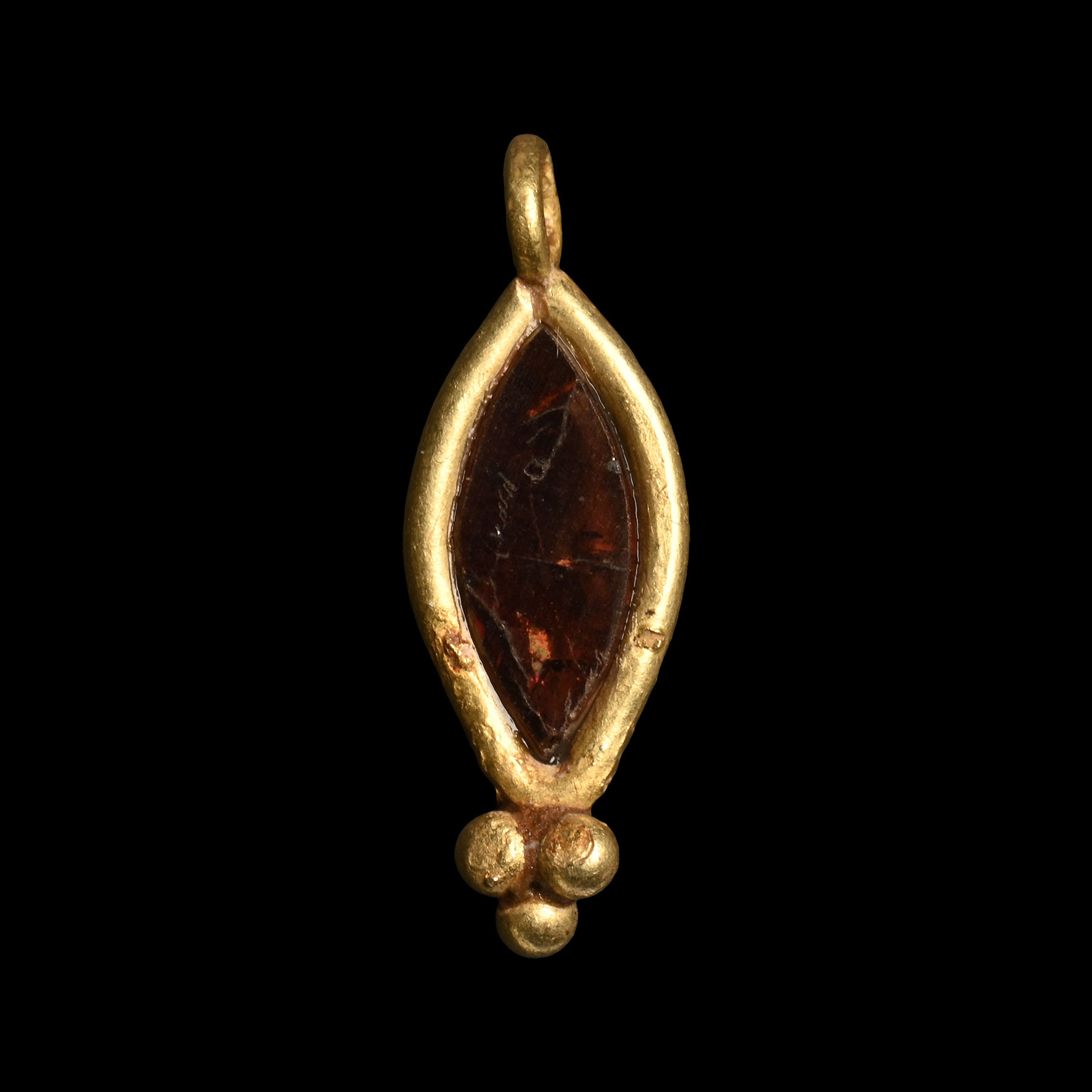
Medieval Gold Pendant with Garnet

CIRCA 14TH-16TH CENTURY A.D.

1 in. (1.64 grams, 23 mm).

Comprising an openwork oval frame set with a translucent garnet disc, pyramidal granule cluster below.

Provenance

Ex property of a late Japanese collector, 1970-2000s.

CONDITION

VETTING:

TimeLine Auctions follows a vetting process to ensure the authenticity and legality of all items, reinforcing our commitment to integrity and responsible trading. Each antiquity, antique, and coin lot undergoes thorough examination by a vetting committee of at least ten external specialists, professional trade association members, scientists, and archaeologists: Our Vetting Process


AUCTIONS:

TimeLine is a leading auction house specialising in antiquities, ancient art, collectables, natural history, coins, medals, and books. Our auctions offer museums, collectors, historians, and enthusiasts the opportunity to acquire unique and historically significant pieces.

LOT 1734

Medieval Gold Pendant with Garnet

Sold for (Inc. bp): £234

Print page

RELATED LOTS

  • The Drayton Medieval Gold Ring with Magical Inscription
    'The Drayton' Medieval Gold Ring with Magical Inscription
    1200-1300 A.D.

    Sold for (Inc. bp): £7,150

    The bezel developing to a low pyramid with lateral facets, surmounted by an inset cabochon sapphire set within an irregular cell; a quatrefoil plaque to each shoulder, and three more regularly placed around the shank; carinated hoop with magical Lombardic script '+NI ONAN NRIO ONIC / NIAI AINO ANIOI NAN'. 3.95 grams, 25.72 mm overall, 19.75 x 18.44 mm internal diameter (approximate size British R, USA 8 1/2, Europe 18 3/4, Japan 18)


    Found whilst searching with a metal detector near Drayton, Vale of the White Horse, Oxfordshire, UK, on Sunday 16th September 2018 by Chris Weir. Declared as treasure under the Treasure Act with reference no.2018T853, subsequently disclaimed and returned to the finder. Accompanied by a copy of the British Museum's Portable Antiquities Scheme (PAS) report no.GLO-0BFB91. Accompanied by a letter from the finder describing the circumstances of finding. This lot has been checked against the Interpol Database of stolen works of art and is accompanied by search certificate no.12118-214086.

    Many late medieval rings and brooches bear similarly meaningless inscriptions, perhaps due to the illiteracy of the engraver who nevertheless was aware that customers required an inscription, so provided one. Alternatively, since the text is composed from repeated sequences 'NI', 'AI', etc. based on an open syllabic structure, the words may be intended as a chant or magical charm. For discussion of such inscriptions see Evans, J., Magical Jewels of the Middle Ages and the Renaissance, Oxford, 1922, pp.121-132, for inscribed jewels.

    Lot Details

  • Medieval Gold Signet Ring with Hexagonal Bezel Engraved with an Arabic Inscription
    Medieval Gold Signet Ring with Hexagonal Bezel Engraved with an Arabic Inscription
    14th-15th century A.D.

    Sold for (Inc. bp): £1,235

    Comprising a D-section hoop with traces of engraved guilloche to the outer edge, knop to the underside, scooped shoulders; octagonal bezel with facetted cup beneath, each face with engraved scroll motif, bevelled rim, engraved Arabic legend. 11.91 grams, 24.13 mm overall, 17.47 mm internal diameter (approximate size British M, USA 6, Europe 12.46, Japan 12)


    From an old French collection believed to have been formed in the 1960s. Acquired privately as part of a collection in the early 1990s. Accompanied by a copy of a previous illustrated catalogue information page. This lot has been checked against the Interpol Database of stolen works of art and is accompanied by a search certificate number no.12141-214818.

    Lot Details

  • Medieval Bronze Knights Holy Sepulchre Badge
    Medieval Bronze Knight's Holy Sepulchre Badge
    Circa 13th-14th century A.D.

    Sold for (Inc. bp): £910

    Formed as a cross-crosslet, the symbol of the Knights of the Holy Sepulchre, with punched-point border. 2.29 grams, 28 mm


    Found whilst searching with a metal detector on a medieval site in Wiltshire in the mid 1980s.

    The 'Equestrian Order of the Holy Sepulchre of Jerusalem' was an order of knighthood under the protection of the Pope, formed around 1099 AD by Duke Godfrey of Bouillon, the leader of the First Crusade. It was established for the protection of pilgrims travelling to the Holy Land and was recognised by a Papal Bull in about 1113 AD.

    Lot Details

Stay up-to-date with the latest from TimeLine Auctions by joining our mailing list