
Loading, please wait...
LOT 1680
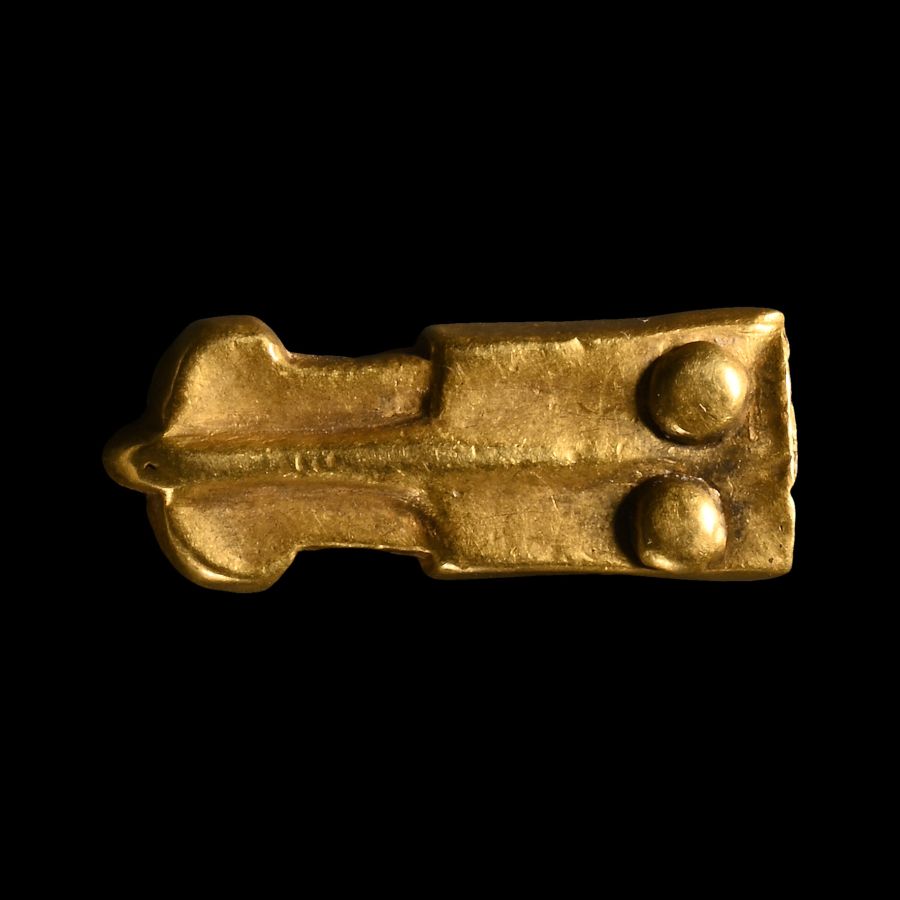
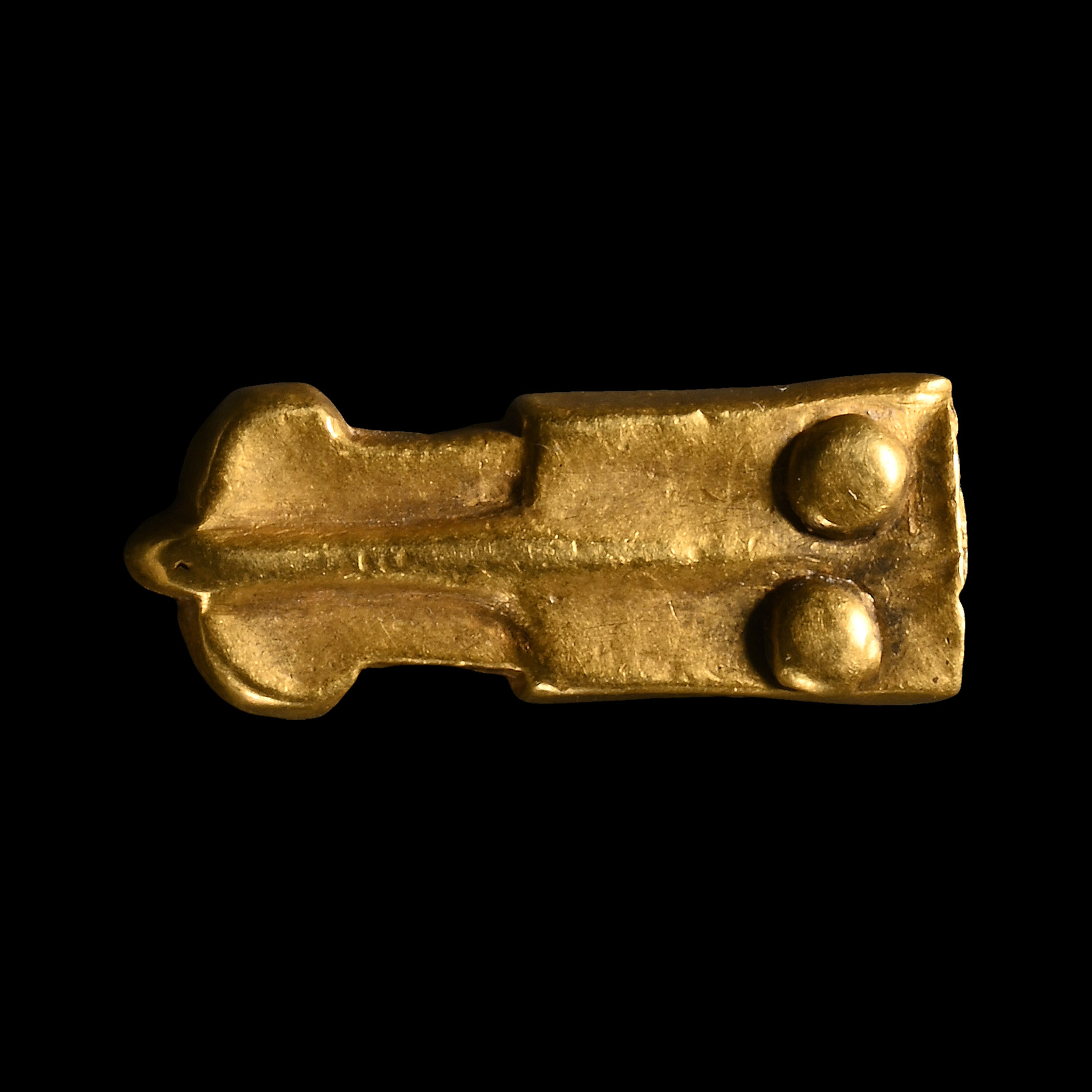
Medieval Gold Belt Buckle Strap End
CIRCA 1500 A.D.
7/8 in. (2.50 grams, 22 mm).
Hollow-formed with a tongue-shaped finial, two attachment studs in situ to the other end.
ProvenanceFrom a late Japanese specialist collector, 1970-2000s.
CONDITIONTimeLine Auctions follows a vetting process to ensure the authenticity and legality of all items, reinforcing our commitment to integrity and responsible trading. Each antiquity, antique, and coin lot undergoes thorough examination by a vetting committee of at least ten external specialists, professional trade association members, scientists, and archaeologists: Our Vetting Process
AUCTIONS:
TimeLine is a leading auction house specialising in antiquities, ancient art, collectables, natural history, coins, medals, and books. Our auctions offer museums, collectors, historians, and enthusiasts the opportunity to acquire unique and historically significant pieces.
LOT 1680
Medieval Gold Belt Buckle Strap End
Estimate £200 - 300€230 - 350 (for guidance only)$270 - 410 (for guidance only)
-
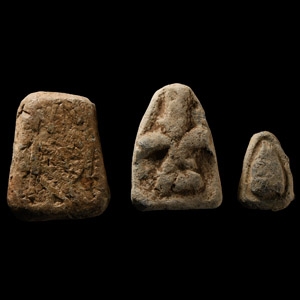
Medieval Lead Weight Collection
Circa 13th-16th century A.D.Sold for (Inc. bp): £13
Heater-shaped with reserved fleur-de-lys and cross decoration; one trapezoidal, plain. 958 grams total, 40-65 mm
Ex Simmons gallery, London, UK. Ex North London collection, 1990s. -

Medieval Stained Glass with Angel Holding a Scroll
Northern France, circa 1520 A.D.Sold for (Inc. bp): £124
Irregular glass panel with painted image of a winged angel with hands folded inside a partly-unfurled scroll; mounted in a display frame. 398 grams, 29 cm
Acquired on the UK art market, 2018. -
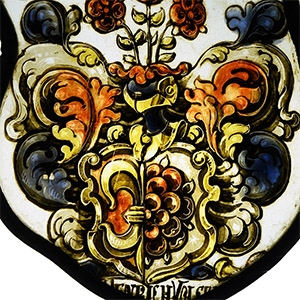
Medieval Stained Glass Armorial with Flowers
Circa 1600 A.D.Sold for (Inc. bp): £312
Panel in frame of lead cames with painted heraldic design in elaborate style, the shield divided per pale with gules a fleur-de-lys or and argent a rosette gules; scroll below with partial text '[H]enrich Volse[...]'. 126 grams, 15.5 cm
with De Baecque Encheres, 5 March 2022, no.49.
