
Loading, please wait...
LOT 1747
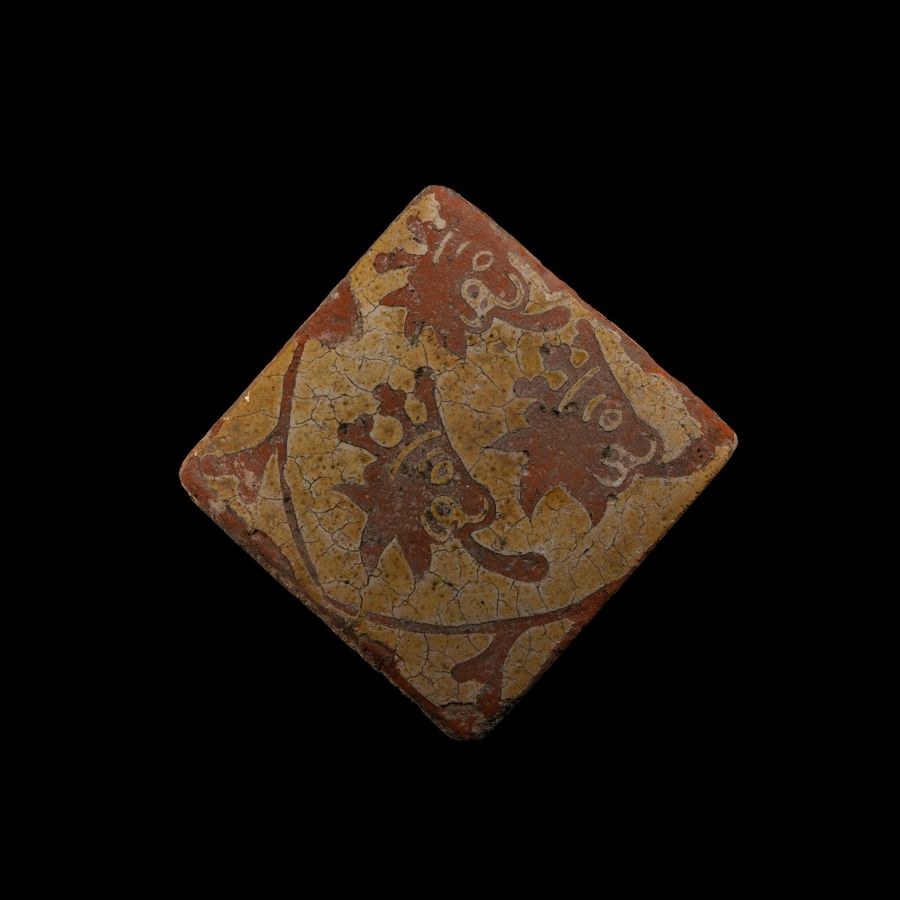
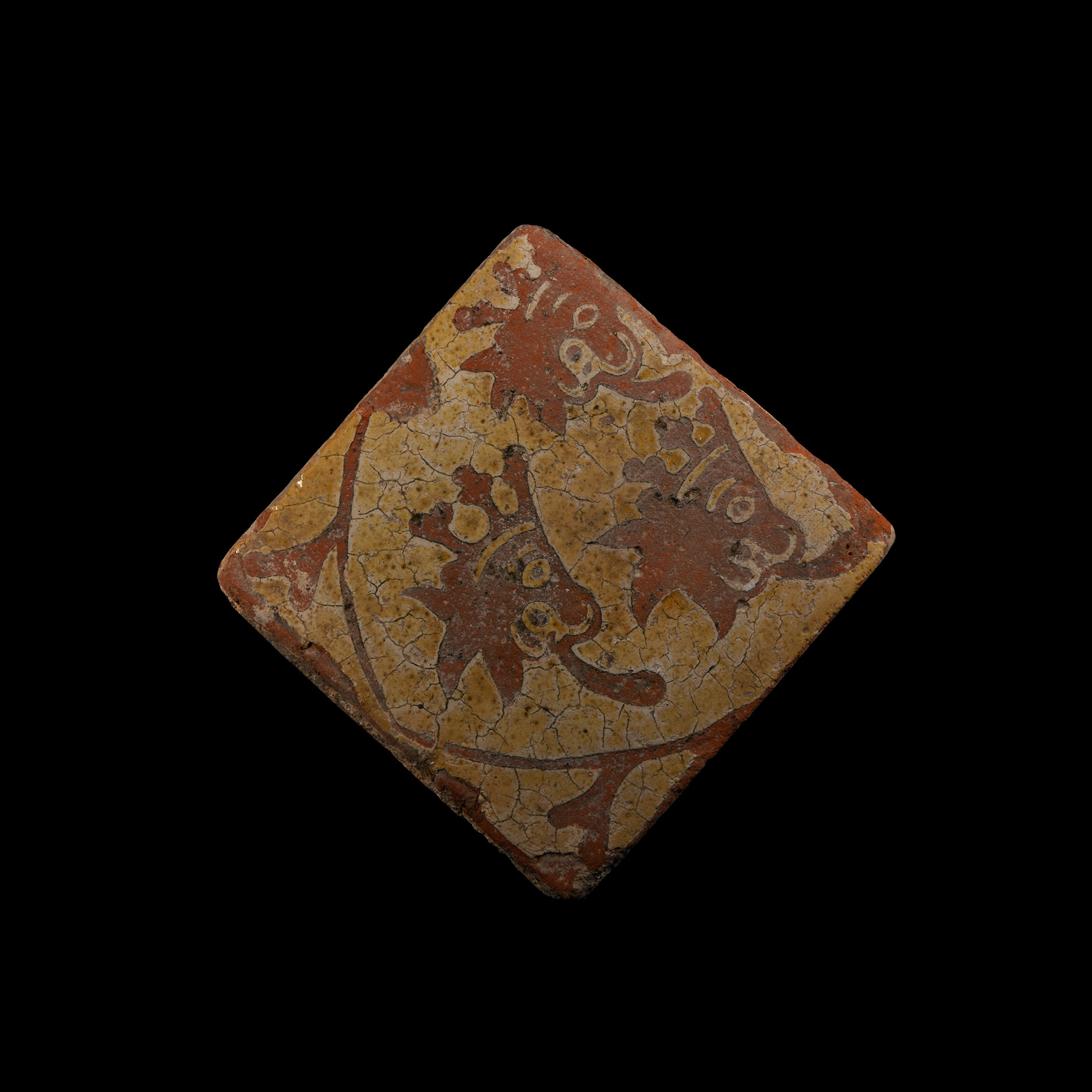
Medieval Glazed Ceramic Tile with Three Crowned Lions in Heraldic Shield
FRANCE, 15TH CENTURY A.D.
7 1/4 in. (964 grams, 18.3 cm).
Displayed on a square-shaped tile, the lions with protruding tongues, framed by the bottom half of a shield-shaped background; remains of bedding cement to reverse together with a Bonham's lot label. [No Reserve]
ProvenanceEx Benjamin Proust, 2015.
Ex central London gallery.
TimeLine Auctions follows a vetting process to ensure the authenticity and legality of all items, reinforcing our commitment to integrity and responsible trading. Each antiquity, antique, and coin lot undergoes thorough examination by a vetting committee of at least ten external specialists, professional trade association members, scientists, and archaeologists: Our Vetting Process
AUCTIONS:
TimeLine is a leading auction house specialising in antiquities, ancient art, collectables, natural history, coins, medals, and books. Our auctions offer museums, collectors, historians, and enthusiasts the opportunity to acquire unique and historically significant pieces.
LOT 1747
Medieval Glazed Ceramic Tile with Three Crowned Lions in Heraldic Shield
Sold for (Inc. bp): £403
-
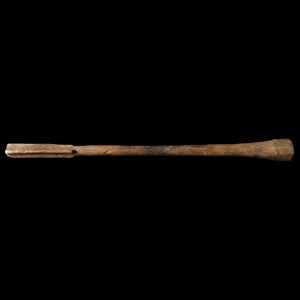
Medieval Wood Implement
14th-15th century A.D.Sold for (Inc. bp): £1
Composed of a cylindrical stem with expanded upper body and facetted bulbous head, the opposite terminal formed as three vertical ribs forming a roughly triangular cross-section. 3.53 grams, 15.5 cm
European collection, 1990s. Property of a Cambridgeshire, UK, gentleman. -
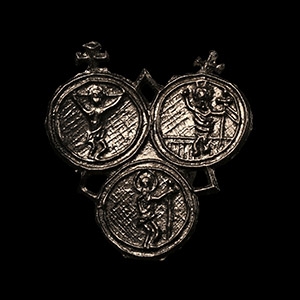
Medieval Dutch Pewter Holy Blood Of Wilsnack Pilgrim's Badge
14th-15th century A.D.Sold for (Inc. bp): £130
Trilobate in plan with openwork triangle between three roundels with hatched fields, the upper two surmounted by crosses, depicting scenes from Christ's life: the crucifixion, resurrection and Christ at the Column in relief. 6.3 grams, 39 mm
Acquired 1990s-early 2000s. East Anglian private collection.
In 1383 AD, after fire in the town of Bad Wilsnack, Germany) three consecrated communion hosts were found undamaged in the ruins of the church. According to the legend, they were sprinkled with the Holy Blood of Christ, which made Bad Wilsnack a famous pilgrimage site. The resultant pilgrim badges were distinctive in shape with three circles arranged in a triangle and painted in red, referring to this miracle. Although the miracle was doubted by Reformation period scholars like John Hus, the final blow came in 1552, when the miraculous communion hosts were publicly burned. -
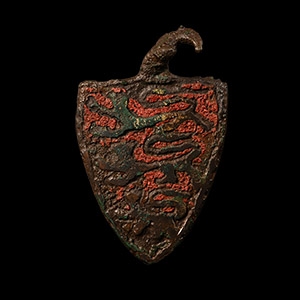
Medieval Knight's Heraldic Horse Harness Pendant with Royal Arms
14th-15th century A.D.Sold for (Inc. bp): £416
Heater-shaped with red enamel field and reserved three lions passant gardant. 5.59 grams, 30 mm
Found Romney Marsh area, 2023. Property of a Kent gentleman.
