
Loading, please wait...
LOT 1811
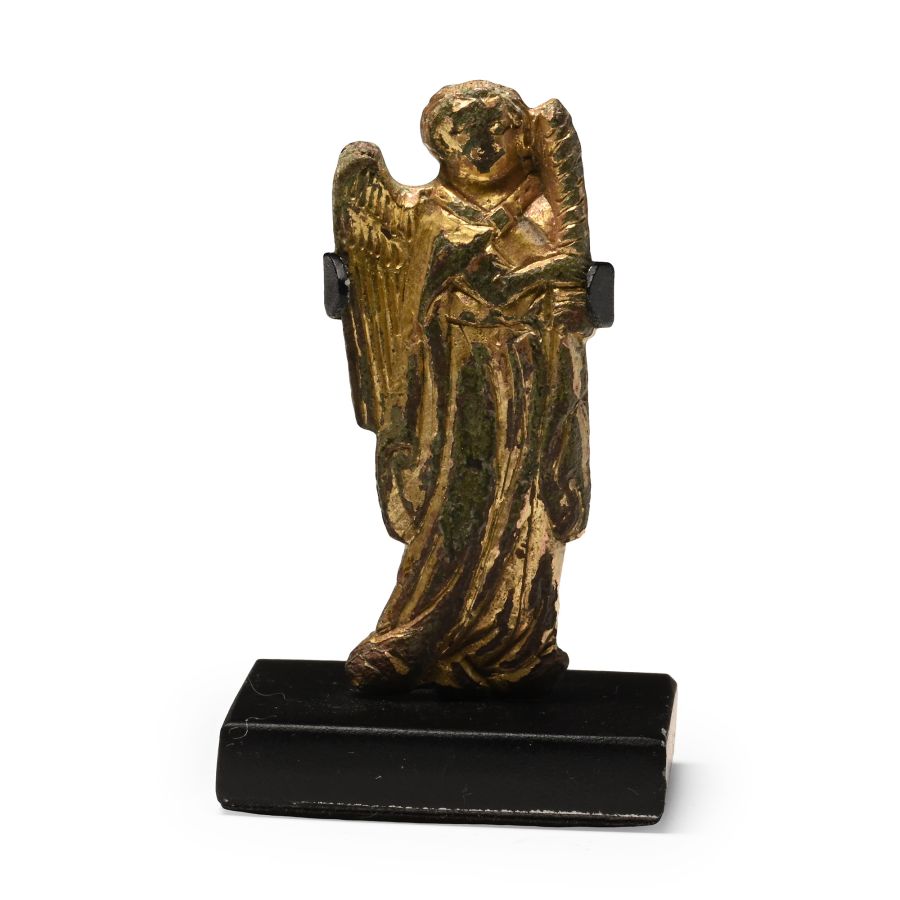
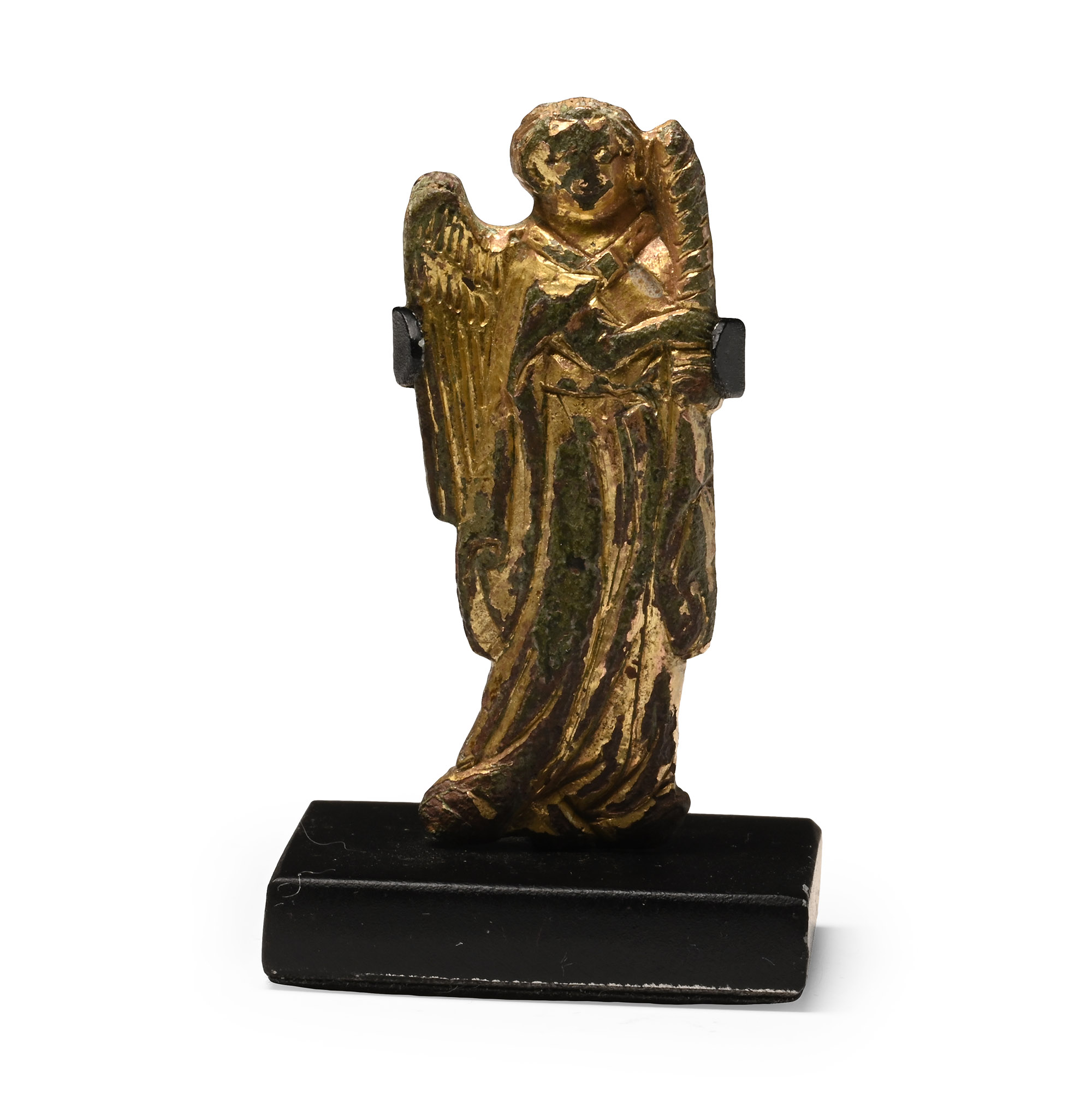
Medieval Gilt Bronze Mount of Angel
14TH CENTURY A.D.
1 5/8 in. (2 in.) (15.3 grams, 43 mm (59.7 grams total, 50 mm including stand)).
Modelled as a standing angel with spread wings, holding a large candle and wearing a long cape; mounted on a custom-made display stand, probably of French workmanship.
ProvenancePrivate collection, UK.
CONDITIONTimeLine Auctions follows a vetting process to ensure the authenticity and legality of all items, reinforcing our commitment to integrity and responsible trading. Each antiquity, antique, and coin lot undergoes thorough examination by a vetting committee of at least ten external specialists, professional trade association members, scientists, and archaeologists: Our Vetting Process
AUCTIONS:
TimeLine is a leading auction house specialising in antiquities, ancient art, collectables, natural history, coins, medals, and books. Our auctions offer museums, collectors, historians, and enthusiasts the opportunity to acquire unique and historically significant pieces.
-
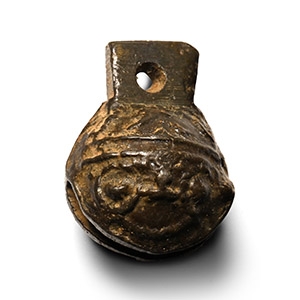
Medieval or Tudor Decorated Bronze Dress Bell
1400-1600 A.D.Sold for (Inc. bp): £20
Of small and and bulbous type; oval body with wide sounding split, within is a small pea that moves freely; the bell with a square-shaped suspension loop with file marks to both faces and a drilled, circular hole; both faces have moulded decoration comprising of lines, roundels and pellets. 5.61 grams, 14 mm
Found whilst searching with a metal detector in the Isle of Wight, Hampshire, UK. Recorded with the British Museum's Portable Antiquities Scheme Report no.IOW-B67BA3.
PAS can find no direct comparison for this bell, however it does share similarities with some hawking bells (for example DENO-127662), and animal bells (see~LEIC-88EDB8). -
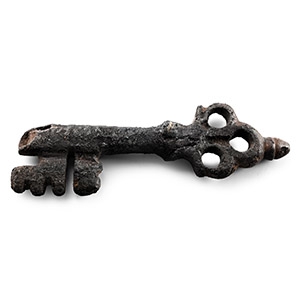
Large Medieval Bronze Key
15th century A.D.Sold for (Inc. bp): £78
With hollow-formed barrel-type shank and voided trefoil bow, acorn-shaped mandrel above; slot to the ward and angled bits; repaired. 42 grams, 82 mm
From the collection of a Buckinghamshire, UK, collector established from the earlier 1960s. -
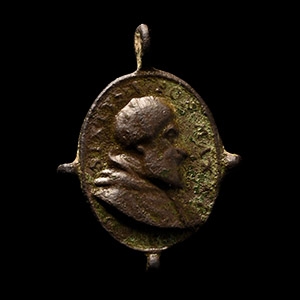
Pope Sixtus V Bronze Pendant
Dated 1585 A.D.Sold for (Inc. bp): £390
Ellipsoid bronze bifacial pendant with three radiating lugs and pierced lug above; reverse with kneeling nimbate figure (St. Jerome) in ankle-length robe, one hand extended and open book below, lion's head to his rear; obverse with profile bust in cassock and camauro (papal cap), legend above 'SIXTVS V PONS MAX A I'. 4.7 grams, 30 mm
Found Tuesday 1st April 2025 in Claydon, Suffolk, UK. Accompanied by a copy of the British Museum's Portable Antiquities Scheme (PAS) report no.SF-92A7E3.
This item is a rare example of a Catholic papal emblem made and used during Elizabeth I's reign, when the Protestant cause was dominant. This is only the second known example to be found in England.
