
Loading, please wait...
LOT 1675
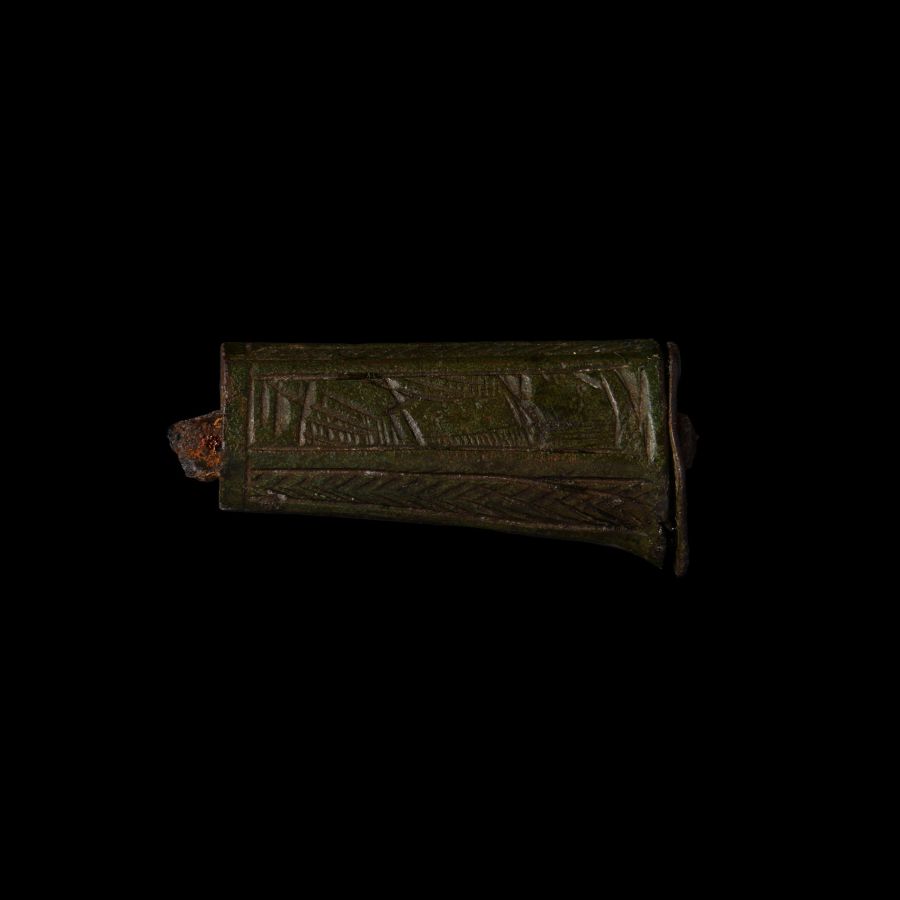
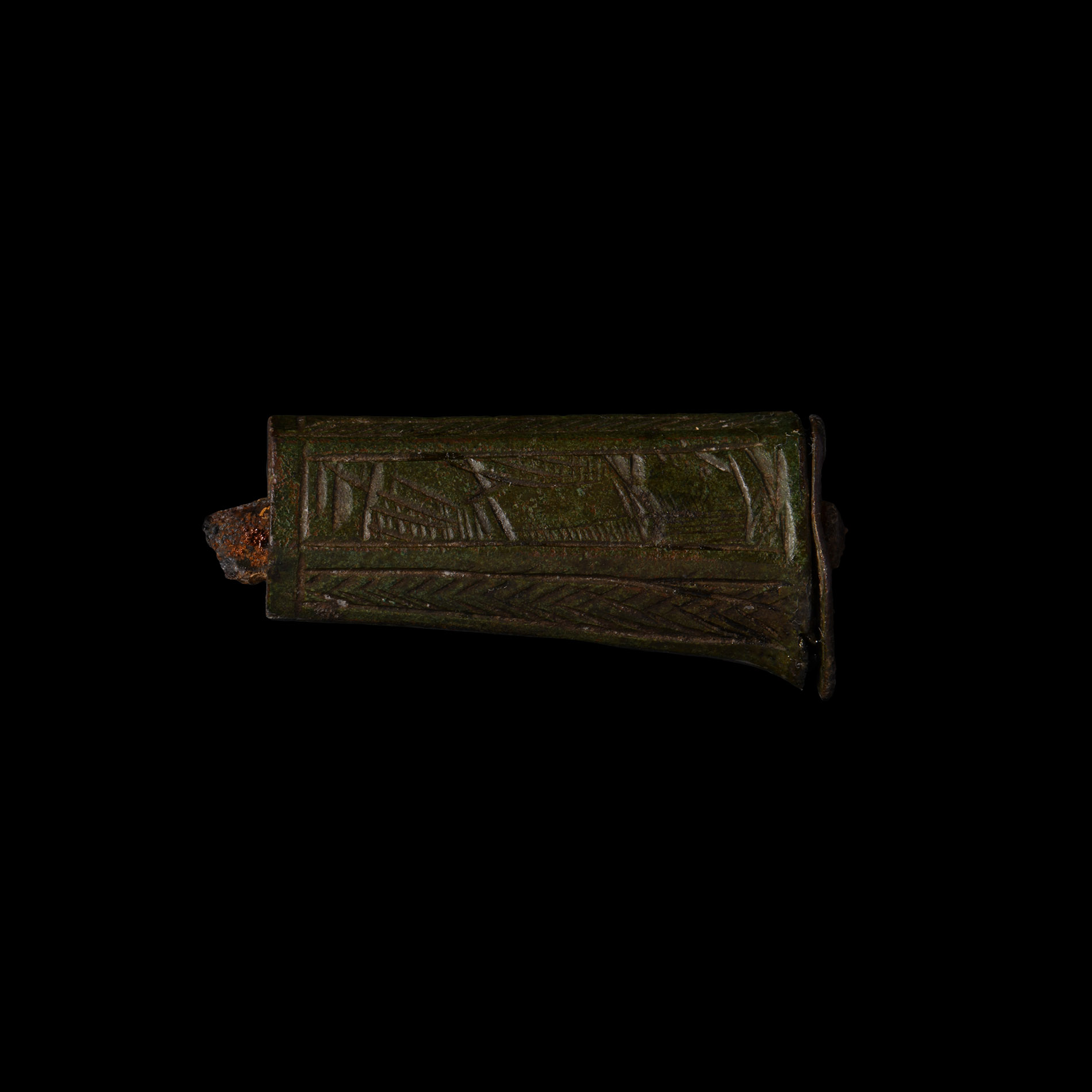
Medieval Engraved Bronze Knife Handle with Veiled Figures
15TH-16TH CENTURY A.D.
1 1/4 in. (5.19 grams, 32 mm).
Featuring a tapering hexagonal-section body, radiating lines to the top face, hatched panels alternating with figural panels to the facetted body; remains of iron tang to interior. [No Reserve]
ProvenanceFound Suffolk, UK.
CONDITIONTimeLine Auctions follows a vetting process to ensure the authenticity and legality of all items, reinforcing our commitment to integrity and responsible trading. Each antiquity, antique, and coin lot undergoes thorough examination by a vetting committee of at least ten external specialists, professional trade association members, scientists, and archaeologists: Our Vetting Process
AUCTIONS:
TimeLine is a leading auction house specialising in antiquities, ancient art, collectables, natural history, coins, medals, and books. Our auctions offer museums, collectors, historians, and enthusiasts the opportunity to acquire unique and historically significant pieces.
LOT 1675
Medieval Engraved Bronze Knife Handle with Veiled Figures
Sold for (Inc. bp): £20
-
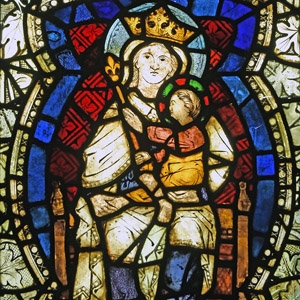
Medieval Stained Glass Panel with The Virgin and Child
Northern France, circa 1270 A.D. and laterSold for (Inc. bp): £2,860
Composed from irregular painted panels bearing mainly foliage designs and figural elements; Mary crowned and enthroned with infant Jesus on her knee, in a lobed vesica-shaped panel held with lead cames; mounted in a wooden frame with modern replacements. 5.75 kg, 85 x 56 cm
with Thierry de Maigret, Vitraux et Dessins, Paris, 20 June 2014, lot 53. -
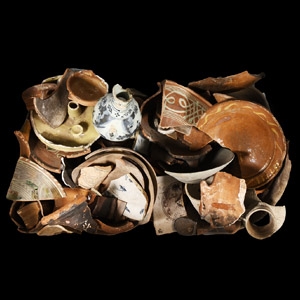
Medieval Glazed Pottery Fragment Group
15th century A.D. and laterSold for (Inc. bp): £7
Including decorated examples and a variety of vessel elements. 21 kg total including box, 69.5 x 30.5 cm
Acquired 1990s-early 2000s. East Anglian private collection. -
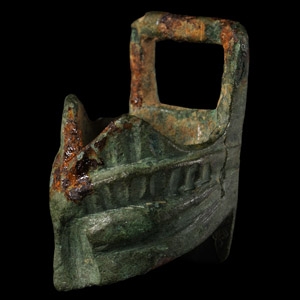
Anglo-Norman Zoomorphic Fitting
11th century A.D.Sold for (Inc. bp): £13
Wedge-shaped in plan with rectangular fitting hole and the upper portion of a stylised feline head with gaping mouth, cylindrical in section. 6 grams, 2.5 cm
Found Pembroke area, Pembrokeshire, 1980s-2000s. Property of the finder.
