Loading, please wait...

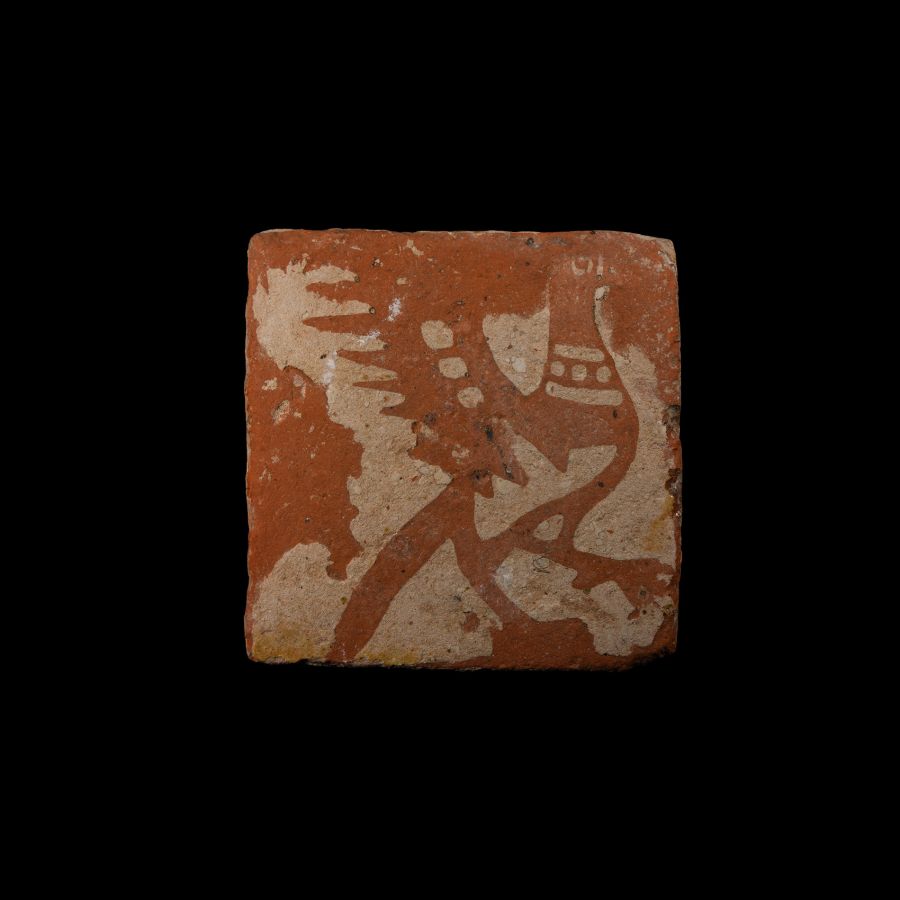
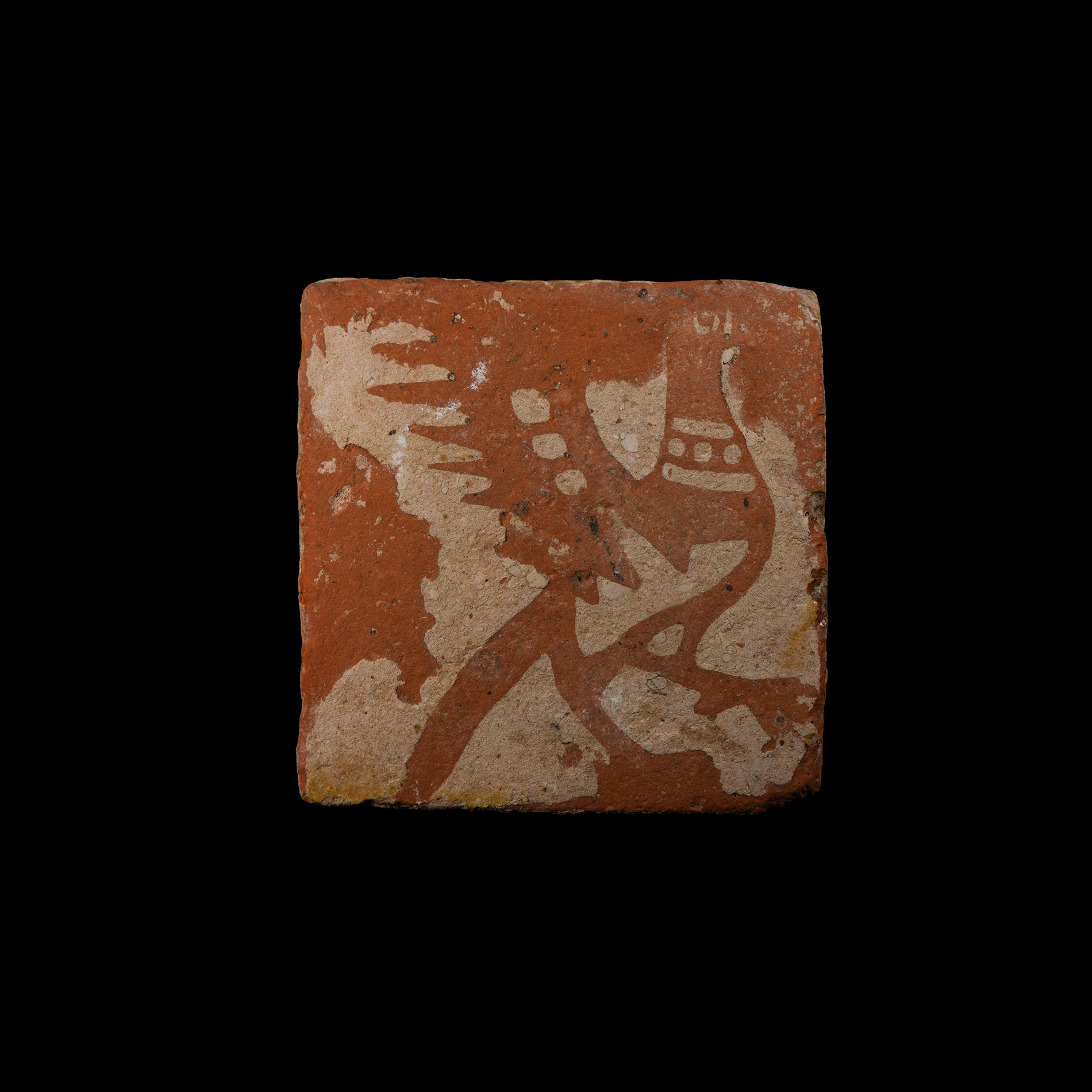
Medieval English Glazed Ceramic Tile With a Dove Medieval English Glazed Ceramic Tile With a Dove Medieval English Glazed Ceramic Tile With a Dove
Use mousewheel to zoom in and out, click to enlarge
Details

LOT 1640

Medieval English Glazed Ceramic Tile With a Dove

WEST COUNTRY, 15TH CENTURY A.D.

7 1/8 in. (1.1 kg, 18.2 cm).

The bird rendered with stylised detailing walking right, wings spread; remains of bedding cement to reverse. [No Reserve]

Provenance

Ex Benjamin Proust, 2015.
Ex central London gallery.

CONDITION
VETTING:

TimeLine Auctions follows a vetting process to ensure the authenticity and legality of all items, reinforcing our commitment to integrity and responsible trading. Each antiquity, antique, and coin lot undergoes thorough examination by a vetting committee of at least ten external specialists, professional trade association members, scientists, and archaeologists: Our Vetting Process


AUCTIONS:

TimeLine is a leading auction house specialising in antiquities, ancient art, collectables, natural history, coins, medals, and books. Our auctions offer museums, collectors, historians, and enthusiasts the opportunity to acquire unique and historically significant pieces.

LOT 1640

Medieval English Glazed Ceramic Tile With a Dove

Sold for (Inc. bp): £169

Print page

RELATED LOTS
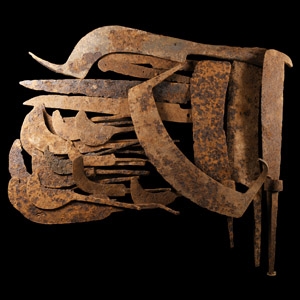
  • Medieval Iron Anti-Cavalry Caltrop Group
    Medieval Iron Anti-Cavalry Caltrop Group
    13th-15th century A.D.

    Sold for (Inc. bp): £234

    Comprising eight caltrops, hand-forged with square-section spikes. 439 grams total, 88-95 mm


    Acquired 1971-1972. From the collection of the vendor's father. Property of a London, UK, collector.

    Caltrops were scattered on battlefields in an effort to stop or slow advancing enemy cavalry or foot soldiers; regardless of how a caltrop lands, one spike is always facing upwards. In 1082, Emperor Alexios Komnenos used caltrops against the Norman cavalry in the Balkans but the Normans avoided them by flanking the Roman line.

    Lot Details

  • Medieval Equestrian Knight Badge Group
    Medieval Equestrian Knight Badge Group
    13th-15th century A.D.

    Estimate: £100 - 140 (+bp*)

    Opening Bid: £28

    Comprising a circular stone with an incised cross to one side and a series of 13 heraldic hearts to the other; a bronze cross pendant with annulet-in-circle motifs to one side. 47 grams total, 30-36 mm


    From an old Worcestershire, UK collection. The Kusmirek Collection, UK.

    The copper-alloy pendant appears to be cross-shaped with the top arm forming the suspension loop. It is therefore possible to consider the pendant to be T-shaped, in the form of the Greek letter Tau. These Tau crosses often acted as miniature reliquaries which are thought to have contained a herbal compound that was used to treat the symptoms of St Anthony's fire.

    Lot Details

  • Renaissance Gilt Wooden Octagonal Socle with Paintings of Saints
    Renaissance Gilt Wooden Octagonal Socle with Paintings of Saints
    South Germany, probably Augsburg, circa 1500-1520 A.D.

    Sold for (Inc. bp): £1,950

    Intended for a religious statue, with foot-shaped recesses to the top face; the left side with a painted polychrome scene comprising Saint Jerome and Saint Ambrose with Saint Michael holding a sword and scales for weighing souls; the right side painted with a scene comprising Saint Gregory the Great, Saint Augustine and Saint John the Evangelist; both scenes set with gilt architectural frame; the reverse with the Holy Spirit depicted as a dove. 1.95 kg, 16.5 cm high

    Very fine condition.

    Ex Julius Böhler Ltd, Munich, Germany, 2000. Ex central London gallery. Accompanied by an academic report by Dr Raffaele D’Amato. This lot has been checked against the Interpol Database of stolen works of art and is accompanied by search certificate no.11741-202052.

    The base probably housed a statue of Christ. The painting, although mannerist, reflects the style of the Germanic Renaissance. The saints surrounding the dove are easily recognisable by their attributes. St Jerome as a penitent was often represented in front of a crucifix, next to him the hourglass and the skull, symbolising fleeing time leading to death. St Ambrose is represented with his whip, defending people from the enemies of the faith. St Michael is holding the sword and balance and St Augustine is represented with the child who appeared to him on the seashore admonishing him. Many representations from the Middle Ages show Pope St Gregory the Great (of a noble family and pontiff from 590 to 604) with the Dove of the Holy Spirit perched on his shoulder. St John the Evangelist is represented here according to the golden legend of Jacopo da Varazze, with a snake and a chalice.

    Lot Details

Stay up-to-date with the latest from TimeLine Auctions by joining our mailing list