
Loading, please wait...
LOT 1156
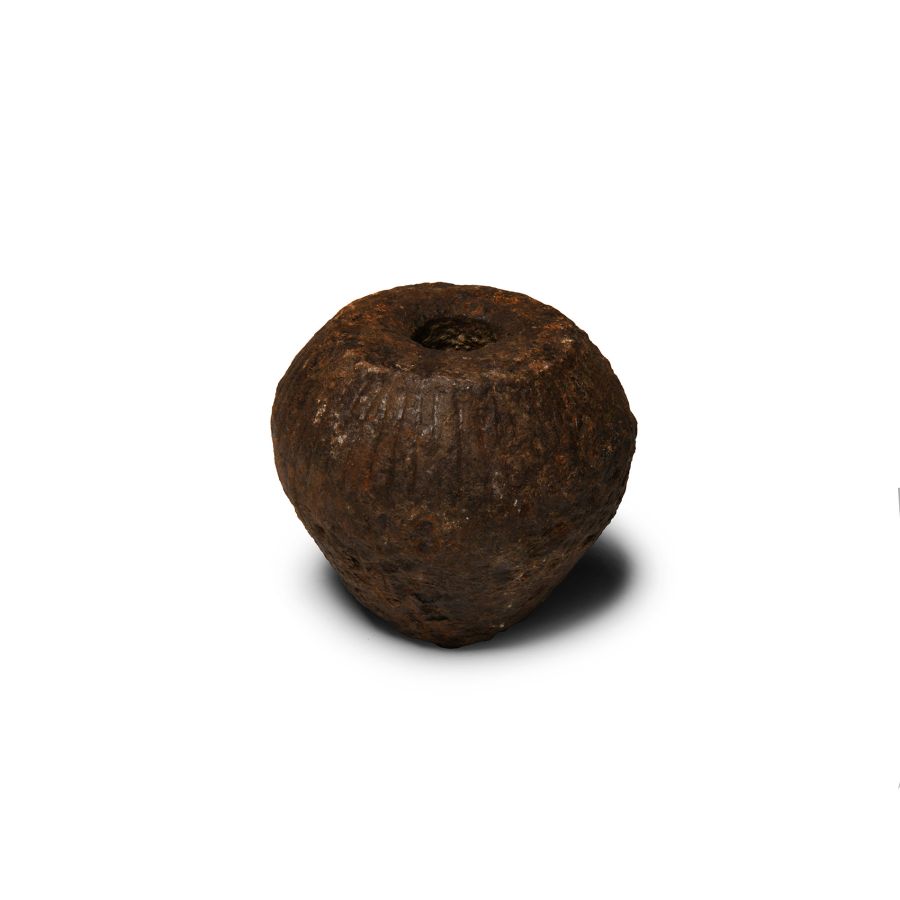
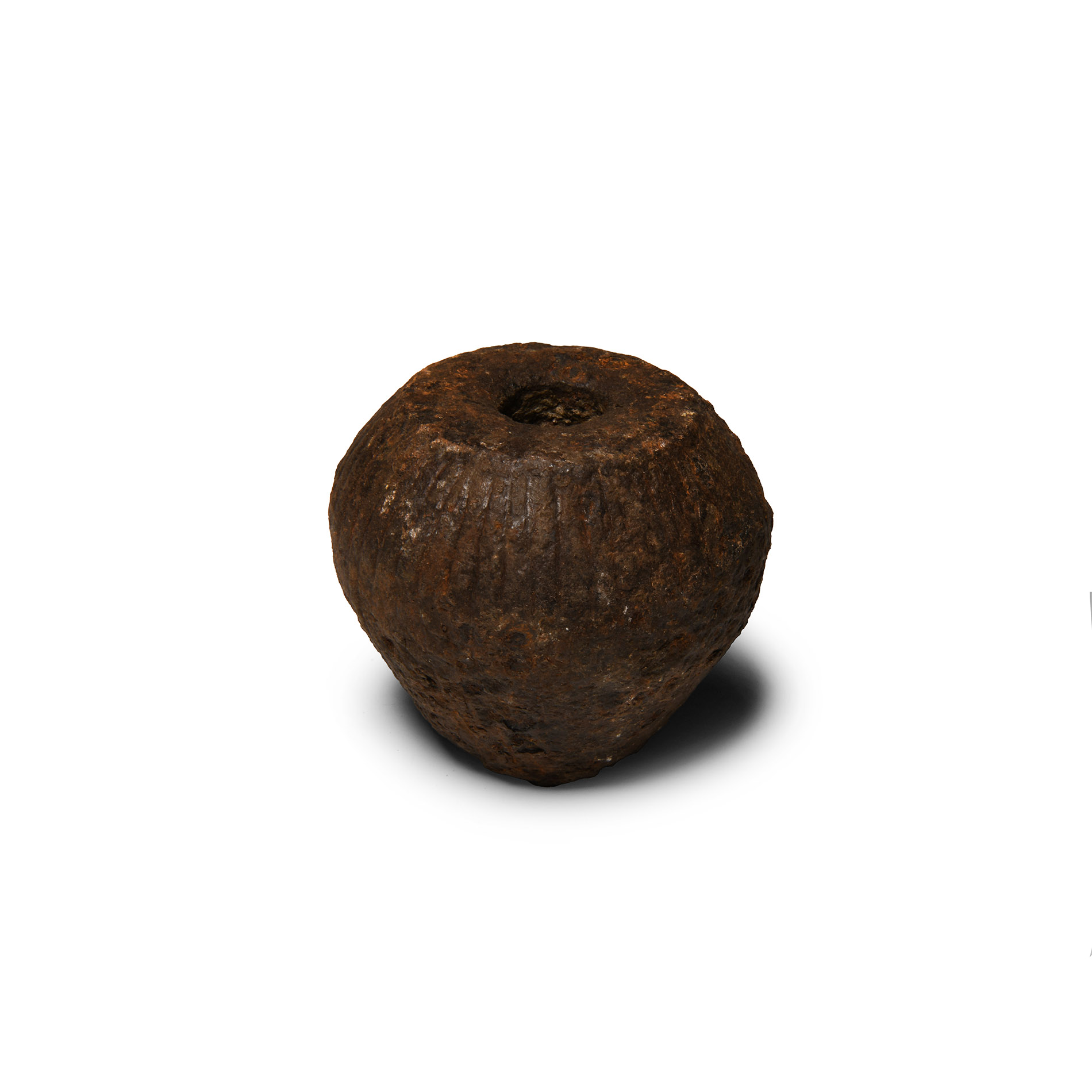
Medieval Eastern European Iron Macehead
14TH-15TH CENTURY A.D.
2 1/2 in. (828 grams, 64 mm wide).
Displaying shallow striations running vertically around the body; cylindrical socket.
ProvenanceAcquired 1990s-early 2000s.
East Anglian private collection.
Cf. Milovanic, D., Metalwork in Serbia (in Serbian), Belgrade, 1986, fig.342, for similar specimen.
FootnotesThis kind of later maces, typical of 15th century, had irregularly shaped heads, with spheres having holes for the insertion of the shaft. Incised, parallel strips formed a cross ornament running horizontally and vertically. Grooved lines were carved in the fields between.
CONDITIONTimeLine Auctions follows a vetting process to ensure the authenticity and legality of all items, reinforcing our commitment to integrity and responsible trading. Each antiquity, antique, and coin lot undergoes thorough examination by a vetting committee of at least ten external specialists, professional trade association members, scientists, and archaeologists: Our Vetting Process
AUCTIONS:
TimeLine is a leading auction house specialising in antiquities, ancient art, collectables, natural history, coins, medals, and books. Our auctions offer museums, collectors, historians, and enthusiasts the opportunity to acquire unique and historically significant pieces.
-
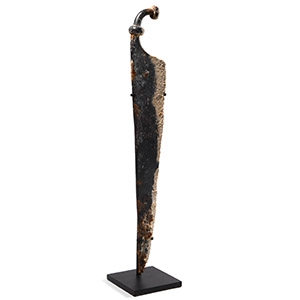
Iron Age Celtic La Tene Dagger
1st century B.C.-1st century A.D.Estimate: £1,200 - 1,700 (+bp*)
Opening Bid: £500
Featuring a gently curved single-edged iron blade and one-sided fuller, curved handle with knot pommel; mounted on a custom-made display stand. 525 grams total, 35 cm high including stand
Dutch art market. Private collection of K.S., Cologne, Germany, acquired 1996.
One of the military insignia of a Celtic warrior was the war-knife, usually between 33 and 35 cm long. For example, in the collection of Celtic military equipment from Galish-Lovachka, the archaeologists have found a short sword with an X-shaped handle (l = 41 cm), two middle La Tène swords (72.5 and 75 cm long), 12 large curved knives, 27 spearheads, two javelin heads, 14 arrowheads, and nine iron chain belts for hanging a sword. The war-knife was also used for hunting, as a spare weapon, or to cut the throat of an enemy in a surprise attack. -
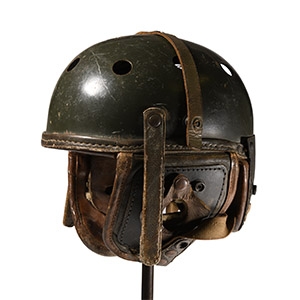
United States M38 Tank Crew Helmet
Circa 1940's A.D.Sold for (Inc. bp): £143
Rawling's pattern M38 composition tank crew helmet with neck protection plate and ear-flaps, fitted with leather lining with leather and fabric securing straps; finished dark green; with later inked 'CESARE' owner name and '1-5-79' date to liner. 613 grams, 27 cm high
Acquired from Czerny's Auction, lot 81515. The Kusmirek Collection, UK. Accompanied by copy of a previous invoice and lot description.
Possibly of Italian manufacture of the type used by US forces in WWII. -
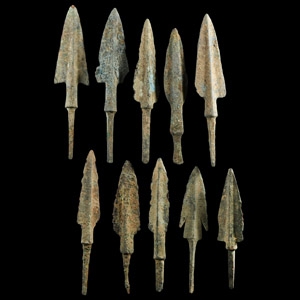
Luristan Bronze Arrowhead
2nd-1st millennium B.C.Estimate: £150 - 200 (+bp*)
Opening Bid: £80
The group comprising various types of tanged arrowheads, including barbed and leaf-shaped examples. 175 grams total, 8.1-10.5 cm
Acquired 1990s. From the collection of a late Japanese weaponry collector.
