
Loading, please wait...
LOT 1739
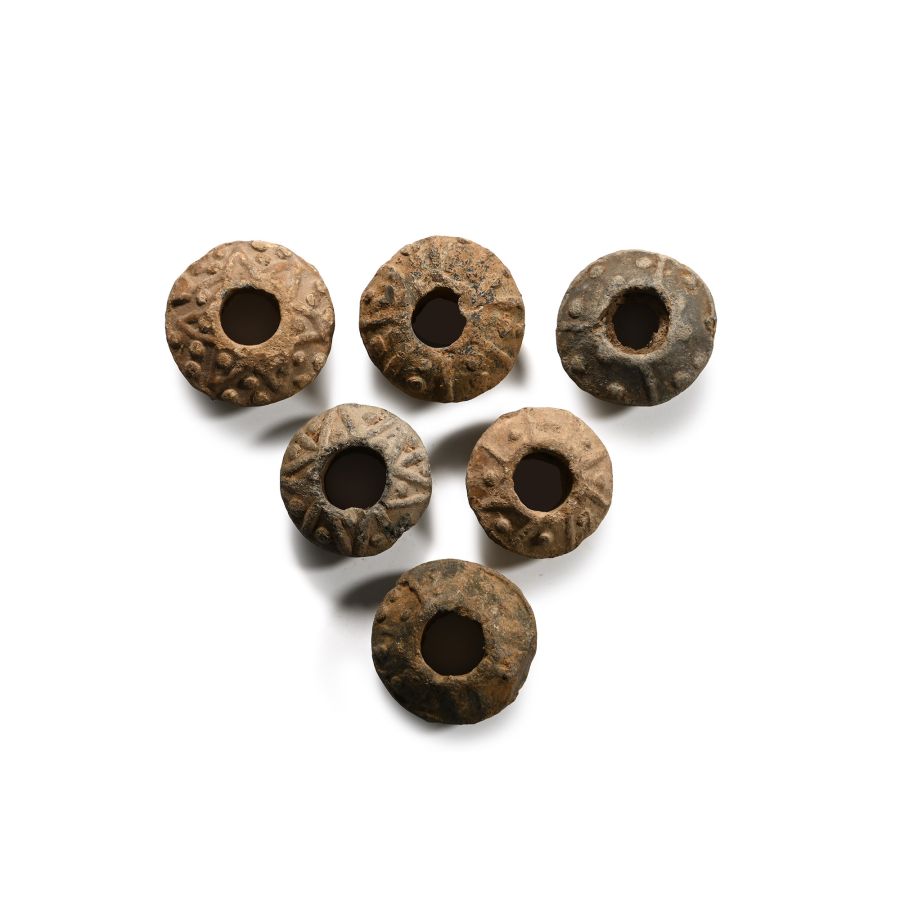
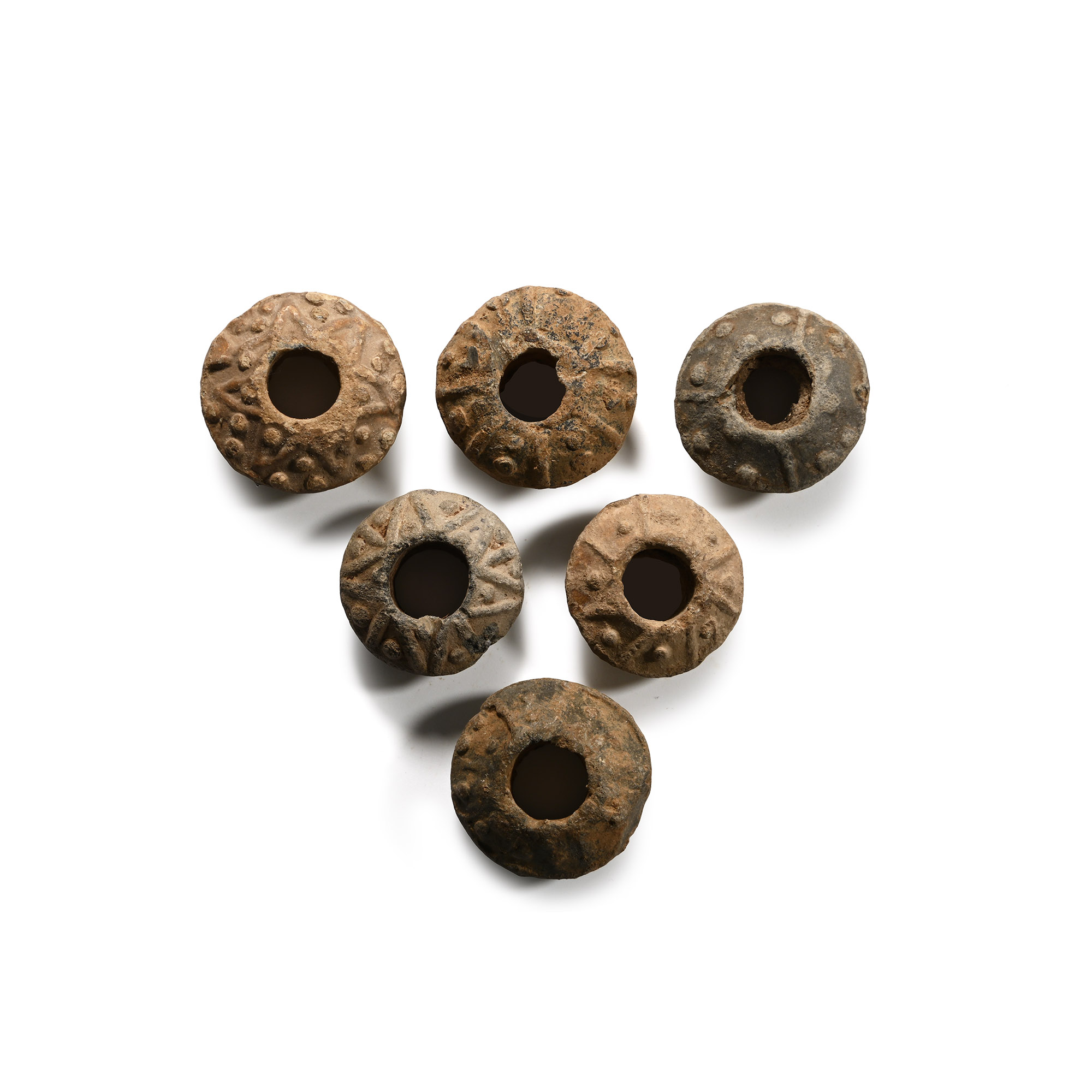
Medieval Decorated Lead Spindle Whorl Group
12TH-15TH CENTURY A.D.
1 - 1 1/8 in. (226 grams total, 26-29 mm).
Each biconvex in section with raised pellets or vandykes to the shoulders. [6, No Reserve]
ProvenanceFound near York, Yorkshire, UK, in 2007.
From an old Yorkshire, UK, collection.
This lot is accompanied by an illustrated lot declaration signed by the Head of the Antiquities Department, Dr Raffaele D'Amato.
TimeLine Auctions follows a vetting process to ensure the authenticity and legality of all items, reinforcing our commitment to integrity and responsible trading. Each antiquity, antique, and coin lot undergoes thorough examination by a vetting committee of at least ten external specialists, professional trade association members, scientists, and archaeologists: Our Vetting Process
AUCTIONS:
TimeLine is a leading auction house specialising in antiquities, ancient art, collectables, natural history, coins, medals, and books. Our auctions offer museums, collectors, historians, and enthusiasts the opportunity to acquire unique and historically significant pieces.
-
.jpg)
Medieval Silver Mask Appliqué
12th-15th century A.D.Estimate: £100 - 140 (+bp*)
Opening Bid: £50
Discoid with repoussé pellets to the border, nimbate mask with beard; Relskino Culture. 0.2 grams, 20 mm
Ex German art market, 2000s. Acquired from an EU collector living in London. From the collection of a Surrey, UK, gentleman. This lot is accompanied by an illustrated lot declaration signed by the Head of the Antiquities Department, Dr Raffaele D'Amato. -
.jpg)
Large Medieval Bronze Door Key with Lozenge-Shaped Handle
1150-1400 A.D.Sold for (Inc. bp): £104
A substantial London type VI key of the lozenge bow circle type, with lozenge-shaped terminal with four circular drilled holes, one near each corner; small circular, hollow protrusion at its furthest end and a slightly raised collar at the top of the stem; the stem sub-circular and with a large rectangular indented bit with linear depression running along its longest edge, bisected by two smaller depressions; a further depression in its short, upper edge. 65 grams, 10 cm
Found near Hinckley, Leicestershire, UK, circa 2005. This lot is accompanied by an illustrated lot declaration signed by the Head of the Antiquities Department, Dr Raffaele D'Amato. -
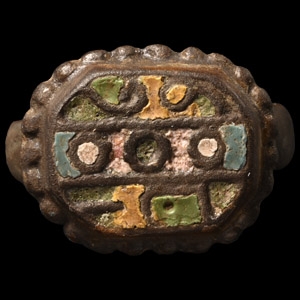
Medieval Bronze Ring with Enamelled Design
15th-16th century A.D.Sold for (Inc. bp): £143
Comprising a D-shaped hoop and raised bezel with piecrust edge, geometric motifs to the bezel with polychrome enamel. 6.26 grams, 25.03 mm overall, 18.21 mm internal diameter (approximate size British P 1/2, USA 7 3/4, Europe 16.86, Japan 16)
Ex German art market, 2000s. Acquired from an EU collector living in London. From the collection of a Surrey, UK, gentleman. This lot is accompanied by an illustrated lot declaration signed by the Head of the Antiquities Department, Dr Raffaele D'Amato.
