
Loading, please wait...
LOT 1148
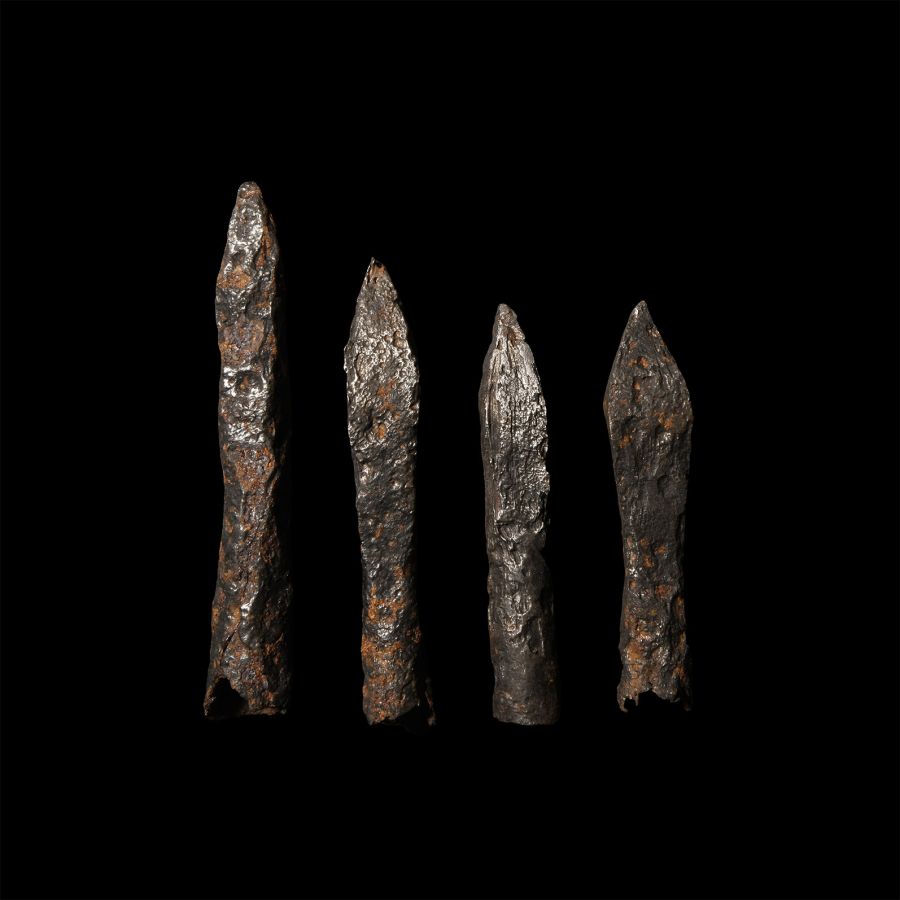
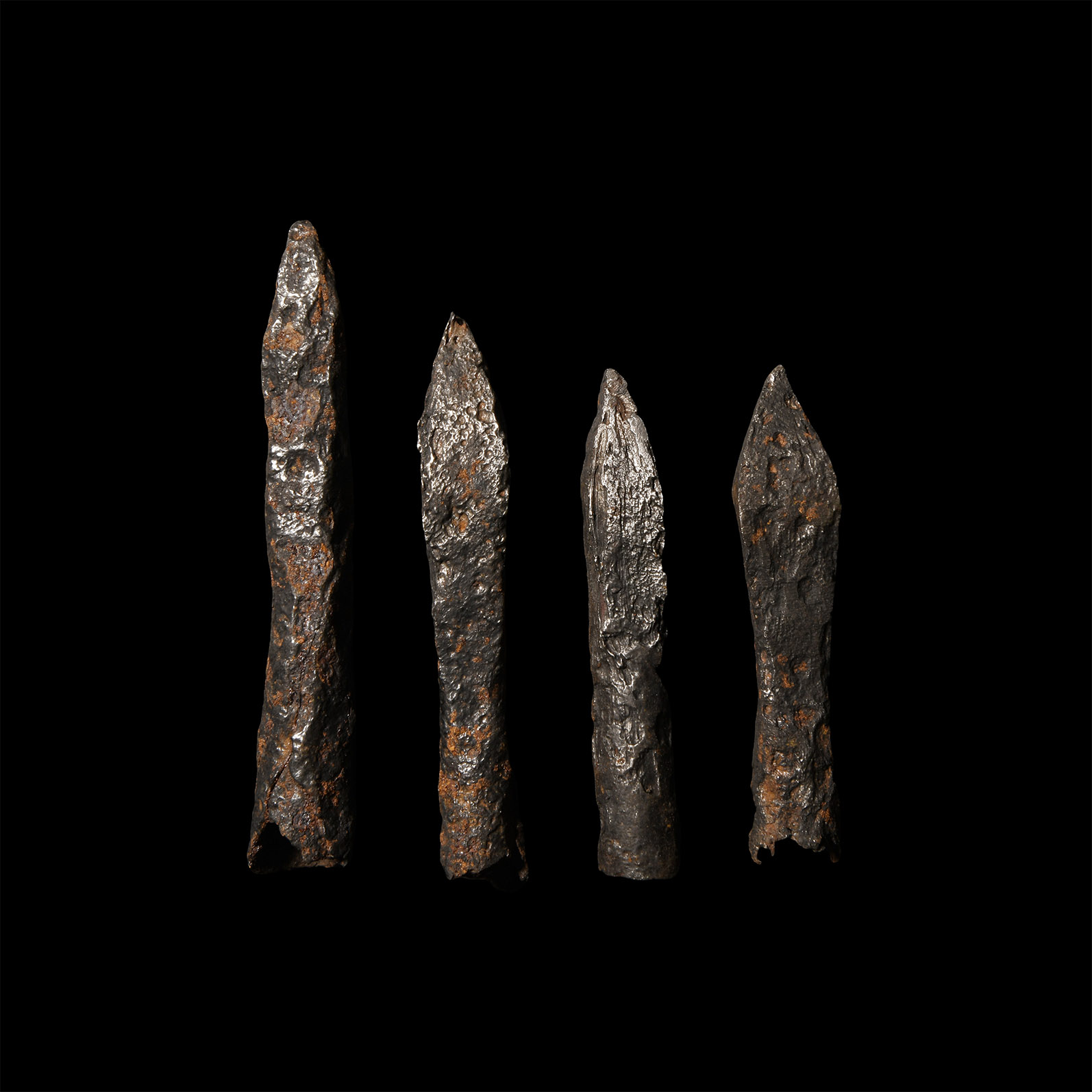
Medieval Crossbow Bolt Group
12TH-15TH CENTURY A.D.
2 5/8 - 3 1/2 in. (166 grams total, 68-88 mm).
Comprising four bolts with lanceolate-pyramidal heads. [4, No Reserve]
ProvenanceFrom a private European collection, formed in the 1980s.
The Kusmirek Collection, UK.
See Vitlianov, S., Старобългарското въоръжение, (Ancient Bulgarian armament), Sofia, 1996, pl.V, no.6, from Madara, for similar.
CONDITIONTimeLine Auctions follows a vetting process to ensure the authenticity and legality of all items, reinforcing our commitment to integrity and responsible trading. Each antiquity, antique, and coin lot undergoes thorough examination by a vetting committee of at least ten external specialists, professional trade association members, scientists, and archaeologists: Our Vetting Process
AUCTIONS:
TimeLine is a leading auction house specialising in antiquities, ancient art, collectables, natural history, coins, medals, and books. Our auctions offer museums, collectors, historians, and enthusiasts the opportunity to acquire unique and historically significant pieces.
-
Iron Age Celtiberian Dagger
Circa 6th-5th century B.C. or laterSold for (Inc. bp): £1,235
Featuring a leaf-shaped double-edged iron blade, shallow fullers tapering to a point, short straight quillons, a soldered two-part grip with ridged middle bulge, the flat pommel surmounted with two spherical finials. 255 grams, 31 cm
Acquired 1990s-early 2000s. East Anglian private collection.
This type of dagger presents a plate handle system, very similar to that of the Fronton sword and bilobular types, but unlike these, it develops to an antenna terminal on the pommel. It is a type of dagger that is documented in peninsular necropoleis of Hispania from the Iron Age II, such as La Mercadera, Requijana de Gormaz or Uxama. It is type V of short antennae daggers according the classification of F. Quesada Sanz, a possible ancestor of the Roman pugio. -
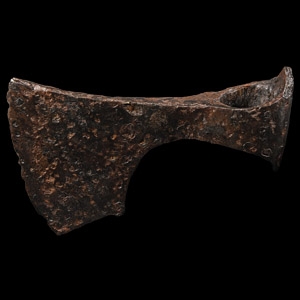
Viking Age Iron Bearded Axehead
9th-13th century A.D.Sold for (Inc. bp): £247
Finno-Ugrian with scooped socket, broad blade with extension to the lower edge, hole to the blade, possibly of Baltic workmanship. 498 grams, 16.2 cm
Acquired 1971-1972. From the collection of the vendor's father. Property of a London, UK, collector.
During their struggles against Germans and Teutonic Knights, deceased pagans were often cremated along with damaged or ceremonially sacrificed weaponry. If swords were generally reserved for the military elite, the side axe was one of the most commonly used weapons. -
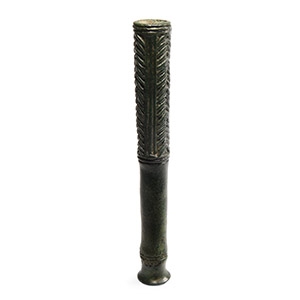
Elamite Bronze Macehead
Early 2nd millennium B.C.Sold for (Inc. bp): £312
Of tapering cylindrical form with flange to socket, the upper body displaying vertical columns of chevrons between plain bands. 449 grams, 23 cm
Acquired 1980-2015. Ex Abelita family collection.
This gorz mace head belongs to the category of truncheon-shaped mace-heads, a type developed on the Iranian plateau during the Bronze Age, used by Elamite and Luristan warriors since the 3rd millennium B.C. This category of objects was also interpreted as a part of a shaft or cudgel, but most scholars agree on the interpretation of use as a mace.
