
Loading, please wait...
LOT 1688
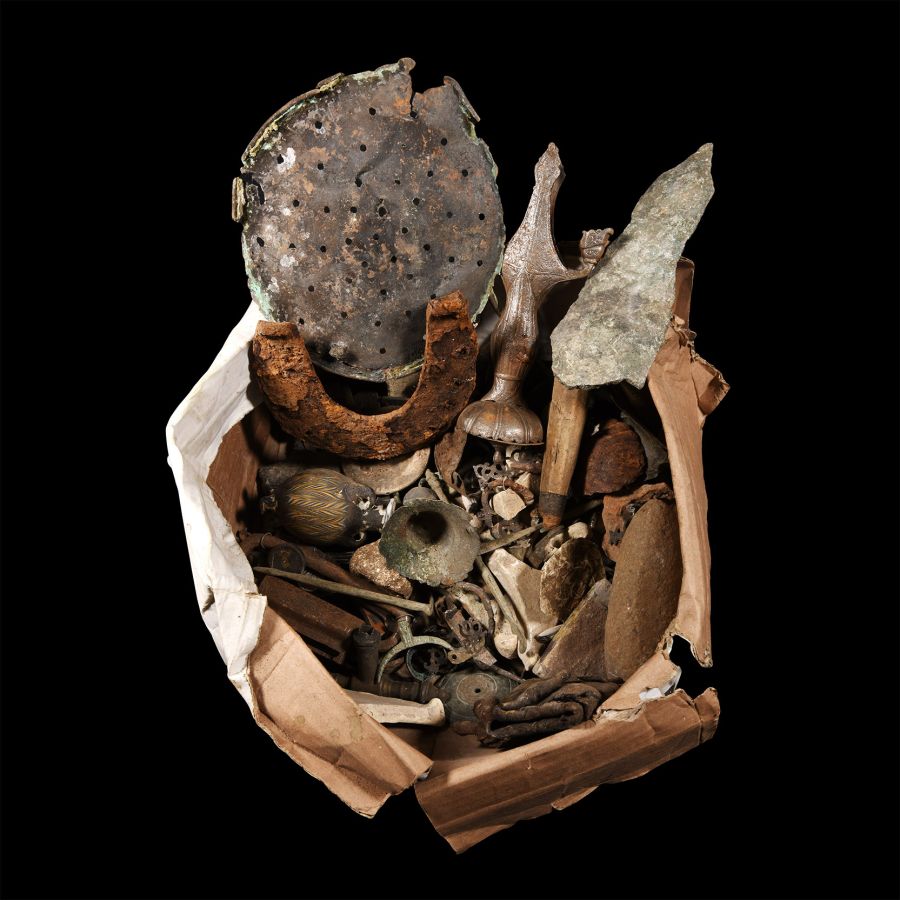
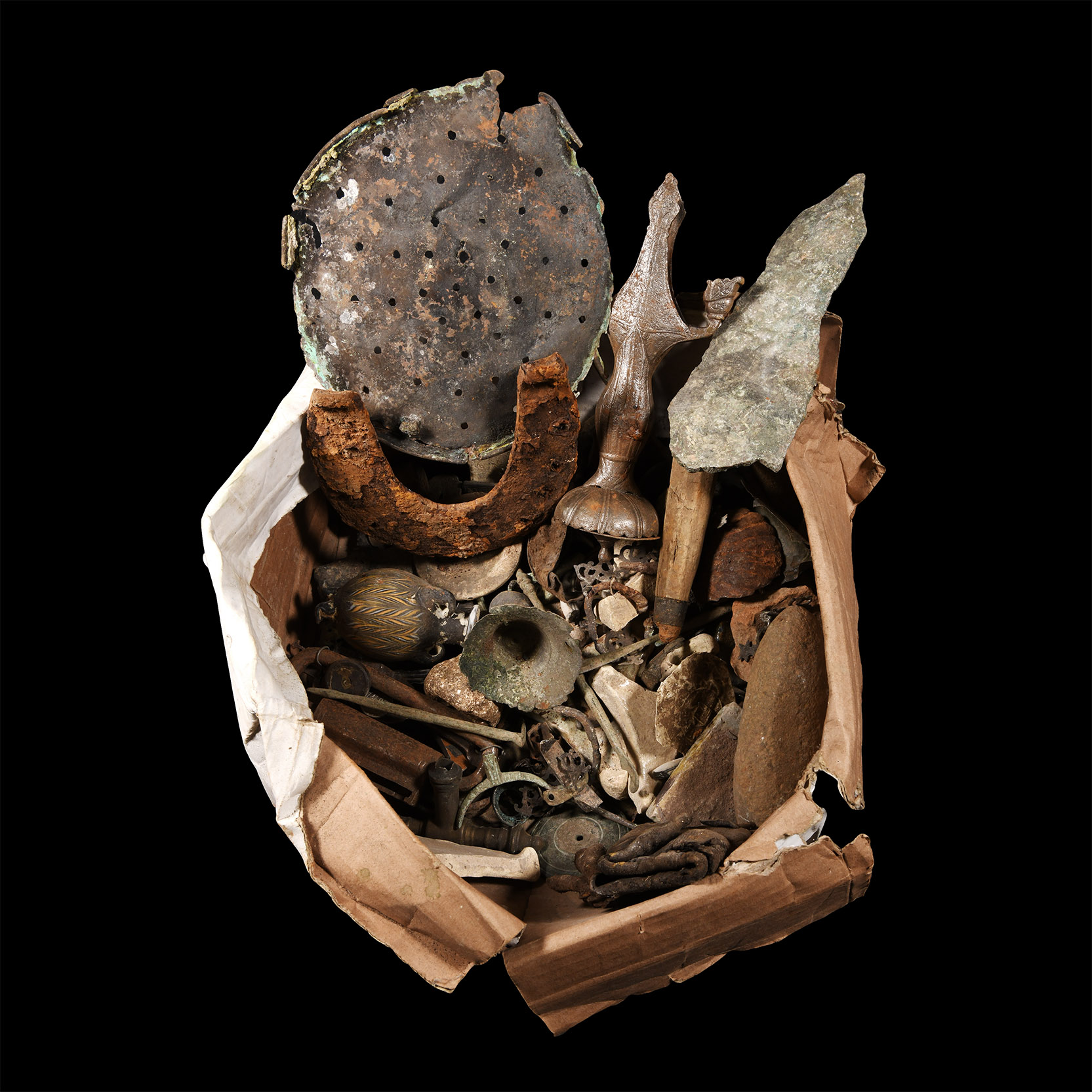
Medieval Copper-Alloy and Other Artefact Group
CIRCA 15TH CENTURY A.D. AND LATER
5/8 - 9 7/8 in. (6.1 kg total, 1.5-25 cm).
Comprising a variety of complete and fragmentary objects including: coins; clothes fittings; strap ends; weights; glass bangle fragments; musket balls; tools; vessels and other miscellaneous items. [183+, No Reserve]
ProvenanceAcquired 1990s-early 2000s.
East Anglian private collection.
TimeLine Auctions follows a vetting process to ensure the authenticity and legality of all items, reinforcing our commitment to integrity and responsible trading. Each antiquity, antique, and coin lot undergoes thorough examination by a vetting committee of at least ten external specialists, professional trade association members, scientists, and archaeologists: Our Vetting Process
AUCTIONS:
TimeLine is a leading auction house specialising in antiquities, ancient art, collectables, natural history, coins, medals, and books. Our auctions offer museums, collectors, historians, and enthusiasts the opportunity to acquire unique and historically significant pieces.
-
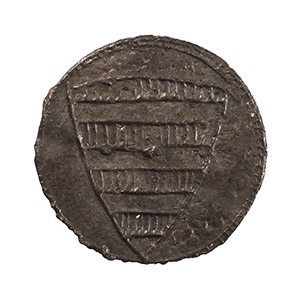
Medieval Thames Pewter Bifacial Wine Tavern Token
Circa 14th-15th century A.D.Sold for (Inc. bp): £46
One face displaying a shield in relief bearing horizontal lines; an antlered deer pursued by an arrow. 715 grams, 1.7 cm
Found Billingsgate spoil from the Thames foreshore, London, UK.
Tokens of this type were used in taverns and similar establishments. -

Medieval And Later Lead Weight and Artefact Collection
Circa 15th century A.D. and laterSold for (Inc. bp): £7
Including seals, loom and other weights, together with other miscellaneous items. 7.2 kg total, 1.5-13.5 cm
Acquired 1990s-early 2000s. East Anglian private collection. -
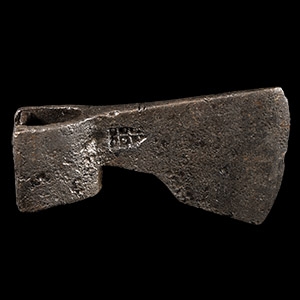
Medieval Iron Axehead
14th-15th century A.D.Sold for (Inc. bp): £111
Stamped to one face with work smith's mark, angled lower cheek edge and a sub-oval socket. 522 grams, 15.5 cm
Acquired 1990s-early 2000s. East Anglian private collection.
The axe seems to be a Xa type in the Glosek classification. The earliest dated examples in Eastern Europe of this kind of axehead come from 14th century, but it is likely that this sub-type also goes back to the 13th century A.D.
