
Loading, please wait...
LOT 1587
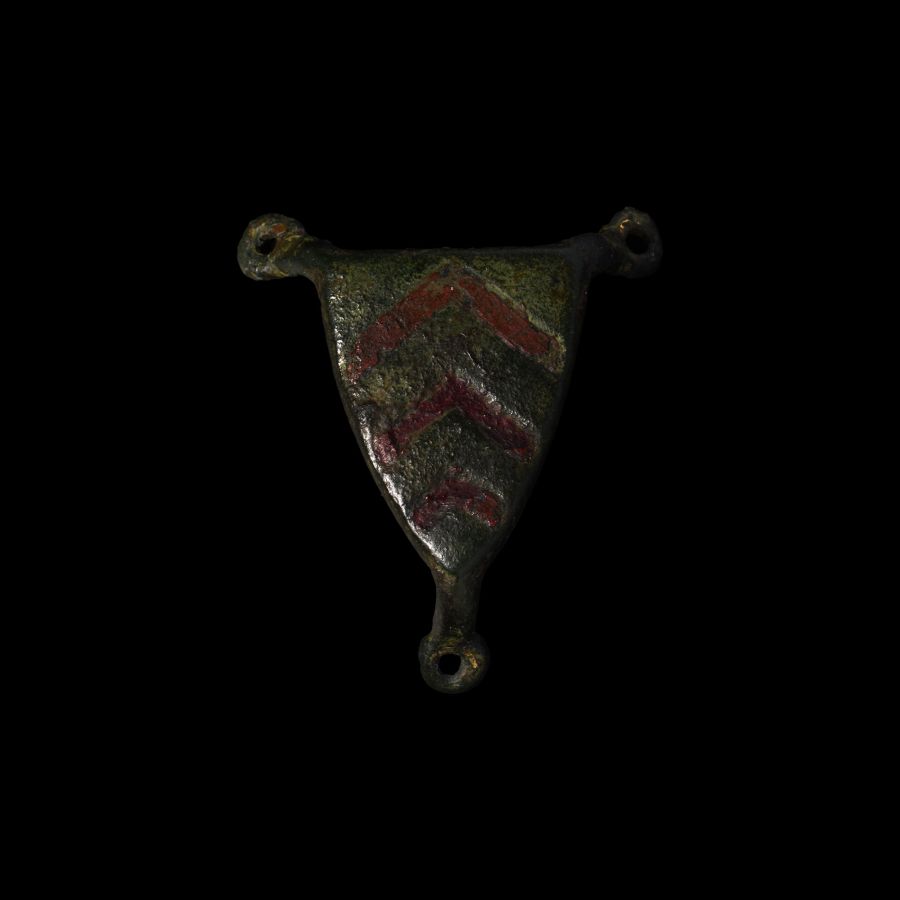
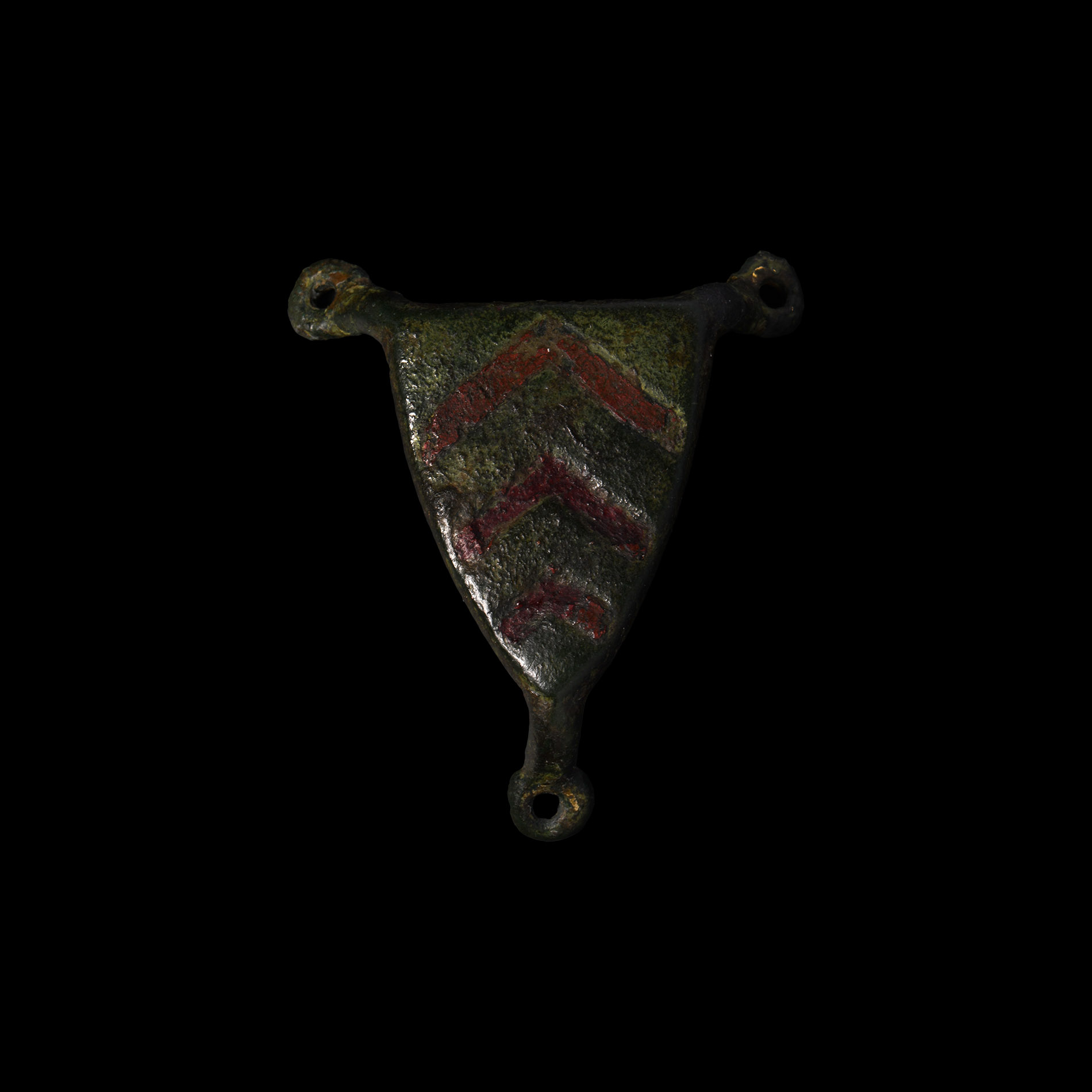
Medieval 'Clare Family' Bronze Heraldic Horse Saddle Mount
13TH-14TH CENTURY A.D.
2 in. (23.3 grams, 51 mm).
Comprising a heater shield with three enamelled chevrons, three brackets each with a pierced lobe finial; blazoned 'or three chevrons gules', arms of the Clare family. [No Reserve]
ProvenanceFound near Gainsborough, Lincolnshire, UK.
LiteratureSee Ashley, S., Medieval Armorial Horse Furniture in Norfolk, East Anglian Archaeology 101, Dereham, 2002, p.42, for discussion.
CONDITIONTimeLine Auctions follows a vetting process to ensure the authenticity and legality of all items, reinforcing our commitment to integrity and responsible trading. Each antiquity, antique, and coin lot undergoes thorough examination by a vetting committee of at least ten external specialists, professional trade association members, scientists, and archaeologists: Our Vetting Process
AUCTIONS:
TimeLine is a leading auction house specialising in antiquities, ancient art, collectables, natural history, coins, medals, and books. Our auctions offer museums, collectors, historians, and enthusiasts the opportunity to acquire unique and historically significant pieces.
LOT 1587
Medieval 'Clare Family' Bronze Heraldic Horse Saddle Mount
Sold for (Inc. bp): £338
-
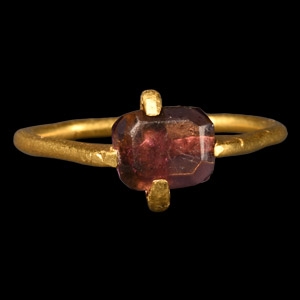
Medieval Gold Ring with Amethyst Gemstone
12th-14th century A.D.Sold for (Inc. bp): £910
Stirrup-shaped hoop with four claws holding a cut and polished amethyst. 2.69 grams, 23.40 mm overall, 17.95 mm internal diameter (approximate size British O, USA 7, Europe 14.98, Japan 14)
Acquired 1990s-early 2000s. East Anglian private collection. -
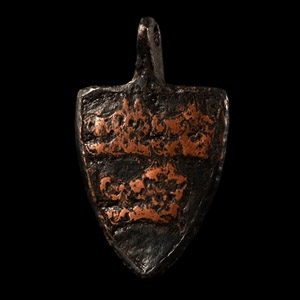
Medieval Bronze Knight's 'Swinburn Family' Heraldic Horse Harness Pendant with Three Boar's Heads
13th-14th century A.D.Sold for (Inc. bp): £208
Heater shield-shaped with integral suspension loop to the upper edge; one face displaying a heraldic device composed of three boars' heads left with remaining traces of red enamel in the field. 16.2 grams, 45 mm
Found near Snargate, Kent, UK. Property of a Kent gentleman. Accompanied by a copy of the British Museum's Portable Antiquities Scheme (PAS) report no.KENT-56AC78, dating it to c.1280-1350 A.D.
The triple boar's head arms is associated with several members of the Swinburne (sometimes Swynbourne) family in the late 13th to early 14th century period. -
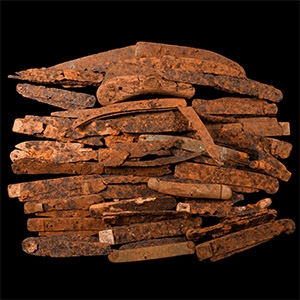
Medieval Iron Folding Knife Group
Circa 15th century A.D.Sold for (Inc. bp): £13
Comprising blades and handles of various styles and dates, including examples with decorative elements. 1.6 kg total, 9-23 cm
Acquired 1990s-early 2000s. East Anglian private collection.
