
Loading, please wait...
LOT 1557
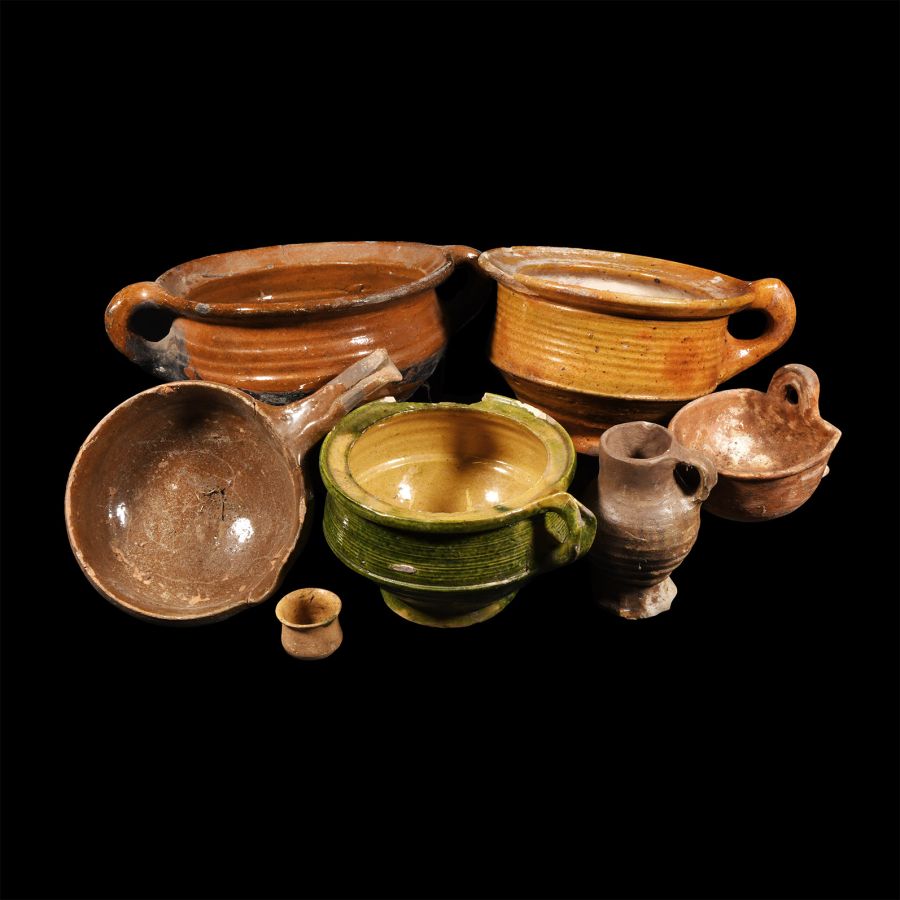
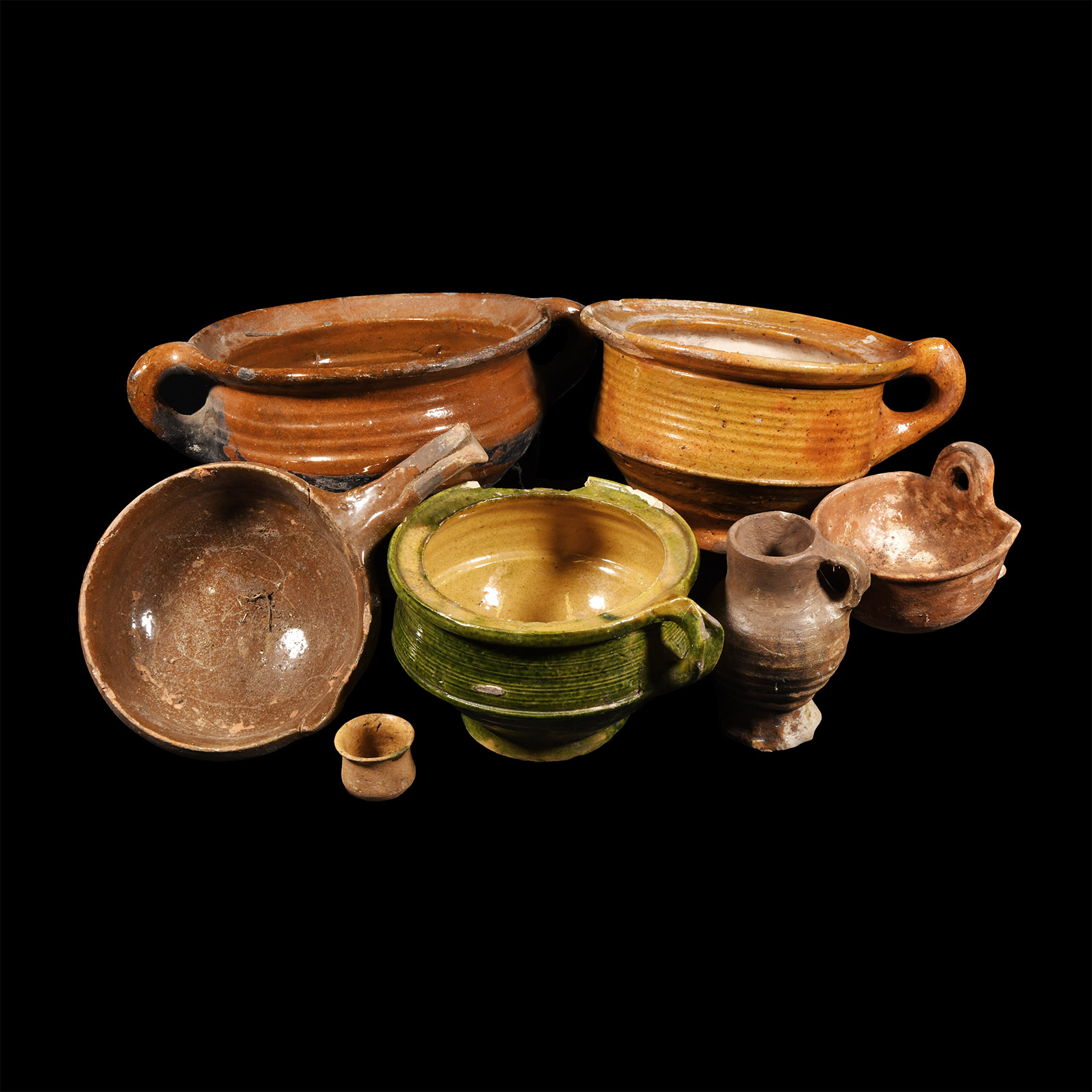
Medieval Ceramic Group
15TH CENTURY A.D. AND LATER
1 3/8 - 11 1/2 in. (3.5 kg total, 4.4-29 cm).
Composed of glazed vessels including pots with tripod feet, a skillet, handled bowls and others; most with chips and cracks. [7]
ProvenanceAcquired 1990s-early 2000s.
East Anglian private collection.
TimeLine Auctions follows a vetting process to ensure the authenticity and legality of all items, reinforcing our commitment to integrity and responsible trading. Each antiquity, antique, and coin lot undergoes thorough examination by a vetting committee of at least ten external specialists, professional trade association members, scientists, and archaeologists: Our Vetting Process
AUCTIONS:
TimeLine is a leading auction house specialising in antiquities, ancient art, collectables, natural history, coins, medals, and books. Our auctions offer museums, collectors, historians, and enthusiasts the opportunity to acquire unique and historically significant pieces.
-
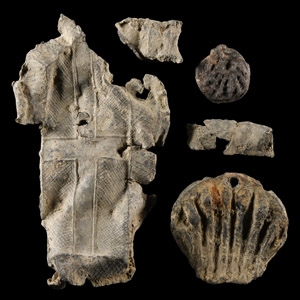
Medieval 'Thames' Pewter Pilgrim's Ampulla and Scallop Shell Badge Collection
15th-16th century A.D.Sold for (Inc. bp): £39
Mainly comprising fragmentary badges, including: an ampulla with reserved cross on a hatched field; larger scallop pierced for attachment; other miscellaneous fragments. 73 grams total, 20-93 mm
Found Thames foreshore spoil, 1980s. Accompanied by a copy of the The British Museum's Portable Antiquities Scheme (PAS) report no.LON-BACC15 for the ampulla. -
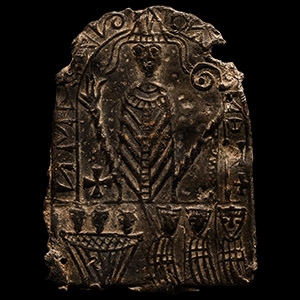
Medieval Pewter Pilgrim Badge of Saint Nicholas
Circa 1300 A.D.Sold for (Inc. bp): £234
With facing image of St. Nicholas of Myra in orans pose with spiral-headed crook, Maltese cross motif, frieze of devotees below and arch canopy with enigmatic legend 'NMM[.] AVG[.] OK [..]MEA +'. 7.46 grams, 42 mm
From the Forgeais (1822-1878) collection, France, thence by family descent. with Gallery 51, 21 June 2013, lot 72. -
.jpg)
Medieval Gold Ring with Cabochon
12th-14th century A.D.Sold for (Inc. bp): £650
Composed of a slender round-section hoop and oval bezel with green glass cabochon in claw setting. 3.29 grams, 21.64 mm overall, 18.38 mm internal diameter (approximate size British L 1/2, USA 6, Europe 11.87, Japan 11)
Acquired 1990s-early 2000s. East Anglian private collection.
