
Loading, please wait...
LOT 1572
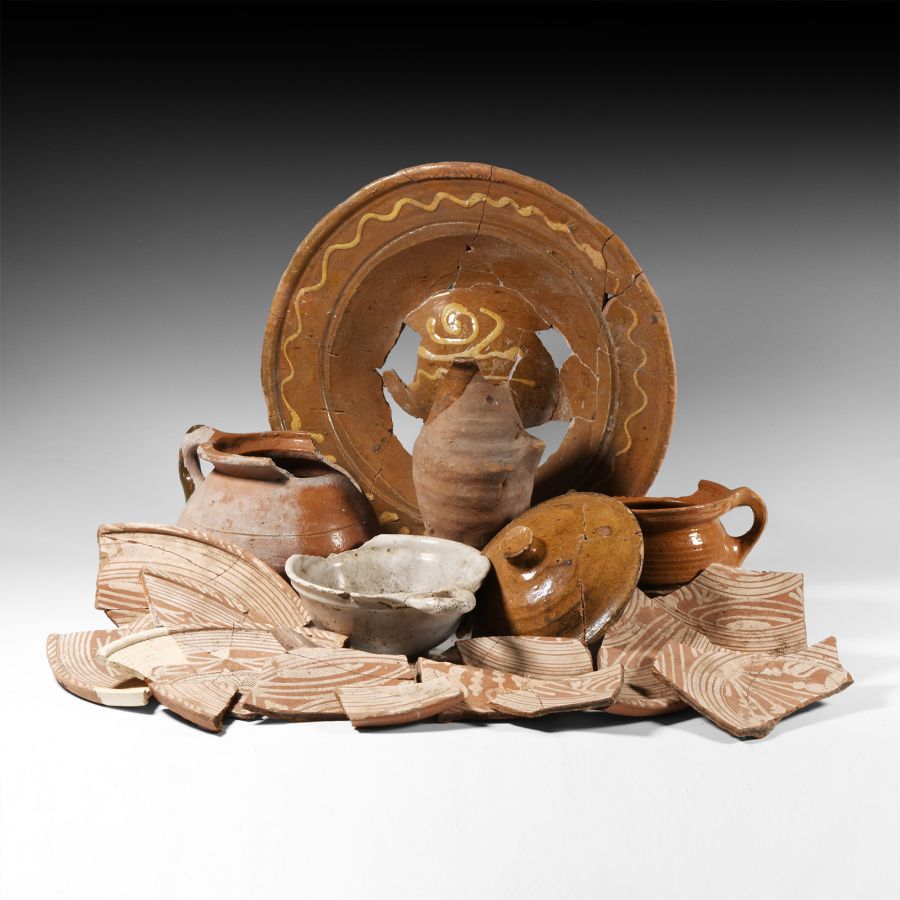
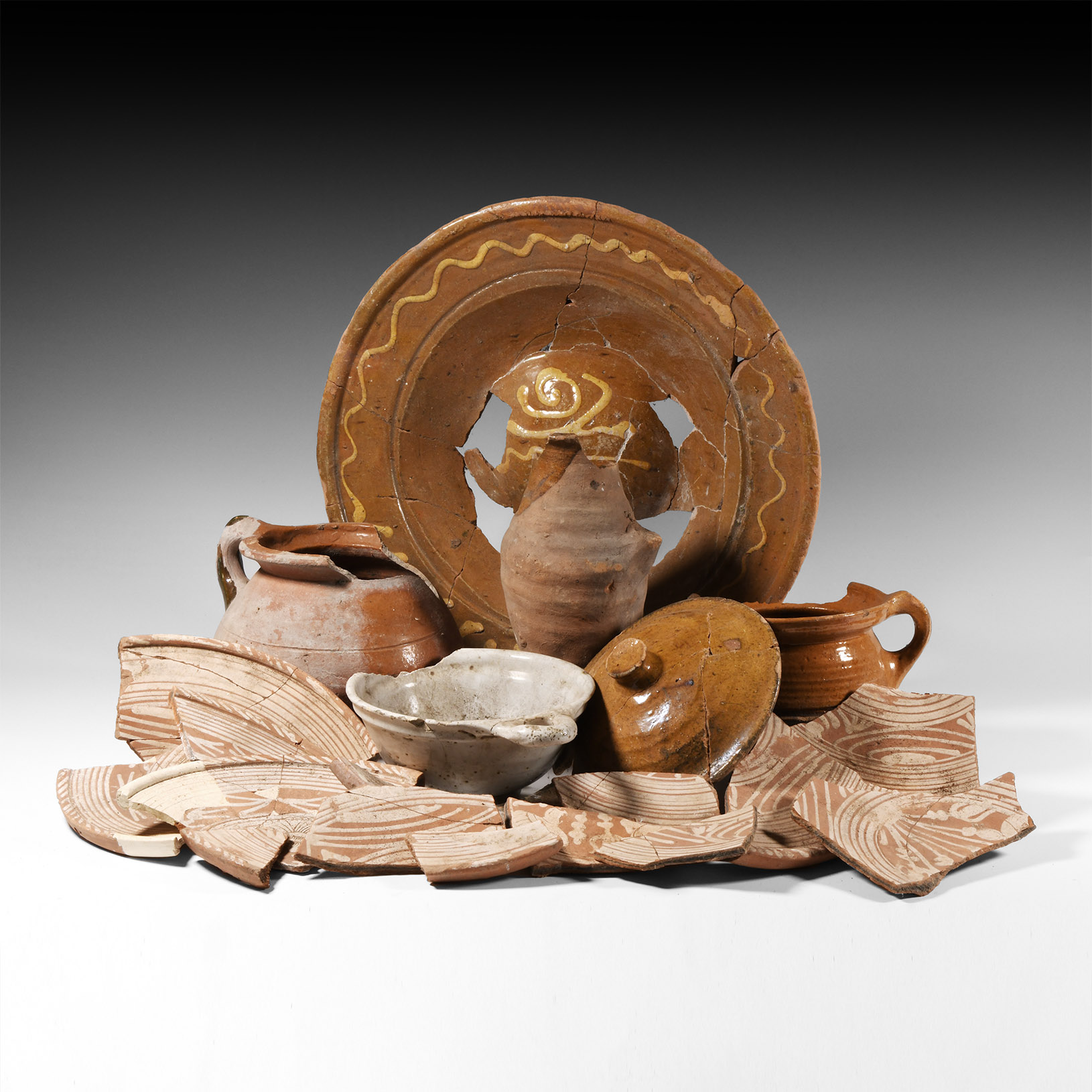
Medieval Ceramic Group
15TH CENTURY A.D. AND LATER
2 1/4 - 14 1/2 in. (6.5 kg total, 6-37 cm).
Composed of fragments of decorated vessels, a glazed lid and chipped pots with remains of glaze and handles. [19, No Reserve]
ProvenanceAcquired 1990s-early 2000s.
East Anglian private collection.
TimeLine Auctions follows a vetting process to ensure the authenticity and legality of all items, reinforcing our commitment to integrity and responsible trading. Each antiquity, antique, and coin lot undergoes thorough examination by a vetting committee of at least ten external specialists, professional trade association members, scientists, and archaeologists: Our Vetting Process
AUCTIONS:
TimeLine is a leading auction house specialising in antiquities, ancient art, collectables, natural history, coins, medals, and books. Our auctions offer museums, collectors, historians, and enthusiasts the opportunity to acquire unique and historically significant pieces.
-
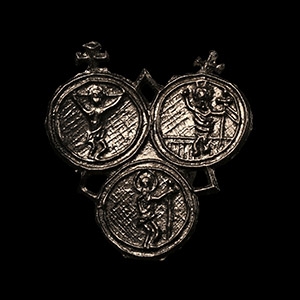
Medieval Dutch Pewter Holy Blood Of Wilsnack Pilgrim's Badge
14th-15th century A.D.Sold for (Inc. bp): £130
Trilobate in plan with openwork triangle between three roundels with hatched fields, the upper two surmounted by crosses, depicting scenes from Christ's life: the crucifixion, resurrection and Christ at the Column in relief. 6.3 grams, 39 mm
Acquired 1990s-early 2000s. East Anglian private collection.
In 1383 AD, after fire in the town of Bad Wilsnack, Germany) three consecrated communion hosts were found undamaged in the ruins of the church. According to the legend, they were sprinkled with the Holy Blood of Christ, which made Bad Wilsnack a famous pilgrimage site. The resultant pilgrim badges were distinctive in shape with three circles arranged in a triangle and painted in red, referring to this miracle. Although the miracle was doubted by Reformation period scholars like John Hus, the final blow came in 1552, when the miraculous communion hosts were publicly burned. -
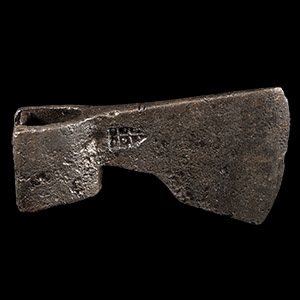
Medieval Iron Axehead
14th-15th century A.D.Sold for (Inc. bp): £111
Stamped to one face with work smith's mark, angled lower cheek edge and a sub-oval socket. 522 grams, 15.5 cm
Acquired 1990s-early 2000s. East Anglian private collection.
The axe seems to be a Xa type in the Glosek classification. The earliest dated examples in Eastern Europe of this kind of axehead come from 14th century, but it is likely that this sub-type also goes back to the 13th century A.D. -
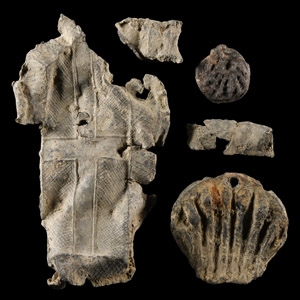
Medieval 'Thames' Pewter Pilgrim's Ampulla and Scallop Shell Badge Collection
15th-16th century A.D.Sold for (Inc. bp): £39
Mainly comprising fragmentary badges, including: an ampulla with reserved cross on a hatched field; larger scallop pierced for attachment; other miscellaneous fragments. 73 grams total, 20-93 mm
Found Thames foreshore spoil, 1980s. Accompanied by a copy of the The British Museum's Portable Antiquities Scheme (PAS) report no.LON-BACC15 for the ampulla.
