
Loading, please wait...
LOT 1686
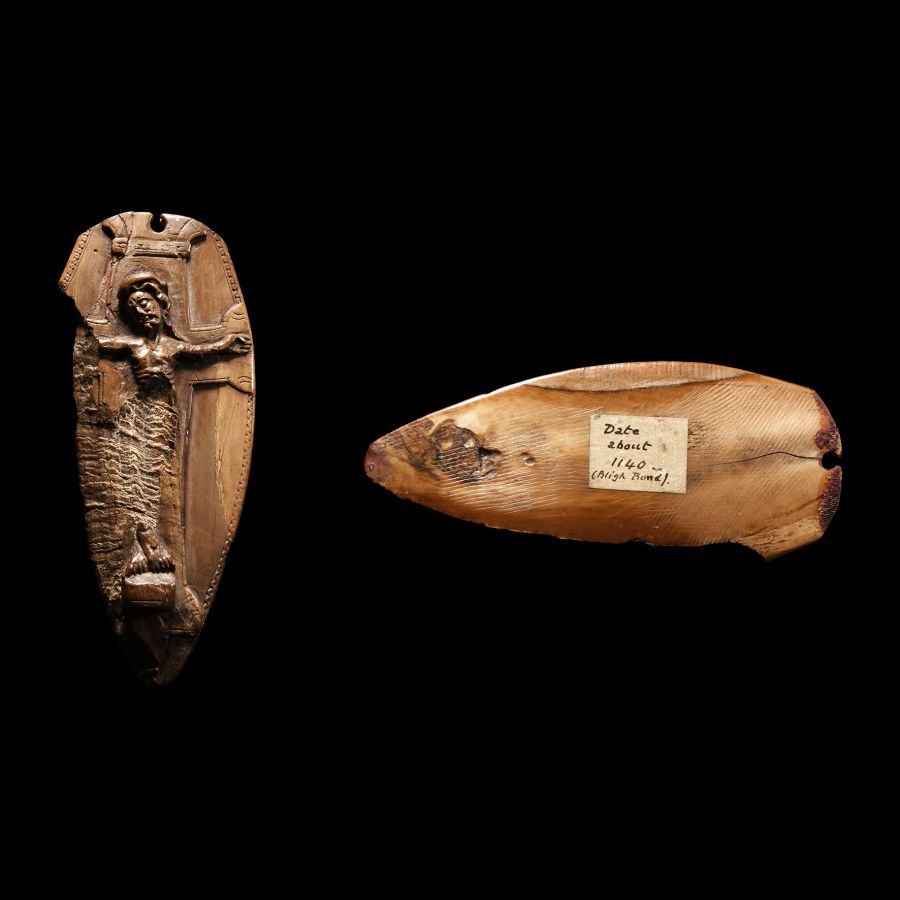
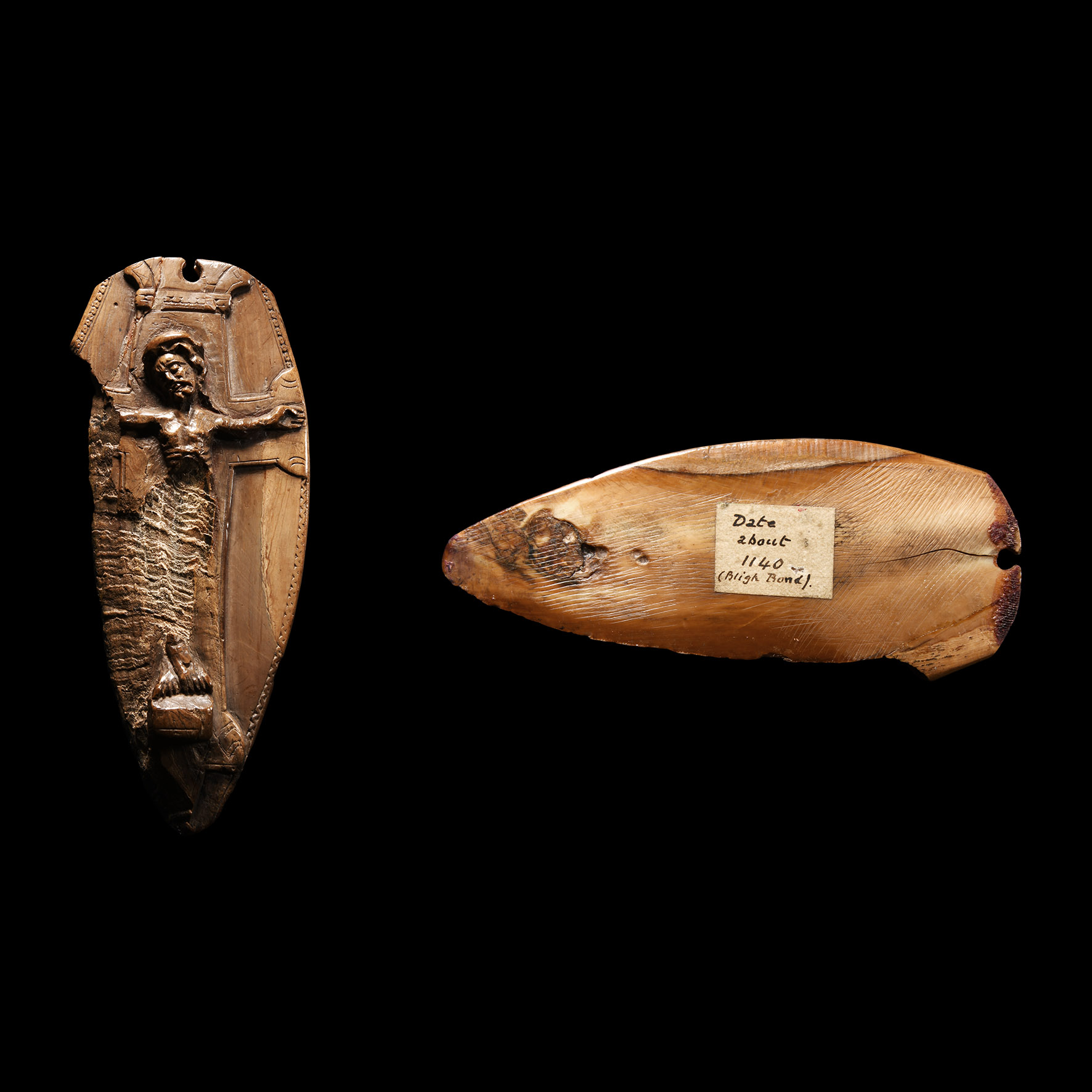
Medieval Carved Bone Plaque Depicting Christ
ENGLAND, LATE 15TH CENTURY A.D. OR LATER
4 1/2 in. (41 grams, 11.3 cm).
Shown crucified on the cross; carved in relief with semi-naturalistic anatomical detailing; remains of suspension loop to top; polished. [No Reserve]
ProvenanceEx Frederick Bligh Bond (1864-1946), the archaeologist of Glastonbury. An erroneous inscription on the reverse 'date about 1140 (Bligh Bond)'.
CONDITIONTimeLine Auctions follows a vetting process to ensure the authenticity and legality of all items, reinforcing our commitment to integrity and responsible trading. Each antiquity, antique, and coin lot undergoes thorough examination by a vetting committee of at least ten external specialists, professional trade association members, scientists, and archaeologists: Our Vetting Process
AUCTIONS:
TimeLine is a leading auction house specialising in antiquities, ancient art, collectables, natural history, coins, medals, and books. Our auctions offer museums, collectors, historians, and enthusiasts the opportunity to acquire unique and historically significant pieces.
-
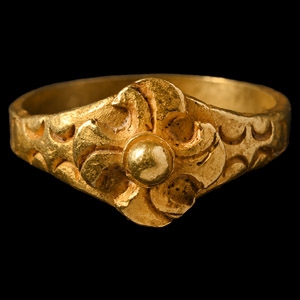
Medieval Gold Quatrefoil Ring
Circa 15th century A.D.Sold for (Inc. bp): £715
Rectangular-section hoop and flared shoulders, punched crescent detailing, raised quatrefoil with central collar and knop. 4.41 grams, 22.92 mm overall, 16.27 mm internal diameter (approximate size British L 1/2, USA 6, Europe 11.87, Japan 11)
Acquired 1970-2010. Collection of a late Japanese gentleman. -
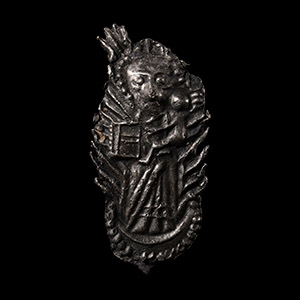
Medieval 'Thames' Pewter Annunciation Pilgrim's Badge
15th century A.D.Sold for (Inc. bp): £98
Image of facing figure with a book and infant standing on a crescent base; rib and pin to the reverse. 2.95 grams, 32 mm
Found Thames foreshore spoil, 1980s. -
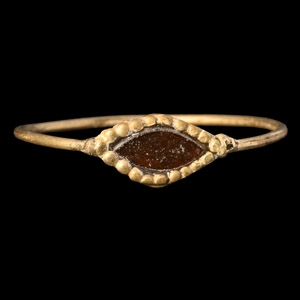
Medieval Gold Ring with Garnet Gemstone
Circa 15th century A.D.Sold for (Inc. bp): £195
Slender hoop with vesica-shaped cell open to both faces, granulated borders and inset garnet cloison. 0.80 grams, 19.37 mm overall, 17.62 mm internal diameter (approximate size British N 1/2, USA 6 3/4, Europe 14.35, Japan 13)
Acquired 1970-2010. Collection of a late Japanese gentleman.
