
Loading, please wait...
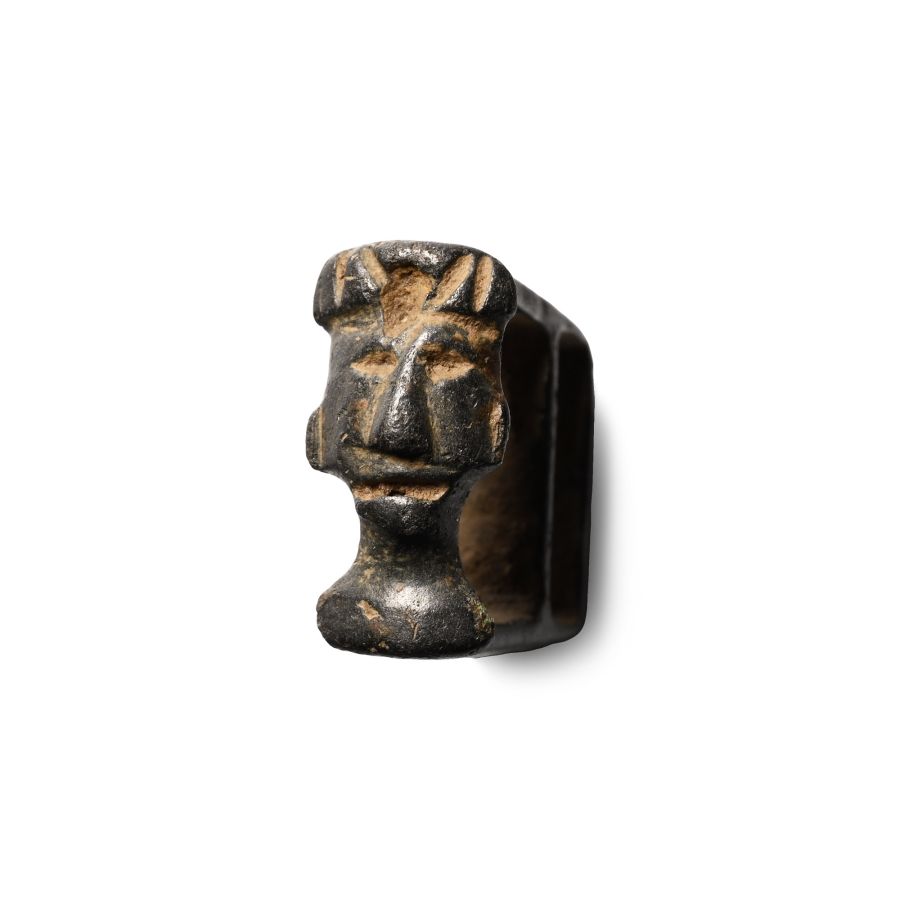
LOT 1796
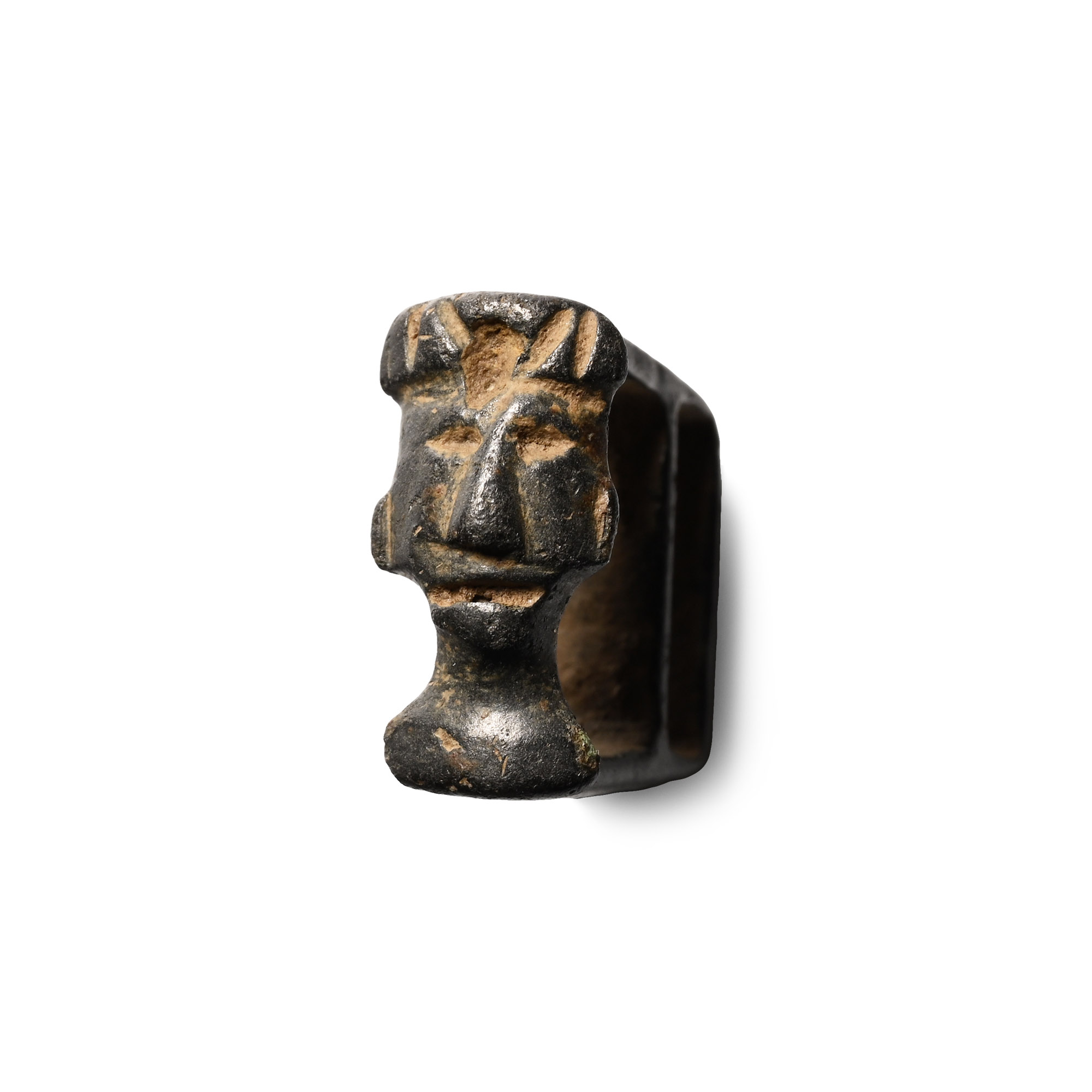
Medieval Bronze Strap Fitting with Bust
1350-1450 A.D.
5/8 in. (3.04 grams, 17 mm).
Trapezoidal in elevation with integral bust to the upper face; a 'keeper' or strap-retainer; [No Reserve]
ProvenanceFound near Skirpenbeck, Yorkshire, UK, in 2019.
From an old Yorkshire, UK, collection.
Accompanied by a copy of the British Museum's Portable Antiquities Scheme (PAS) report no.YORYM-DA24C2.
This lot is accompanied by an illustrated lot declaration signed by the Head of the Antiquities Department, Dr Raffaele D'Amato.
TimeLine Auctions follows a vetting process to ensure the authenticity and legality of all items, reinforcing our commitment to integrity and responsible trading. Each antiquity, antique, and coin lot undergoes thorough examination by a vetting committee of at least ten external specialists, professional trade association members, scientists, and archaeologists: Our Vetting Process
AUCTIONS:
TimeLine is a leading auction house specialising in antiquities, ancient art, collectables, natural history, coins, medals, and books. Our auctions offer museums, collectors, historians, and enthusiasts the opportunity to acquire unique and historically significant pieces.
-
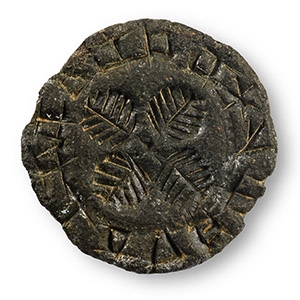
Medieval Bronze 'You Have a Loyal/Faithful Love' Seal Matrix Head
Circa 1300-1400 A.D.Sold for (Inc. bp): £221
Circular die with a central four-leaved plant paris quadrifolia, surrounded by a French inscription reading: '*LEL AMI AVET' for 'you have a loyal (or faithful) love'. 5.28 grams, 17 mm
Found Fairstead, Braintree, Essex, UK. Accompanied by a copy of the British Museum's Portable Antiquities Scheme (PAS) report no.ESS-F0F3AA. This lot is accompanied by an illustrated lot declaration signed by the Head of the Antiquities Department, Dr Raffaele D'Amato.
Dr Malcolm Jones notes: 'This common device and associated inscription need to be understood in the context of the imagery and conventions of amour courtois/Courtly Love. Certainly, ami literally means ‘friend’, but in this context it means ‘love, lover, beloved’ – so the legend means “you have a loyal/faithful love”. Furthermore this quatrefoil is no ordinary stylised flower. In medieval English the four-leaved plant paris quadrifolia was known as the truelove. Two 15th-century English wills include the bequest of rings in the shape of a truelove: an anulum argenti operatum cum uno trewlove (silver ring fashioned with a truelove) in 1407, and unum anulum argenti et deauratum cum uno trew lofe (a silver and silver-gilt ring with a truelove) in 1464. -
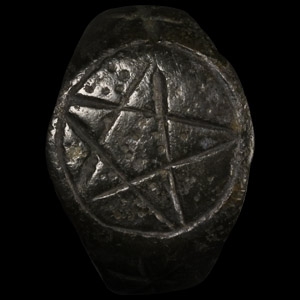
Medieval Bronze Ring with Pentagram
14th-16th century A.D.Sold for (Inc. bp): £182
Wide hoop expanding at the shoulders to a circular bezel with a pentagram on textured field. 4.36 grams, 20.85 mm overall, 18.31mm internal diameter (approximate size British P 1/2, USA 7 3/4, Europe 16.86, Japan 16)
Ex German art market, 2000s. Acquired from an EU collector living in London. From the collection of a Surrey, UK, gentleman. This lot is accompanied by an illustrated lot declaration signed by the Head of the Antiquities Department, Dr Raffaele D'Amato. -
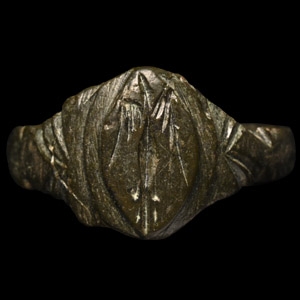
Medieval Bronze Ring with Bird
14th-16th century A.D.Sold for (Inc. bp): £65
D-section hoop supporting a lentoid bezel with an incised motif of a spread eagle. 3.46 grams, 22.70 mm overall, 18.62 mm internal diameter (approximate size British Q, USA 8, Europe 17.49, Japan 16)
Ex German art market, 2000s. Acquired from an EU collector living in London. From the collection of a Surrey, UK, gentleman. This lot is accompanied by an illustrated lot declaration signed by the Head of the Antiquities Department, Dr Raffaele D'Amato.
