
Loading, please wait...
LOT 1028
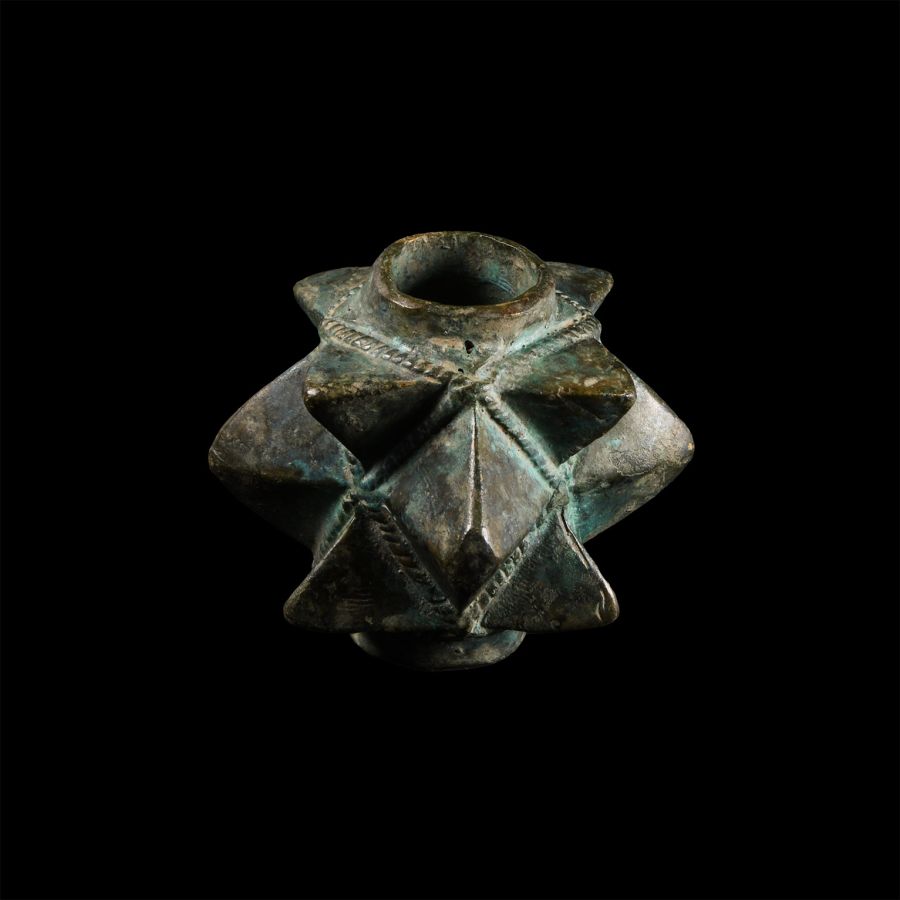
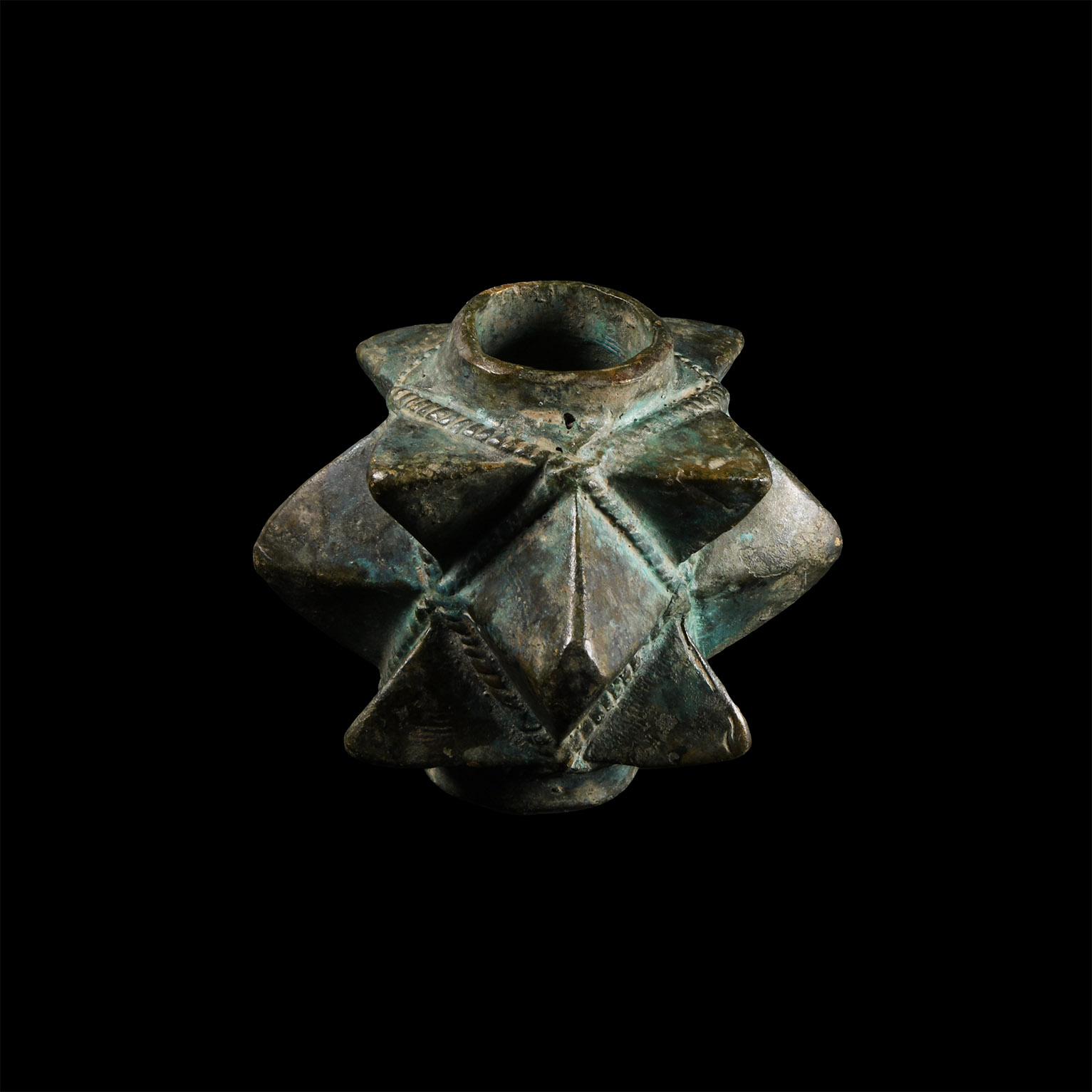
Medieval Bronze Socketted Macehead
14TH-15TH CENTURY A.D.
2 5/8 in. (286 grams, 67 mm).
Comprising four large pyramidal projections, four smaller above and below, ropework detailing; circular shaft hole. [No Reserve]
ProvenanceAcquired in Munich in the 1970s.
From an old German collection.
TimeLine Auctions follows a vetting process to ensure the authenticity and legality of all items, reinforcing our commitment to integrity and responsible trading. Each antiquity, antique, and coin lot undergoes thorough examination by a vetting committee of at least ten external specialists, professional trade association members, scientists, and archaeologists: Our Vetting Process
AUCTIONS:
TimeLine is a leading auction house specialising in antiquities, ancient art, collectables, natural history, coins, medals, and books. Our auctions offer museums, collectors, historians, and enthusiasts the opportunity to acquire unique and historically significant pieces.
-
Luristan Bronze Sword with Hilt
13th-6th century B.C.Sold for (Inc. bp): £1,235
Composed of a double-edged triangular blade with lentoid cross-section, long lower guard with strip extensions to both faces and edges, iron grip, bronze cotton-reel pommel. 635 grams, 35.5 cm
Ex West German collection, Cologne. The Kusmirek Collection, UK. -
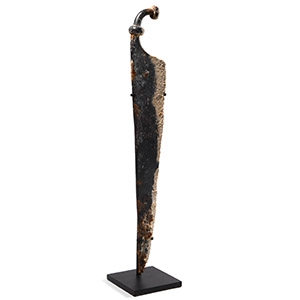
Iron Age Celtic La Tene Dagger
1st century B.C.-1st century A.D.Estimate: £1,200 - 1,700 (+bp*)
Opening Bid: £500
Featuring a gently curved single-edged iron blade and one-sided fuller, curved handle with knot pommel; mounted on a custom-made display stand. 525 grams total, 35 cm high including stand
Dutch art market. Private collection of K.S., Cologne, Germany, acquired 1996.
One of the military insignia of a Celtic warrior was the war-knife, usually between 33 and 35 cm long. For example, in the collection of Celtic military equipment from Galish-Lovachka, the archaeologists have found a short sword with an X-shaped handle (l = 41 cm), two middle La Tène swords (72.5 and 75 cm long), 12 large curved knives, 27 spearheads, two javelin heads, 14 arrowheads, and nine iron chain belts for hanging a sword. The war-knife was also used for hunting, as a spare weapon, or to cut the throat of an enemy in a surprise attack. -
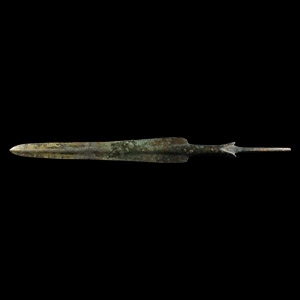
Amlash Type Spearhead
12th-11th century B.C.Sold for (Inc. bp): £182
Long, parallel-sided with deep midrib, broad tip, round-section neck with V-shaped recess to each face and thick square-section tang. 468 grams, 47 cm
Ex German collection, Cologne, 1980-1990s.
This weapon belongs to the type 1 of the spear-head classification of Khorasani, mainly from Marlik or Amlash areas. Similar pieces have been dated by Stutzinger to 1200-1100 BC.
