
Loading, please wait...
LOT 1735
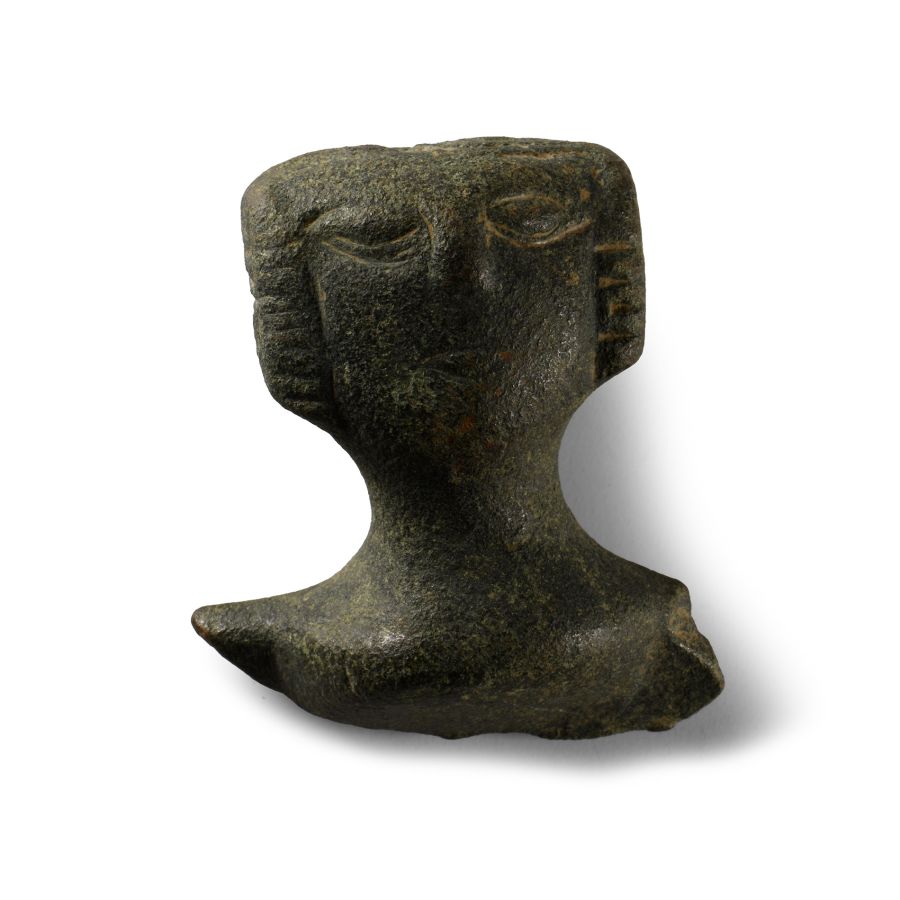
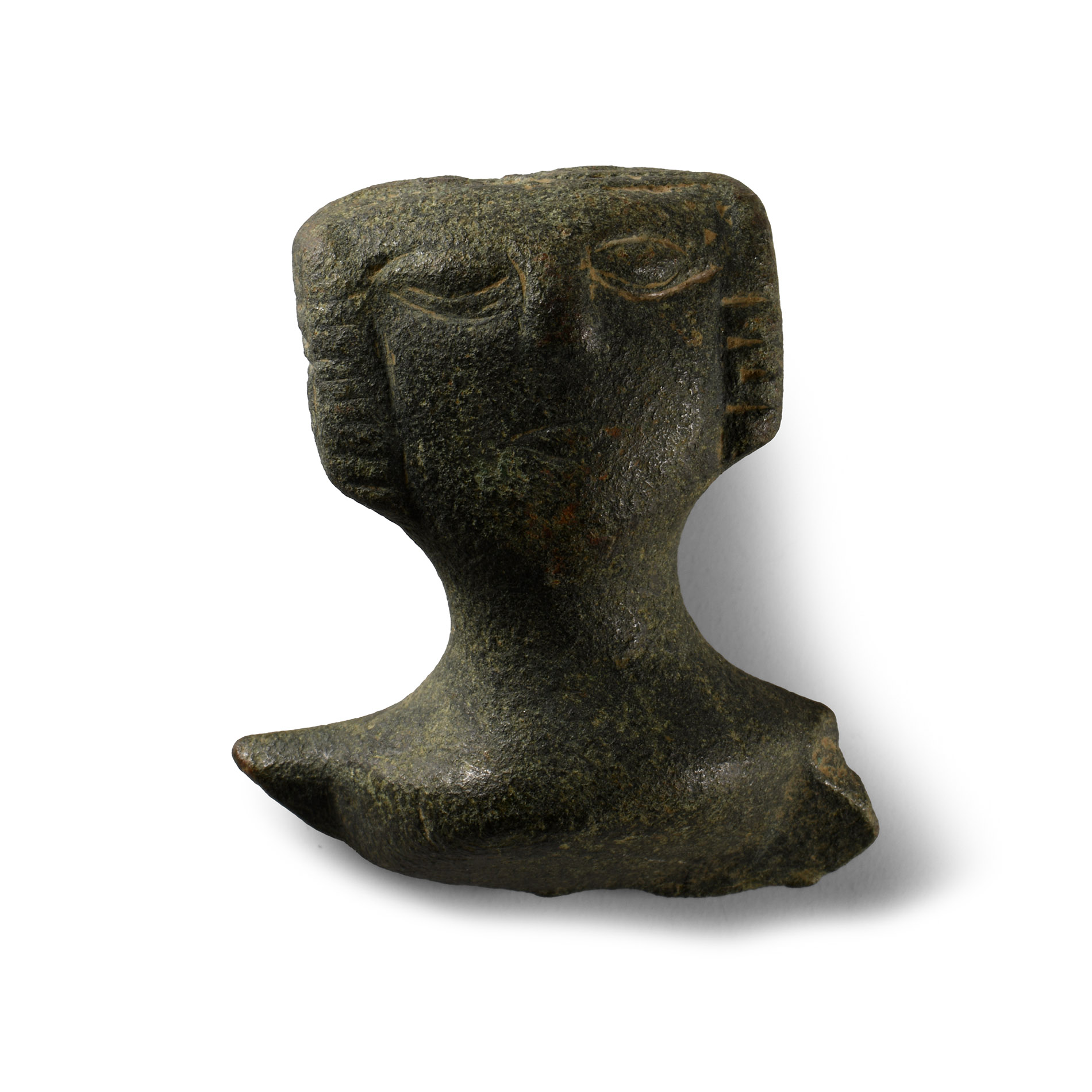
Medieval Bronze Shrine Head
CIRCA 14TH-15TH CENTURY A.D.
1 3/4 in. (115 grams, 43 mm).
A shrine or bowl mount formed as a female head with crespines flanking the face; circular recess for fixing to the reverse. [No Reserve]
ProvenanceFound Norfolk, UK.
CONDITIONTimeLine Auctions follows a vetting process to ensure the authenticity and legality of all items, reinforcing our commitment to integrity and responsible trading. Each antiquity, antique, and coin lot undergoes thorough examination by a vetting committee of at least ten external specialists, professional trade association members, scientists, and archaeologists: Our Vetting Process
AUCTIONS:
TimeLine is a leading auction house specialising in antiquities, ancient art, collectables, natural history, coins, medals, and books. Our auctions offer museums, collectors, historians, and enthusiasts the opportunity to acquire unique and historically significant pieces.
-
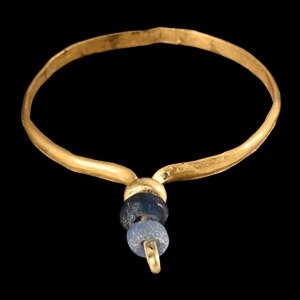
Medieval Gold Beaded Ring
14th-16th century A.D.Estimate: £150 - 200 (+bp*)
Opening Bid: £75
Slender hoop with two small annular glass beads for the bezel. 1.04 grams, 28.17 mm overall, 18.82 mm internal diameter (approximate size British O 1/2, USA 7 1/4, Europe 15.61, Japan 15)
From a late Japanese specialist collector, 1970-2000s. -
.jpg)
Medieval Gold Heraldic Signet Ring with Goat
15th century A.D. or laterSold for (Inc. bp): £28,600
Substantial D-section hoop, expanding shoulders with reserved flowers and foliage, discoid bezel with intaglio regardant leaping goat in a pelletted ring, fronds and stars in the field, enigmatic inscription 'd[..] / de.to'. 23.95 grams, 27.22 mm overall, 21.97 mm internal diameter (approximate size British Z, USA 12 1/2, Europe 28.77, Japan 27)
Ex Notaras Coins & Antiquities, 2014. European private collection. This lot has been checked against the Interpol Database of stolen works of art and is accompanied by search certificate no.12120-211871. -
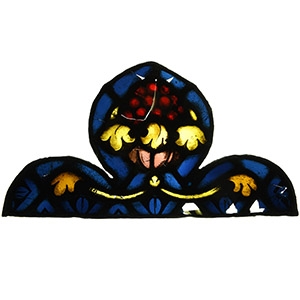
Medieval Stained Glass Trefoil
Rhineland, circa 1500 A.D.Sold for (Inc. bp): £195
Irregular glass panels in original lead cames forming a trefoil outline; painted foliage detailing to the pale yellow segments; some cracked and portions absent. 1.2 kg, 52 cm
German private collection, until 2013. Ex central London gallery.
