
Loading, please wait...
LOT 1724
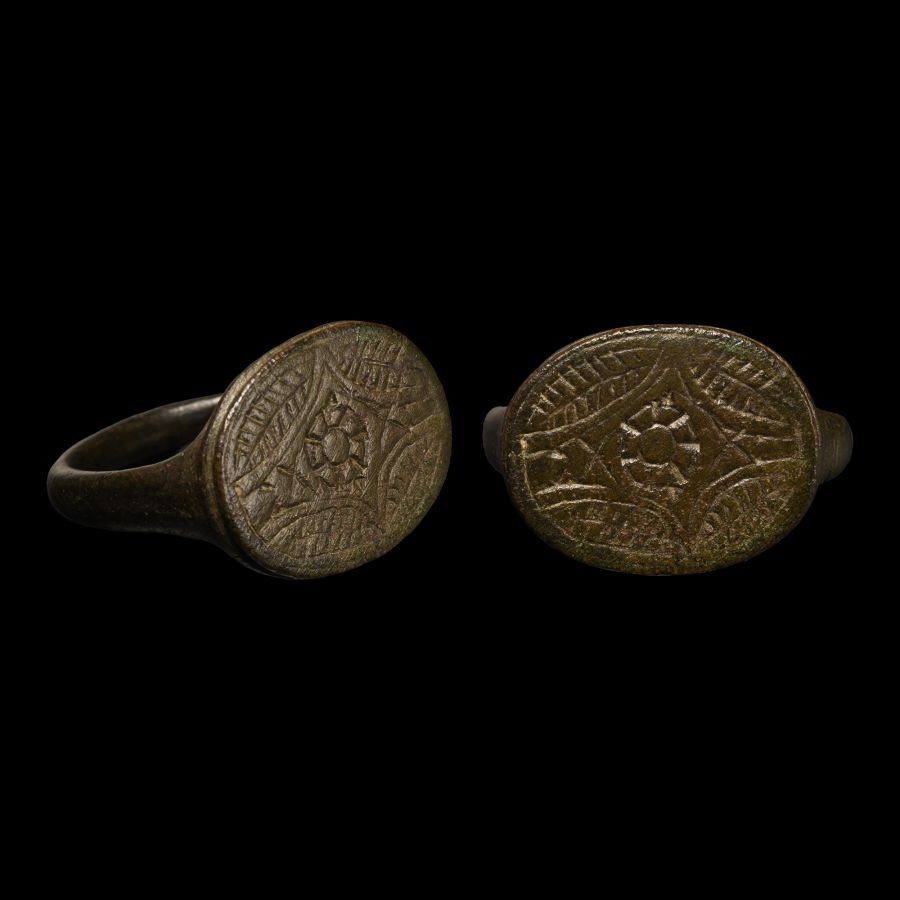
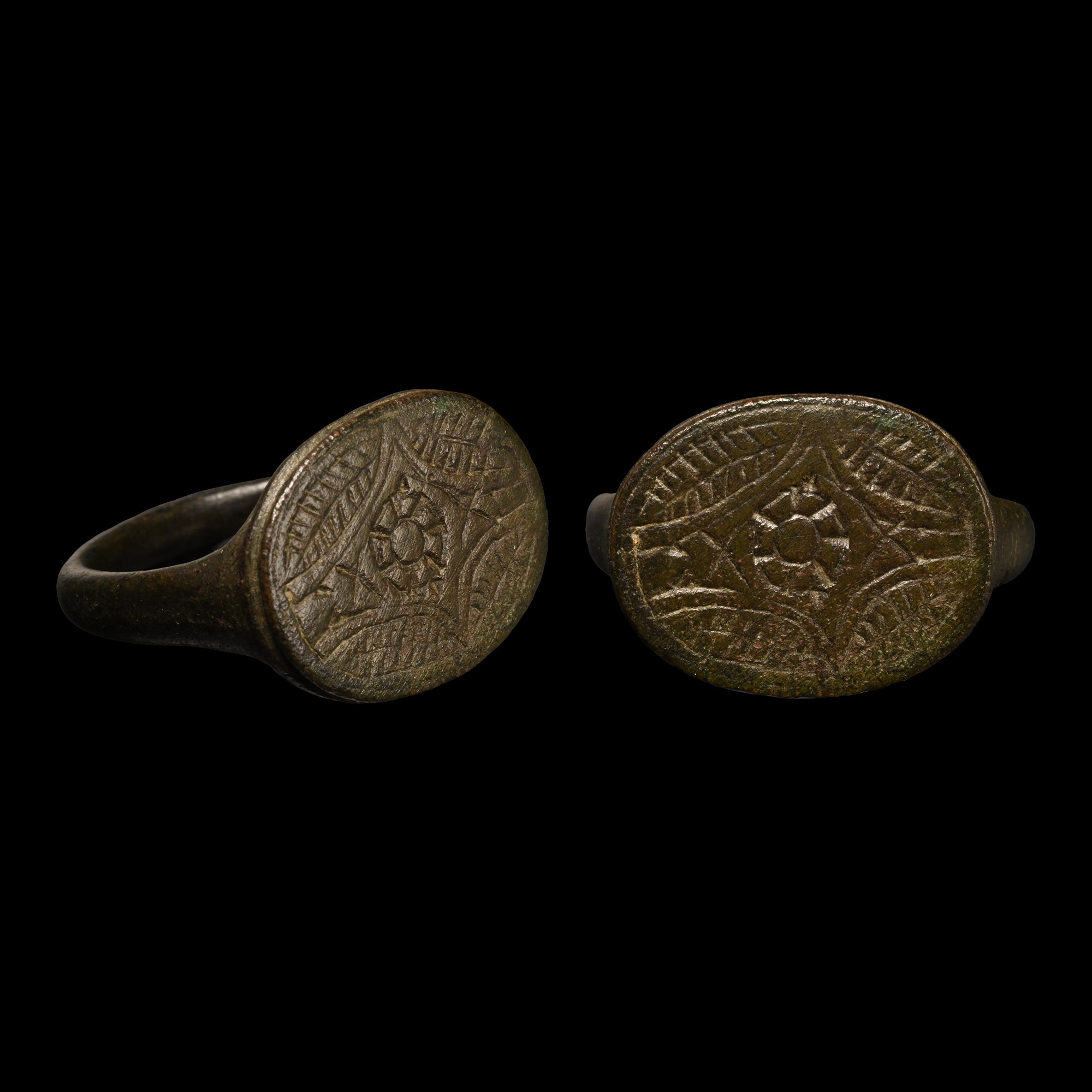
Medieval Bronze Ring with Rose in Lozenge
14TH-16TH CENTURY A.D.
1 in. (10.04 grams, 24.92 mm overall, 19.13 mm internal diameter (approximate size British S, USA 9, Europe 20, Japan 19)).
Comprising a D-section hoop with applied boss to the base, large oval bezel with a central rose within a lozenge on a hatched field. [No Reserve]
ProvenanceEx German art market, 2000s.
Acquired from an EU collector living in London.
From the collection of a Surrey, UK, gentleman.
This lot is accompanied by an illustrated lot declaration signed by the Head of the Antiquities Department, Dr Raffaele D'Amato.
TimeLine Auctions follows a vetting process to ensure the authenticity and legality of all items, reinforcing our commitment to integrity and responsible trading. Each antiquity, antique, and coin lot undergoes thorough examination by a vetting committee of at least ten external specialists, professional trade association members, scientists, and archaeologists: Our Vetting Process
AUCTIONS:
TimeLine is a leading auction house specialising in antiquities, ancient art, collectables, natural history, coins, medals, and books. Our auctions offer museums, collectors, historians, and enthusiasts the opportunity to acquire unique and historically significant pieces.
-

Medieval Silvered Bronze Knight's Horse Harness Pendant with Lamb of God
13th-15th century A.D.Sold for (Inc. bp): £33
Quatrefoil type with reserved agnus dei silvered on an enamelled field; loop absent. 10 grams, 28 mm
Acquired on the UK art market before 2000. Property of an Essex, UK, gentleman. This lot is accompanied by an illustrated lot declaration signed by the Head of the Antiquities Department, Dr Raffaele D'Amato. -

Medieval Limestone 'Pictish Type' Fish Carving
Circa 15th-16th century A.D. or earlierSold for (Inc. bp): £312
Rectangular block with high-relief carving to the upper face, comprising two fishes placed side-by-side, one with heavy scale detailing, the other with a bifurcated tail; mounted on a custom-made display stand. 24 kg total, 51 cm wide including stand
Discovered in part of a stone garden wall during demolition. Ex Stamford deceased estate, Lincolnshire, UK. Property of a Cambridgeshire, UK, gentleman. This lot is accompanied by an illustrated lot declaration signed by the Head of the Antiquities Department, Dr Raffaele D'Amato.
The carving style bears similarities to the low-relief carvings on Pictish picture stones, although a close match for the subject matter is absent. A stone recorded at Dunnicaer, Scotland, is carved with a fish symbol but its execution is very sparse and linear in comparison with the heavy detailing of the present piece. See Noble, G., The Problem with the Picts, in Current Archaeology, issue 134, June 2020. -

Medieval Limestone Gargoyle of a Smiling Horned Devil
Circa 15th century A.D.Sold for (Inc. bp): £2,210
Modelled with a threatening expression, his half-open mouth visibly contracted into an evil grin with exposed teeth, short beard to the chin and wavy locks of hair resting on the forehead with two small horns, large goat horns framing the face on both sides; mounted on a custom-made display stand. 8.4 kg total, 30.5 cm high including stand
From a collection acquired on the UK art market. Property of a West Midlands, UK, private collector. This lot is accompanied by an illustrated lot declaration signed by the Head of the Antiquities Department, Dr Raffaele D'Amato.
From the Romanesque era onwards, images of demons, often carved on the external sides of cathedrals and churches, were strongly linked to the fantastical and monstrous creatures of ancient myth and legend. For theologians, supernatural creatures which could not otherwise be explained were not of God and therefore had to be demonic: their incorporation in the ecclesiastic structures showed that their malevolent powers could be kept under control only through the protection of the church. This origin of Christian demons is likely to have influenced the visual representation in medieval culture as hybrid and monstrous, especially given the increased interest in Greek works from the twelfth century onwards in the West.
