
Loading, please wait...


LOT 1890
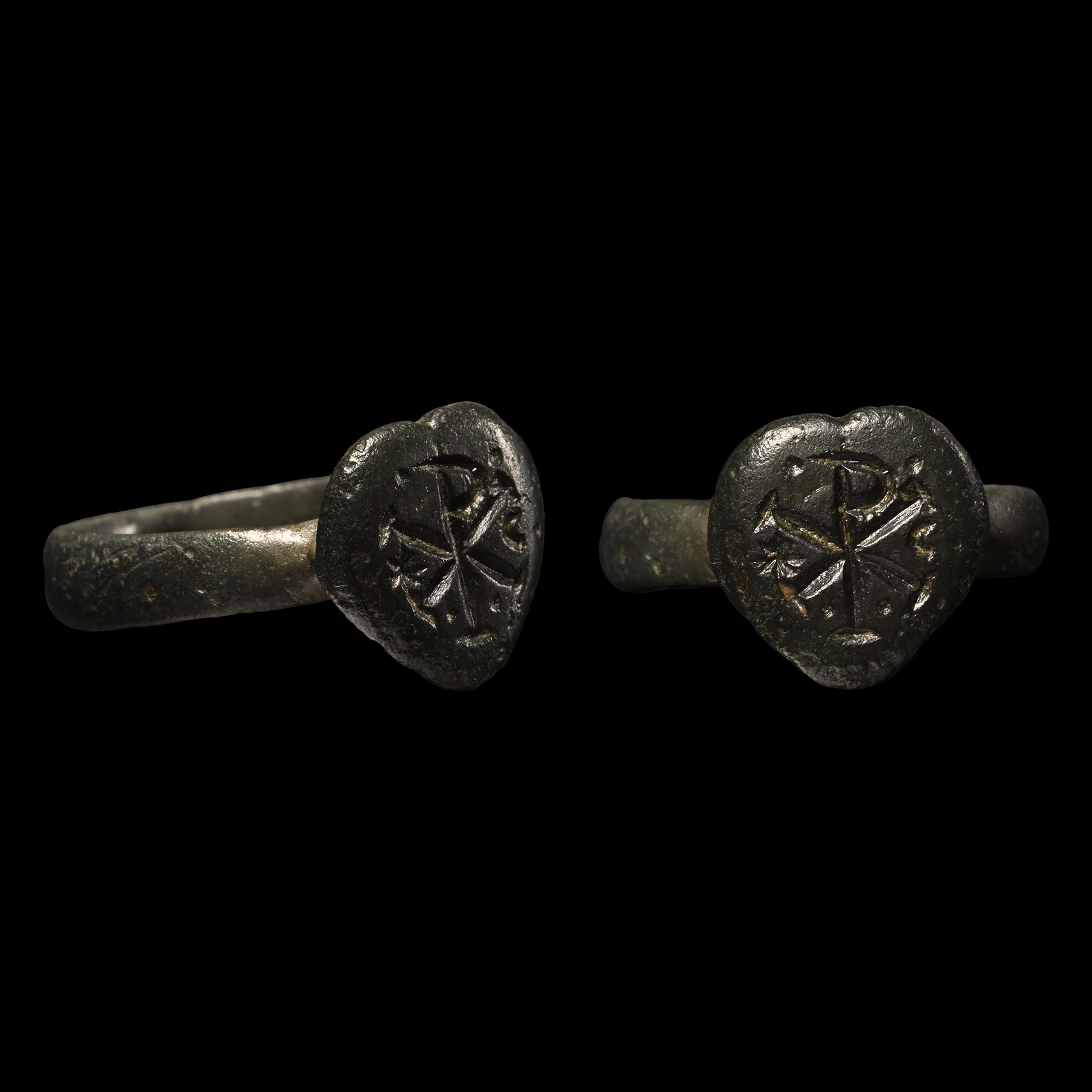
Medieval Bronze Ring with Chi Rho
14TH-15TH CENTURY A.D.
1 in. (5.17 grams, 24.61 mm overall, 17.97 mm internal diameter (approximate size British P, USA 7 1/2, Europe 16.23, Japan 15)).
With a D-section hoop heart-shaped bezel with Chi Rho, flanked by a starburst motif and letter c. [No Reserve]
ProvenanceEx German art market, 2000s.
Acquired from an EU collector living in London.
From the collection of Surrey, UK, gentleman.
TimeLine Auctions follows a vetting process to ensure the authenticity and legality of all items, reinforcing our commitment to integrity and responsible trading. Each antiquity, antique, and coin lot undergoes thorough examination by a vetting committee of at least ten external specialists, professional trade association members, scientists, and archaeologists: Our Vetting Process
AUCTIONS:
TimeLine is a leading auction house specialising in antiquities, ancient art, collectables, natural history, coins, medals, and books. Our auctions offer museums, collectors, historians, and enthusiasts the opportunity to acquire unique and historically significant pieces.
-
.jpg)
Medieval Lead Fishing Weight Group
Circa 14th-16th century A.D.Sold for (Inc. bp): £20
Mixed group of tubular, fusiform, oblate and other types. 2.2 kg total, 16-63 mm
Found Hertfordshire, UK. -
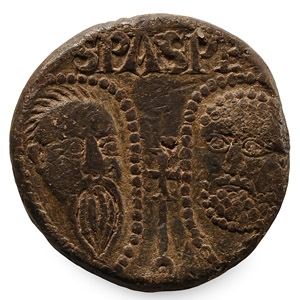
Medieval Lead Papal Bulla Seal of Pope Alexander IV
1254-1261 A.D.Sold for (Inc. bp): £195
The obverse depicting the busts of St Peter and St Paul each within an inverted pear shaped compartment defined by pellets; cross pattee supported on a staff between the busts and at the top of the bulla in the centre the letters 'SPASPE', abbreviations for St Paul and St Peter; reverse inscribed over three lines 'ALE/XANDER/PP.IIII', with an omega above the letters 'PP'; both obverse and reverse faces with a pelleted perimeter. 31.1 grams, 30 mm
Private collection, UK.
The 'PP' abbreviation stands for 'pastor pastorum', translated as 'shepherd of the shepherds'. The bulla was so named because it was attached to Papal documents or 'Bullae'. They were sent from the offices of the Pope in Rome and the seal signified that the document was issued with the Pope's authority. Alexander's pontificate was signalled by efforts to reunite the Eastern Orthodox churches with the Catholic Church, by the establishment of the Inquisition in France, by favours shown to the mendicant orders, and by an attempt to organize a crusade against the Mongols after the second Mongol raid against Poland in 1259. -
.jpg)
Medieval Bronze Buckle Collection
12th-16th century A.D.Sold for (Inc. bp): £26
Mixed group of buckles and buckle loops, some with mounting tags. 129 grams total, 13-44 mm
Found near York, UK.
