
Loading, please wait...
LOT 1835
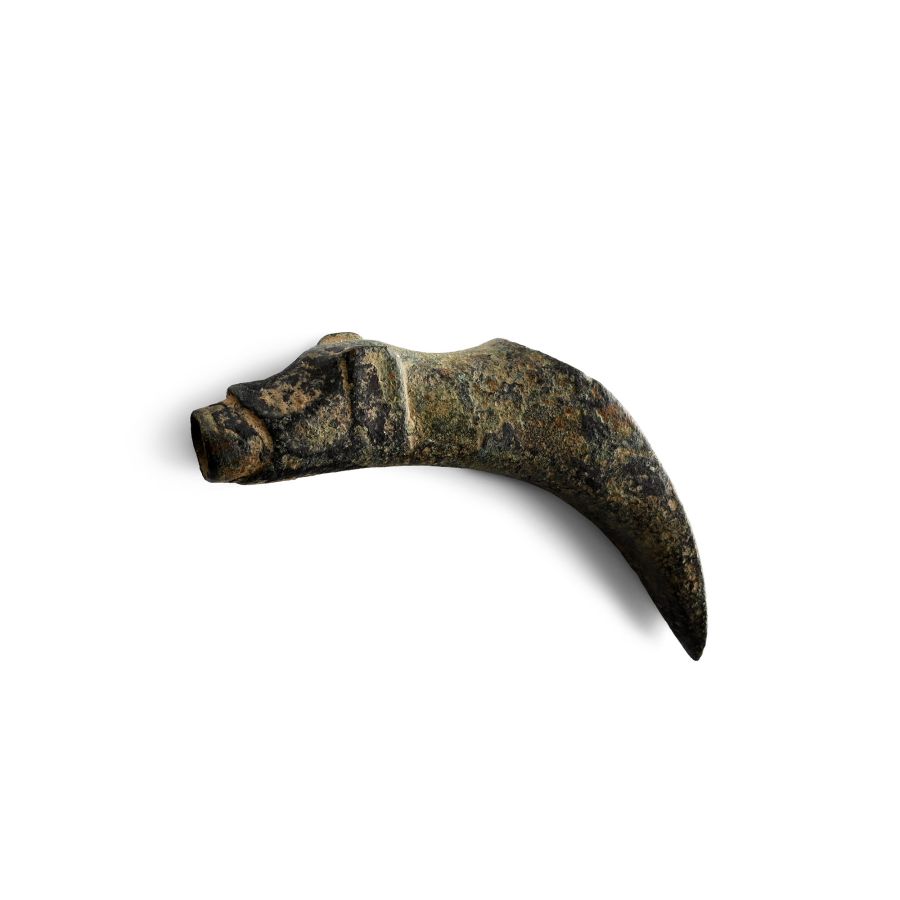
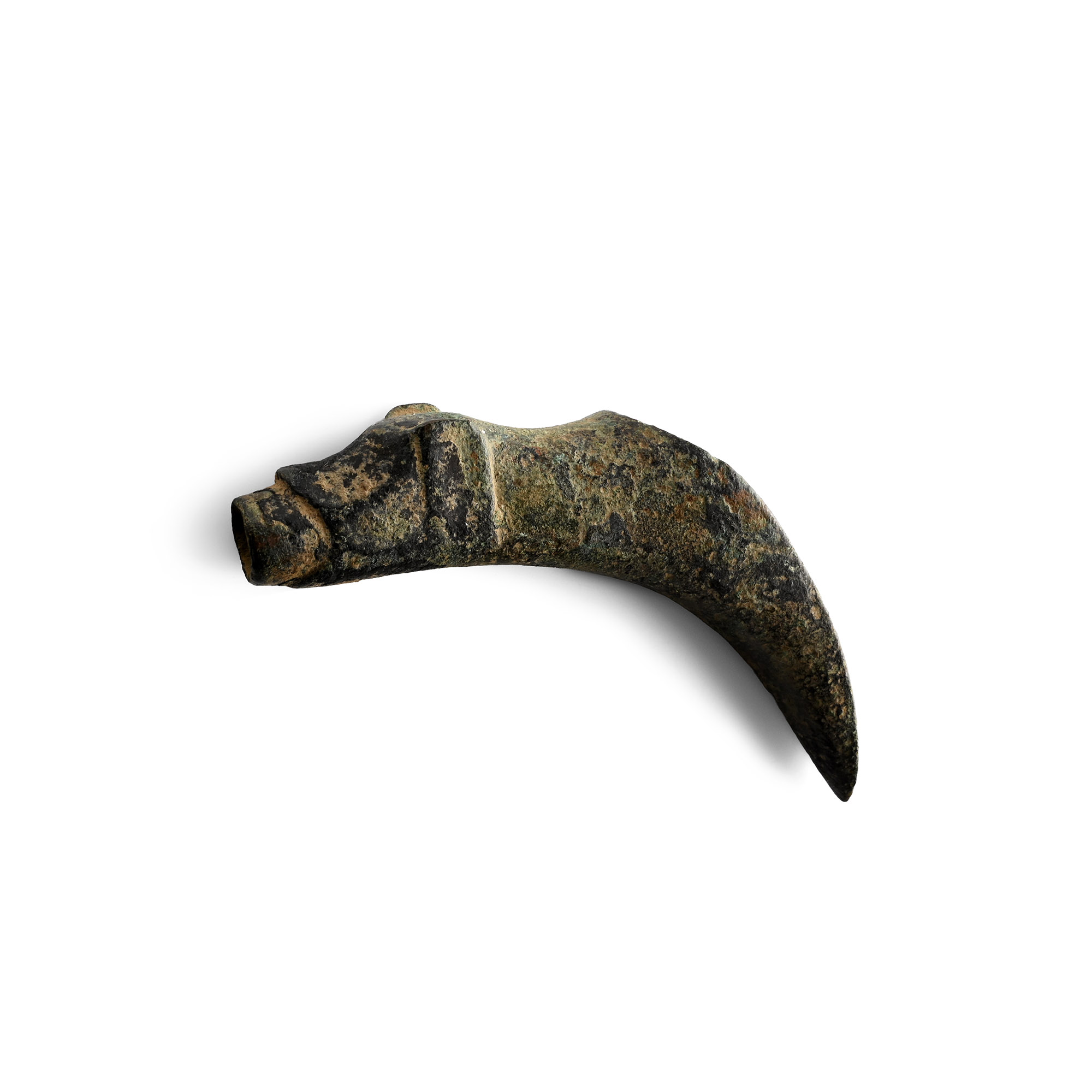
Medieval Bronze Priest's Laver Holy Water Pouring Vessel Spout
14TH-15TH CENTURY A.D.
2 5/8 in. (49 grams, 66 mm).
With stylised zoomorphic detailing to the spout, mouth developing to a round-section spout, arched neck with section cut away for attachment. [No Reserve]
ProvenanceFrom the collection of a Buckinghamshire, UK, collector established from the earlier 1960s.
LiteratureSee Lewis, J.M., Bronze Aquamaniles and Ewers, Finds Research Group 700-1700 Datasheet 7, 1991, for a similar example excavated from Cardiff Castle moats.
FootnotesA priest's laver was a large ceremonial basin used for ritual ablutions.
CONDITIONTimeLine Auctions follows a vetting process to ensure the authenticity and legality of all items, reinforcing our commitment to integrity and responsible trading. Each antiquity, antique, and coin lot undergoes thorough examination by a vetting committee of at least ten external specialists, professional trade association members, scientists, and archaeologists: Our Vetting Process
AUCTIONS:
TimeLine is a leading auction house specialising in antiquities, ancient art, collectables, natural history, coins, medals, and books. Our auctions offer museums, collectors, historians, and enthusiasts the opportunity to acquire unique and historically significant pieces.
LOT 1835
Medieval Bronze Priest's Laver Holy Water Pouring Vessel Spout
Sold for (Inc. bp): £20
-
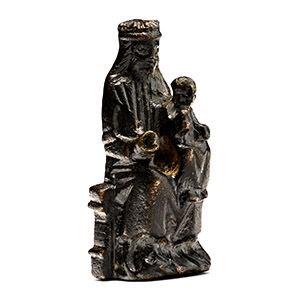
Medieval Bronze Seated Figure of Madonna and Child
England, 14th century A.D.Estimate: £450 - 650 (+bp*)
Opening Bid: £225
Modelled in the half-round, Mary crowned and seated, holding the infant Jesus on her left knee, the infant having his right hand raised in blessing gesture. 24.6 grams, 40 mm
Private collection, UK. -
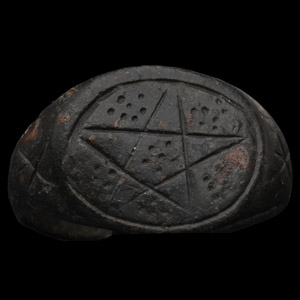
Medieval Bronze Ring with Pentagram
Circa 14th-16th century A.D.Sold for (Inc. bp): £124
The hoop expanding at the shoulders and bearing an X-motif on each side of the bezel with a pentagram. 5.29 grams, 22.41 mm overall, 19.39 mm internal diameter (approximate size British R 1/2, USA 8 3/4, Europe 19.38, Japan 18)
Ex German art market, 2000s. Acquired from an EU collector living in London. From the collection of a Surrey, UK, gentleman. -
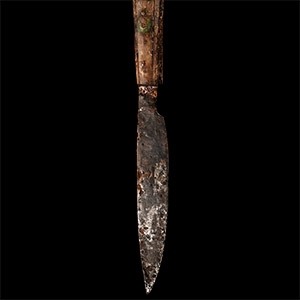
Medieval Bone-Handled Iron Knife with Long Cross in Blade
Circa 1500 A.D.Sold for (Inc. bp): £234
Comprising a single-edged blade with scooped tip, scale-tang grip with brass fixing pins, end-cap; punched maker's mark to blade 'cross with flared foot'. 37 grams, 17.5 cm
Acquired on the UK art market before 2000. Property of an Essex, UK, gentleman.
