
Loading, please wait...
LOT 1665
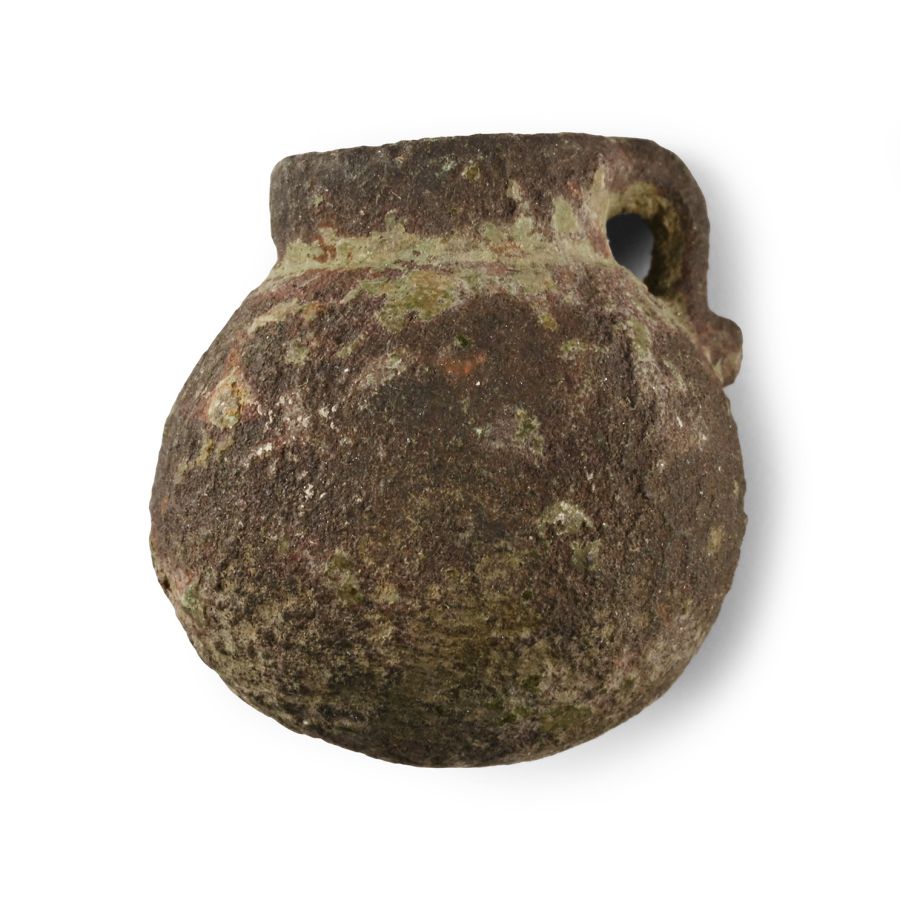
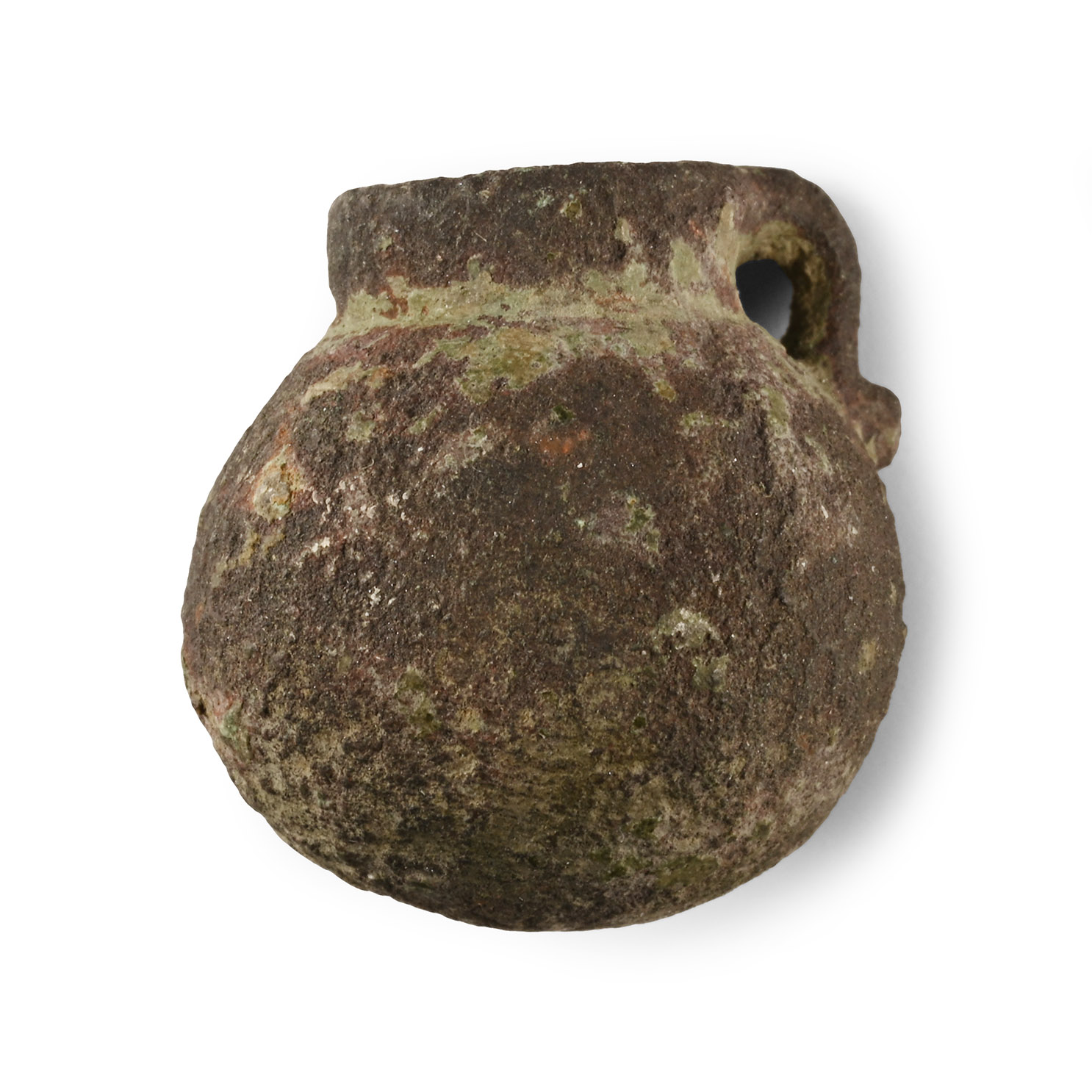
Medieval Bronze Miniature Cauldron
13TH-16TH CENTURY A.D.
3/4 in. (13.8 grams, 21 mm).
Of globular form with low neck, loop handle with spur; textured outer face. [No Reserve]
ProvenanceFound Wiltshire, UK, before 1974.
LiteratureCf. Forsyth, H. & Egan, H., Toys, Trifles & Trinkets. Base-Metal Miniatures from London 1200 to 1800, London, 2005, item 2.8, for type.
CONDITIONTimeLine Auctions follows a vetting process to ensure the authenticity and legality of all items, reinforcing our commitment to integrity and responsible trading. Each antiquity, antique, and coin lot undergoes thorough examination by a vetting committee of at least ten external specialists, professional trade association members, scientists, and archaeologists: Our Vetting Process
AUCTIONS:
TimeLine is a leading auction house specialising in antiquities, ancient art, collectables, natural history, coins, medals, and books. Our auctions offer museums, collectors, historians, and enthusiasts the opportunity to acquire unique and historically significant pieces.
-
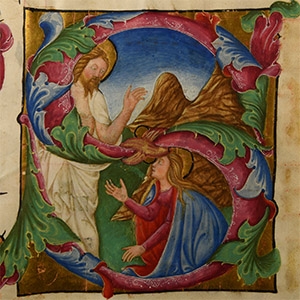
Medieval Large Miniature of Letter 'S' from a Choir Book, The Risen Christ with Mary Magdala
Tuscany, Italy, circa 1450 A.D.Sold for (Inc. bp): £2,860
Vellum manuscript page with hand-coloured large initial 'S' in a square frame and miniature painting of Christ emerging resurrected from the tomb and Mary kneeling before him; lateral band with acanthus-leaf scrolls and asterisks; mounted in a glazed wooden frame with a reveal. 1.06 kg total, 37.5 x 33.5 cm
Private collection, Barcelona, 2022. Ex central London gallery. This lot has been checked against the Interpol Database of stolen works of art and is accompanied by a search certificate number no.12151-217463. -
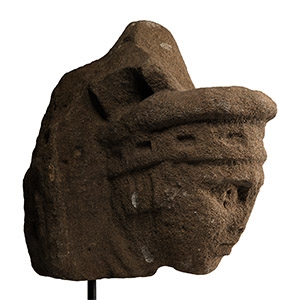
Medieval Carved Stone Head of a Cleric
14th-15th century A.D.Sold for (Inc. bp): £468
Corbel with head of a cleric forming the crest of two angled lateral facets; wearing a chaperon with band of inset rectangles to the brow; mounted on a custom-made stand. 6.85 kg, 35 cm including stand
Acquired Trevanion & Dean, UK, 15 October 2016, lot 395. Property of a Kent collector. -
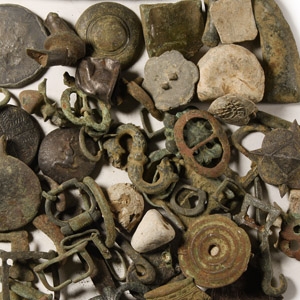
Medieval and Other Artefact Collection
1st millennium B.C.-19th century A.D.Sold for (Inc. bp): £72
Including belt buckles, a purse bar, thimbles, belt mounts and other items. 493 grams total, 1.2-12.4 cm
Found various sites in Essex, UK. Property of an Essex collector.
