
Loading, please wait...
LOT 0364
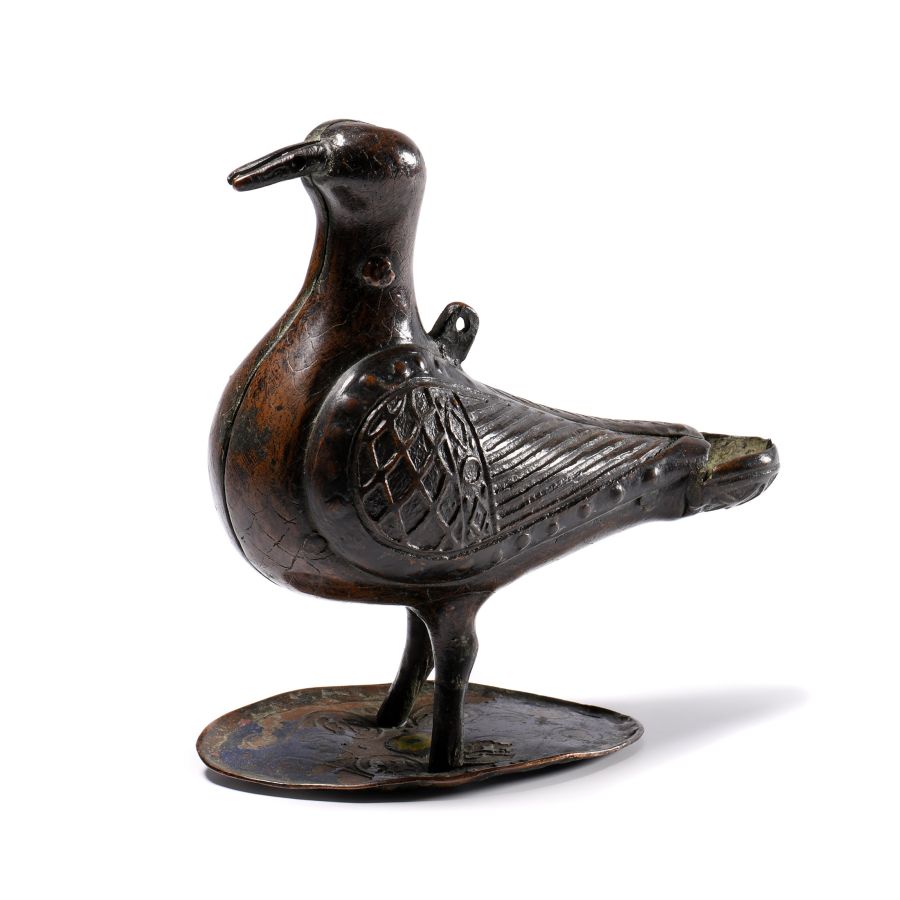
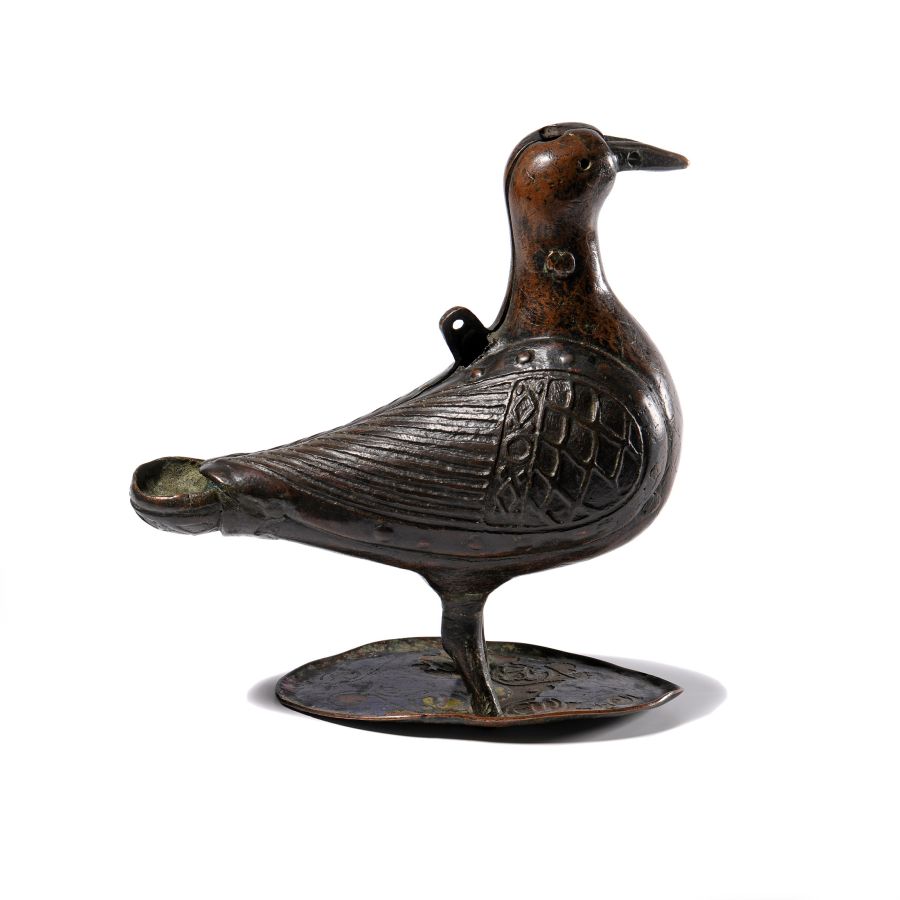
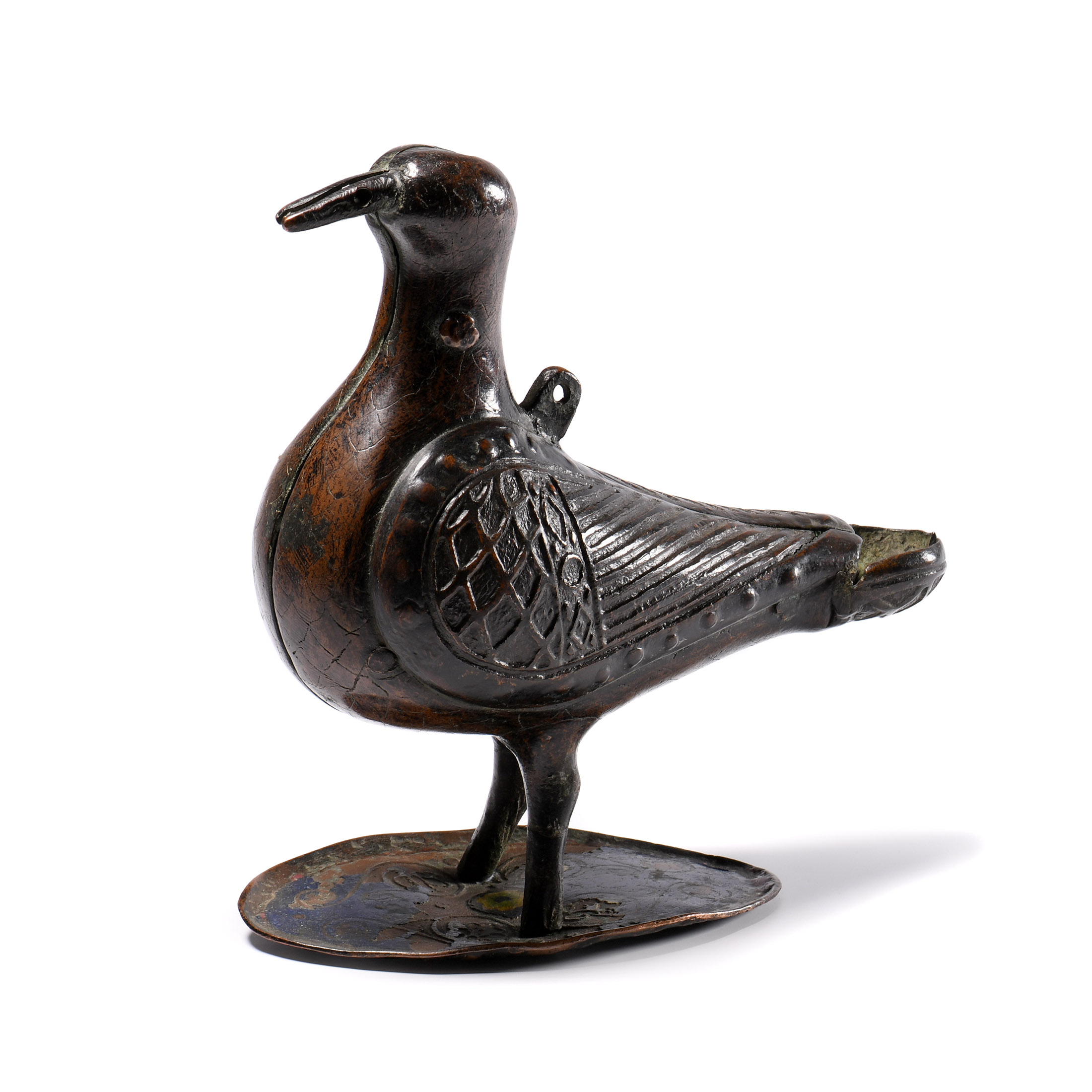
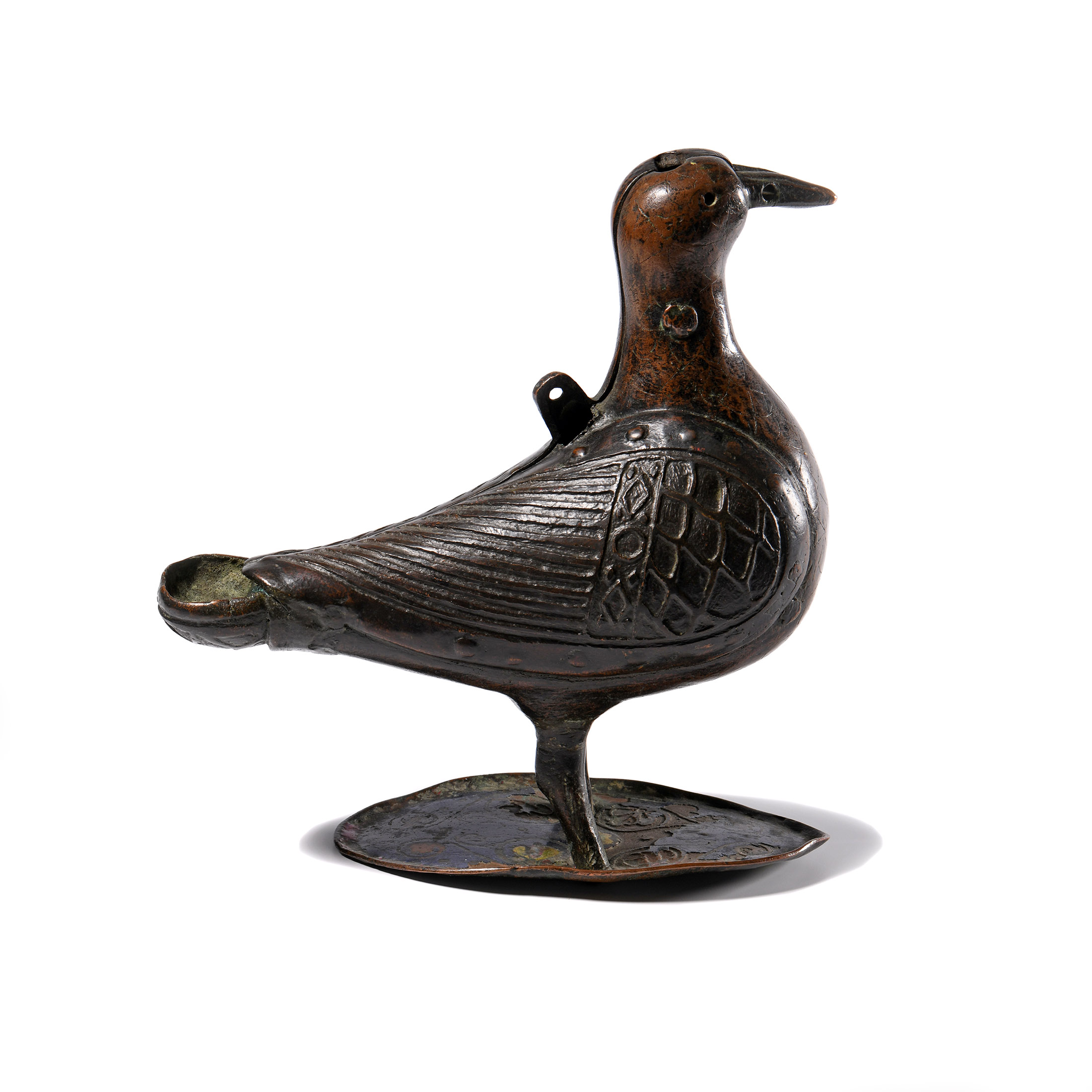
Medieval Bronze Limoges Eucharistic Dove
CIRCA 1200-1230 A.D. OR LATER
6 7/8 in. (662 grams, 17.5 cm).
Modelled in the round, hollow formed with stylised geometric detailing to the wings rendered in raised relief, incised detailing to the breast and head, pierced lug to neck, bowl at tail; base displaying floral scrolls with remains of blue, red and yellow Limoges enamelling; standing on a later elliptical base. [No Reserve]
ProvenanceEx central London gallery.
Accompanied by an academic report by Dr Raffaele D’Amato.
This lot has been checked against the Interpol Database of stolen works of art and is accompanied by search certificate no.11740-202076.
Cf. the Metropolitan Museum, New York, accession number 17.190.344, for a similar example; Walters Art Gallery, Painted Enamels of Limoges, Baltimore, 1968; Campbell, M., An Introduction to Medieval Enamels, London, 1983; Toman, R. Romanesque Architecture, Sculpture, Painting, Cologne, 1997; Stratford, N., Catalogue of Medieval Enamels in the British Museum. Vol. II - Northern Romanesque Enamel, London, 1993.
FootnotesChamplevé enamels were made at Limoges and in the valleys of the Rhine and Meuse from the 11th to the 14th centuries. Limoges workshops manufactured Eucharistic doves, which would have been hung over an altar as an evocation of the Holy Spirit. They were portable tabernacles, containing consecrated hosts.
CONDITIONTimeLine Auctions follows a vetting process to ensure the authenticity and legality of all items, reinforcing our commitment to integrity and responsible trading. Each antiquity, antique, and coin lot undergoes thorough examination by a vetting committee of at least ten external specialists, professional trade association members, scientists, and archaeologists: Our Vetting Process
AUCTIONS:
TimeLine is a leading auction house specialising in antiquities, ancient art, collectables, natural history, coins, medals, and books. Our auctions offer museums, collectors, historians, and enthusiasts the opportunity to acquire unique and historically significant pieces.
-
Medieval Iron Artefact Group
14th-16th century A.D.Sold for (Inc. bp): £91
Mainly comprising keys of various types, including examples with ornamental bows. 740 grams total, 3-16 cm
Acquired 1990s-early 2000s. East Anglian private collection. -
Large Medieval Silver Ring with Agate Cabochon
Circa 14th-15th century A.D.Sold for (Inc. bp): £572
The carinated hoop expanding at the shoulders, with raised geometric design, circular bezel with agate cabochon in claw setting. 14.03 grams, 32.10 mm overall, 23.14 mm internal diameter (approximate size British Y 1/2, USA 12 1/4, Europe 28.2, Japan 27)
Acquired 1990s-early 2000s. East Anglian private collection. -
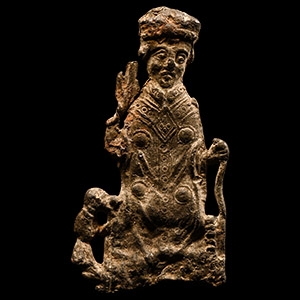
Medieval Pewter Pilgrim Badge of a Bishop
Circa 1300 A.D.Sold for (Inc. bp): £338
Standing figure facing wearing a mitre; right hand raised in sign of blessing, left hand emerging from the robe at the hip to grasp a staff; vestment with low-relief detail to front and back including four bosses and a broad collar; rectangular base with small supplicant to one side. 8.59 grams, 50 mm
From the Forgeais (1822-1878) collection, France, thence by family descent. with Gallery 51, 21 June 2013, lot 79.
