
Loading, please wait...
LOT 1719
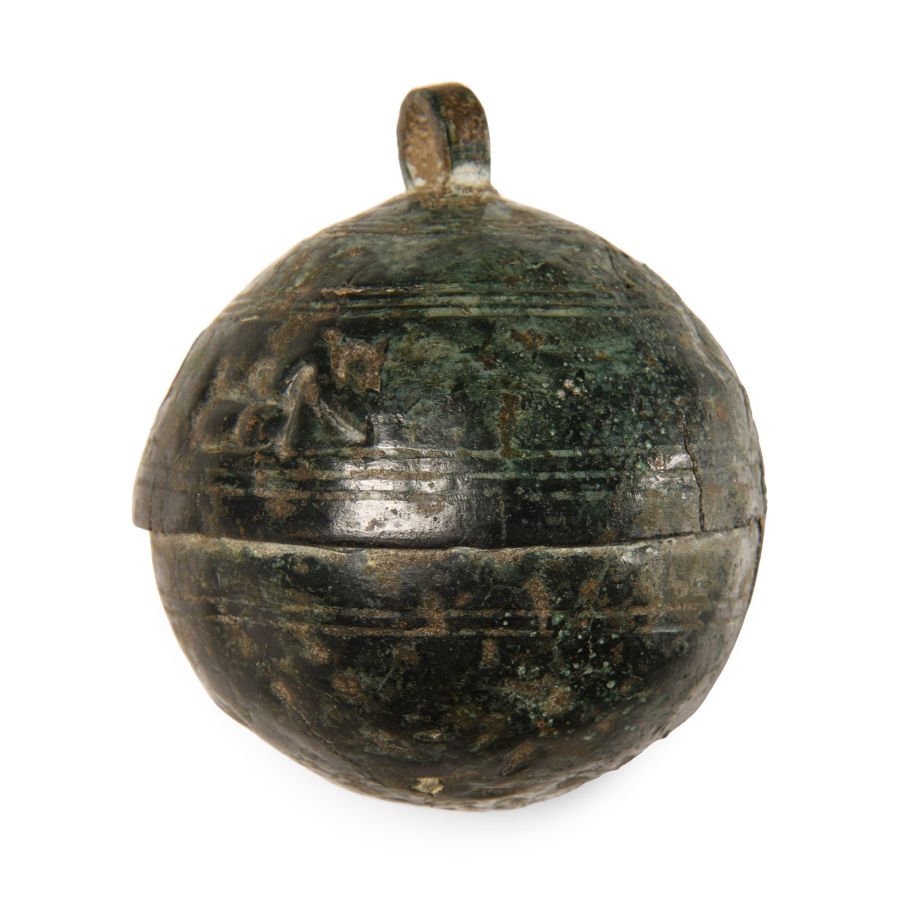
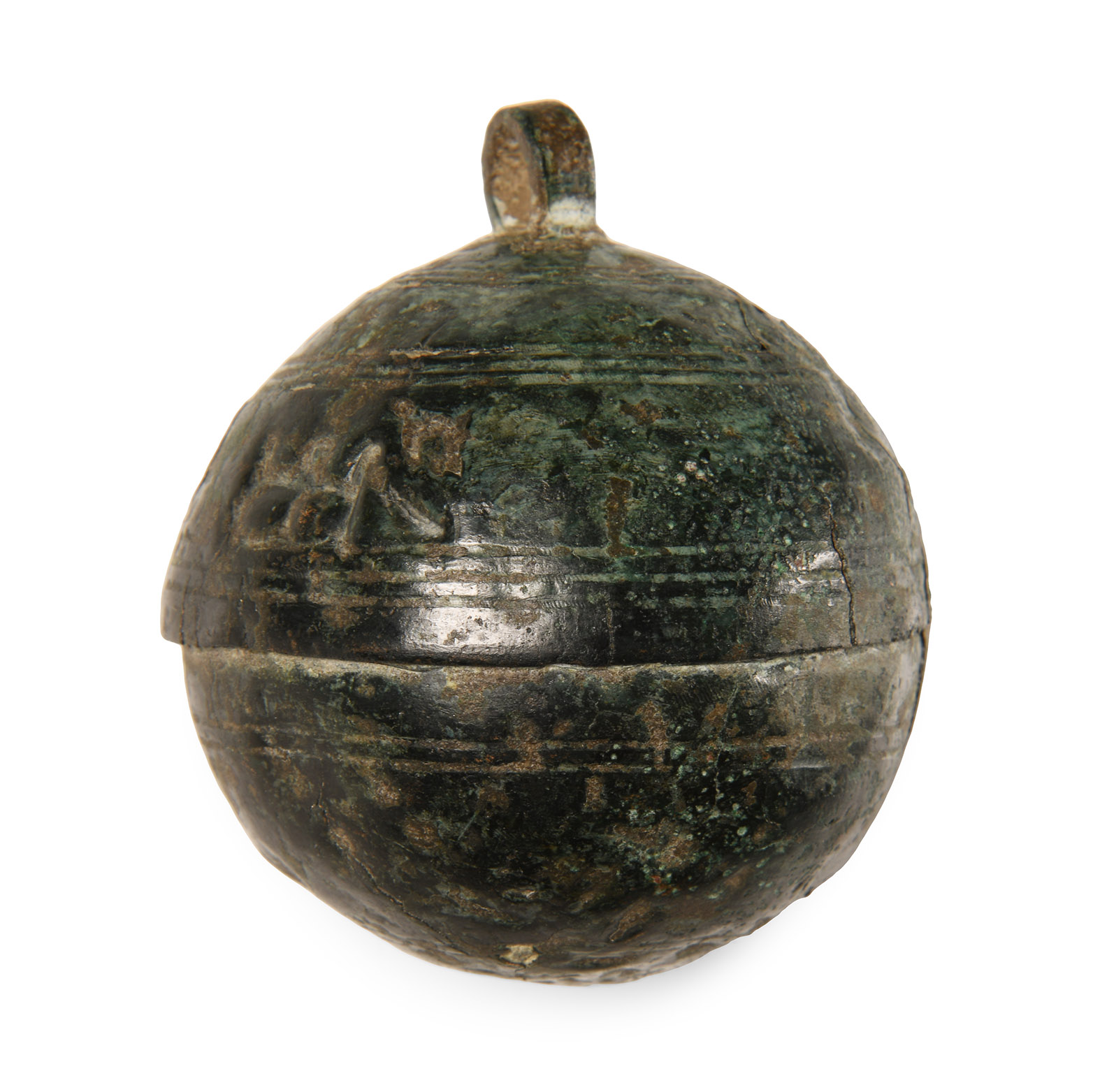
Medieval Bronze Lead-Filled Steelyard Weight
CIRCA 15TH CENTURY A.D.
2 3/8 in. (735 grams, 60 mm).
Spherical in profile with integral loop, circumferential bands and raised collar to equator. [No Reserve]
ProvenanceEx Simmons gallery, 1990s.
From a North London, UK, collection.
TimeLine Auctions follows a vetting process to ensure the authenticity and legality of all items, reinforcing our commitment to integrity and responsible trading. Each antiquity, antique, and coin lot undergoes thorough examination by a vetting committee of at least ten external specialists, professional trade association members, scientists, and archaeologists: Our Vetting Process
AUCTIONS:
TimeLine is a leading auction house specialising in antiquities, ancient art, collectables, natural history, coins, medals, and books. Our auctions offer museums, collectors, historians, and enthusiasts the opportunity to acquire unique and historically significant pieces.
-
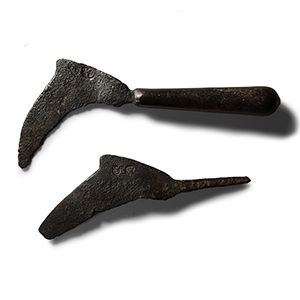
Medieval 'Thames' Currier Leather-Working Knife Group with Maker's Marks
15th-16th century A.D.Sold for (Inc. bp): £26
Comprising a short blade with spur and short tang, maker's marks 'GB' and 'B' to obverse; similar blade in original wooden handle with maker's mark 'G' to obverse. 59 grams total, 12-14.5 cm
Found Billingsgate spoil from the Thames foreshore, London, UK, circa 1984. Property of an Essex collector. -
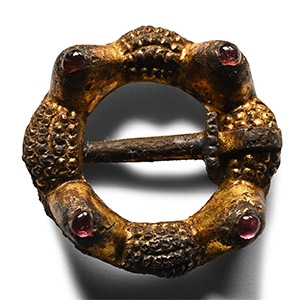
Medieval Gilt Bronze Turretted Ring Brooch with Amethyst Gemstones
Circa 13th-14th century A.D.Sold for (Inc. bp): £715
Comprising an annular body decorated with four raised pyramidal knops each set with an amethyst cabochon, interstitial lobes with pounced surface; sword-shaped pin. 3.72 grams, 19 mm
Found near Brandon, Suffolk, UK. From an East Anglian private collection. -
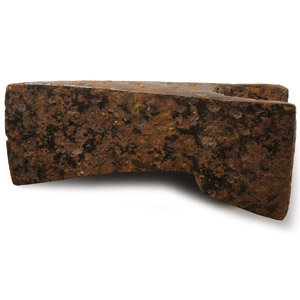
Medieval Iron Axehead
Circa 15th-16th century A.D.Sold for (Inc. bp): £20
With slightly flared blade, straight cutting edge, D-section socket with recess to the upper edge at the rear. 934 grams, 16.5 cm
From a collection acquired on the UK art market from various auction houses and collections mostly before 2000. From an important Cambridgeshire estate; thence by descent.
