Loading, please wait...

Use mousewheel to zoom in and out, click to enlarge

Details

LOT 1752

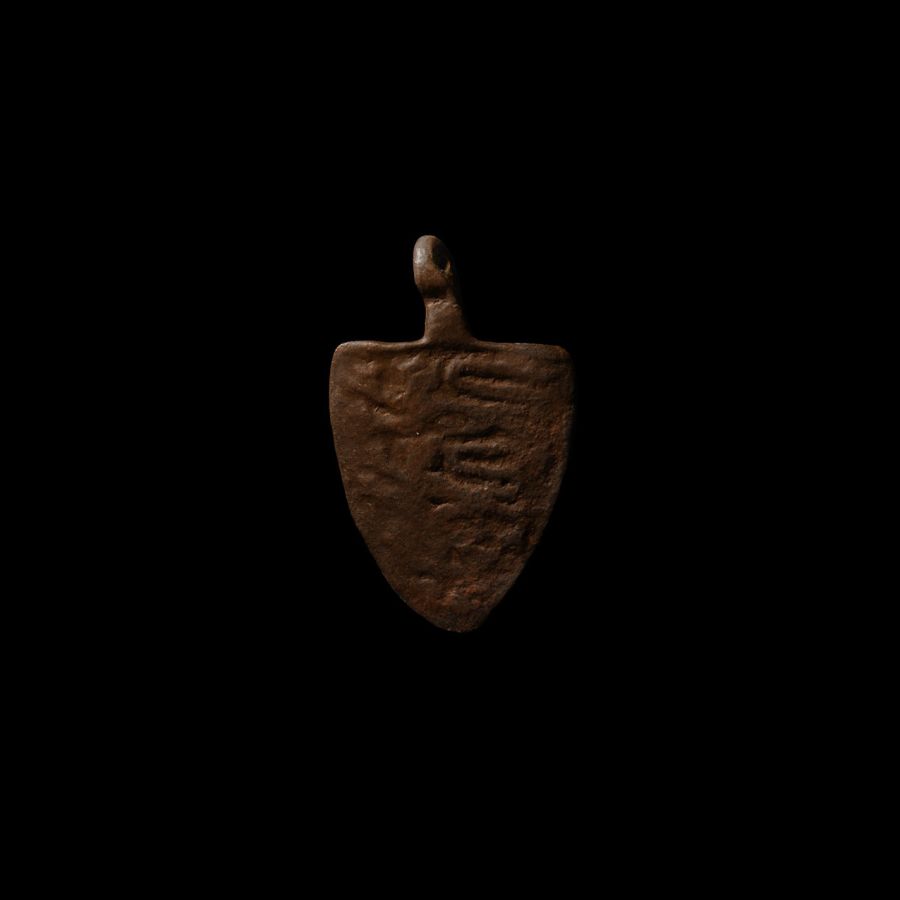
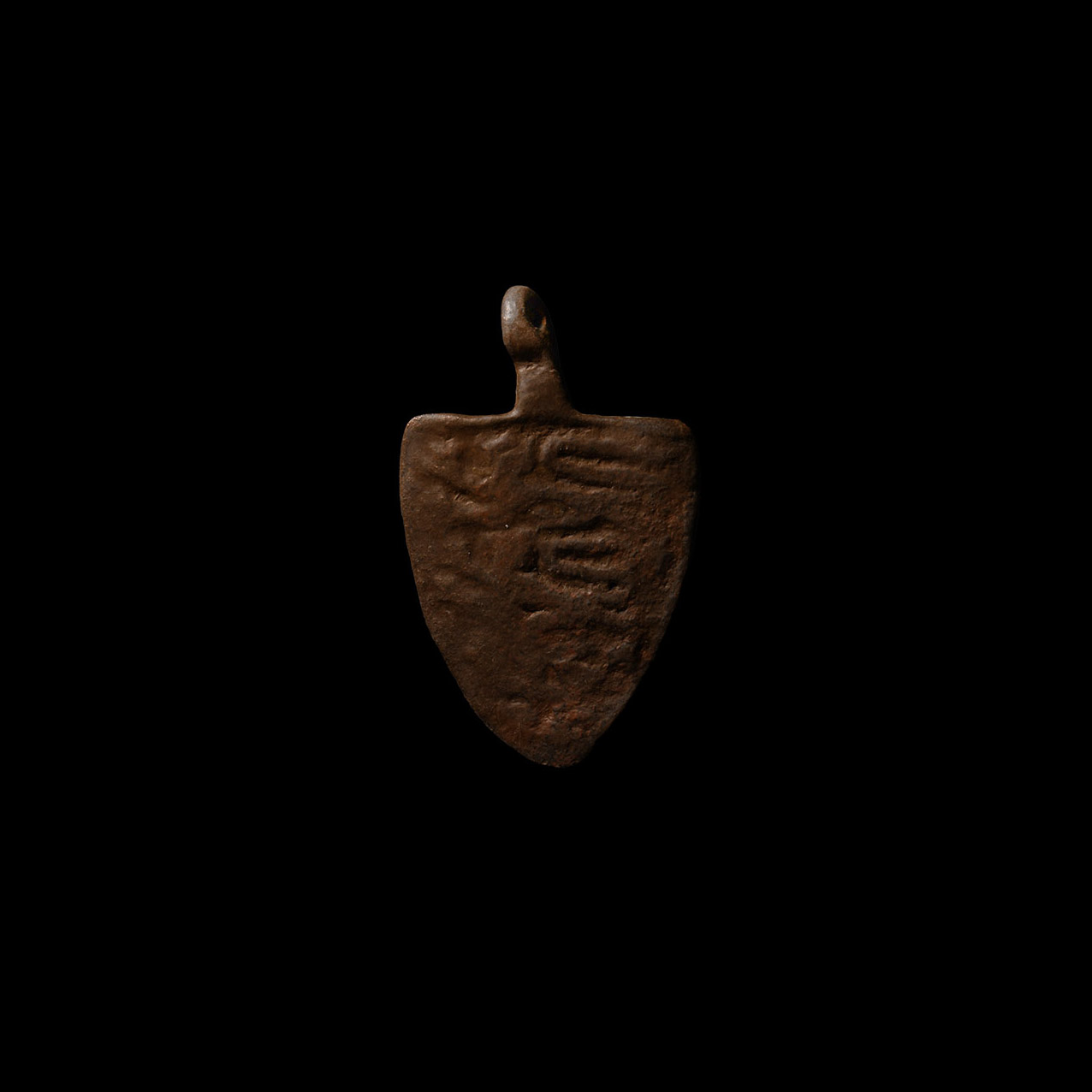
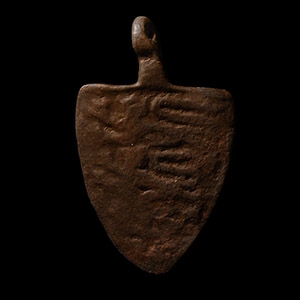
Medieval Bronze Knight's Royal Heraldic Horse Harness Pendant with Arms of England

14TH CENTURY A.D.

1 5/8 in. (10.2 grams, 43 mm).

Heater-shaped with motif of three lions, the royal arms of England from 1198 to 1340 and then from 1360 to 1369; blazoned 'gules, three lions passant guardant in pale or'. [No Reserve]

Provenance

Found Cambridgeshire, UK.

Literature

Cf. Ashley, S., Medieval Armorial Horse Furniture in Norfolk, East Anglian Archaeology 101, Dereham, 2002, items 50, 51, 55.

CONDITION

VETTING:

TimeLine Auctions follows a vetting process to ensure the authenticity and legality of all items, reinforcing our commitment to integrity and responsible trading. Each antiquity, antique, and coin lot undergoes thorough examination by a vetting committee of at least ten external specialists, professional trade association members, scientists, and archaeologists: Our Vetting Process


AUCTIONS:

TimeLine is a leading auction house specialising in antiquities, ancient art, collectables, natural history, coins, medals, and books. Our auctions offer museums, collectors, historians, and enthusiasts the opportunity to acquire unique and historically significant pieces.

LOT 1752

Medieval Bronze Knight's Royal Heraldic Horse Harness Pendant with Arms of England

Sold for (Inc. bp): £169

Print page

RELATED LOTS

  • Late Medieval Ethiopian Wooden Diptych Depicting the Crucifixion and Resurrection
    Late Medieval Ethiopian Wooden Diptych Depicting the Crucifixion and Resurrection
    Circa 1550 A.D.

    Sold for (Inc. bp): £286

    Composed of a pair of recessed panels forming folding doors; the right panel with painted crucifixion scene depicting robed Mary, John the Evangelist and another apostle, angels collecting the blood in cups; the left panel with nude Adam and Eve with deceased reaching up towards resurrected Christ holding the standard of Victory in his left hand, two holy women, the myrrh bearers (Mary Magdalen and Mary, mother of Jesus) to the left. 499 grams, 24 cm high each


    Ex French private collection, 2000. Ex central London gallery.

    The icon shows the Western influence on Ethiopian art. The Crucifixion image contains many elements of this iconography which are found in many Oriental and Western Art of Middle Ages, but with significant changes from the previous representations: Jesus is nailed with three nails and not four, the head leaning towards his right shoulder and the hair falling on his shoulders. Following the Western influence, Christ is represented in a spasm of physical pain, and consequently a more detailed anatomy of his chest and abdomen is depicted. This concept of the Crucifixion, common in the Italian Late Middle Age and Renaissance art, found its way to Ethiopia at some time towards the end of the 15th century, or at the beginning of the 16th century. As in the majority of the Resurrection icons of this period, Christ is dressed in a long robe with a cloak or toga draped over one shoulder.

    Lot Details

  • Medieval Stone Column Capital with Lion and Human Face
    Medieval Stone Column Capital with Lion and Human Face
    Spain or Southern France, late 12th century A.D.

    Sold for (Inc. bp): £1,950

    Carved in the half-round with a frieze composed of interlaced foliage with two rows of acanthus leaves and foliage scrolls, framing a lion's head on one side and a human head on the other, remains of lion's mane to the third; drilled holes to the raised surfaces and sockets for the insertion of decorative stones. 30 kg, 33.5 cm


    Acquired from Antoine Boccador-Lieveaux, 2005. Ex central London gallery. Accompanied by an academic report by Dr Raffaele D’Amato. This lot has been checked against the Interpol Database of stolen works of art and is accompanied by search certificate no.11739-202053.

    The iconography of this capital is probably associated with the biblical story of Daniel in the lion's den. Capitals like this were part of an extensive decorative program which characterised Spanish and the French churches especially in the late 12th century A.D., with the advent of the Cistercian style. Foliate capitals ornamented the churches of Las Claustrillas, Aguilar, Gama, and other Christian sites of Southern France and Northern Spain. Capitals decorated with similar acanthus foliage can be found in churches in Burgundy, for instance at Avallon, Vezelay, and Donzy-le-Pré. However, figurative elements of the old Romanesque art also persisted.

    Lot Details

  • Medieval Ceramic Group
    Medieval Ceramic Group
    15th century A.D. and later

    Sold for (Inc. bp): £20

    Including glazed vessels of various sizes, a jar with piecrust foot; tripod dish and jar; lidded pot with handle and foot, together with other vessels; most chipped and cracked. 3.2 kg total, 4.3-20 cm


    Acquired 1990s-early 2000s. East Anglian private collection.

    Lot Details

Stay up-to-date with the latest from TimeLine Auctions by joining our mailing list