
Loading, please wait...
_900x900.jpg "Medieval Bronze Knight's Heraldic Horse Harness Pendant with Three Crowns")
_200x200.jpg "Medieval Bronze Knight's Heraldic Horse Harness Pendant with Three Crowns")
.jpg "Medieval Bronze Knight's Heraldic Horse Harness Pendant with Three Crowns")
LOT 1652
Medieval Bronze Knight's Heraldic Horse Harness Pendant with Three Crowns
14TH-15TH CENTURY A.D.
3/4 in. (1.67 grams, 19 mm).
Bearing the arms of arms of the Bishop of Ely, loop absent. [No Reserve]
ProvenanceFound Cambridgeshire, UK.
LiteratureCf. Ashley, S., Medieval Armorial Horse Furniture in Norfolk, East Anglian Archaeology 101, Dereham, 2002, items 197, 198.
CONDITIONTimeLine Auctions follows a vetting process to ensure the authenticity and legality of all items, reinforcing our commitment to integrity and responsible trading. Each antiquity, antique, and coin lot undergoes thorough examination by a vetting committee of at least ten external specialists, professional trade association members, scientists, and archaeologists: Our Vetting Process
AUCTIONS:
TimeLine is a leading auction house specialising in antiquities, ancient art, collectables, natural history, coins, medals, and books. Our auctions offer museums, collectors, historians, and enthusiasts the opportunity to acquire unique and historically significant pieces.
LOT 1652
Medieval Bronze Knight's Heraldic Horse Harness Pendant with Three Crowns
Sold for (Inc. bp): £65
-
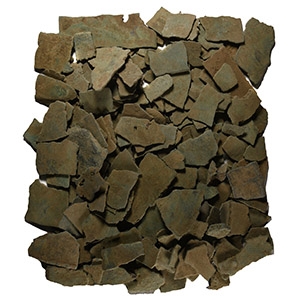
Medieval Bronze Plate Section Group
12th-16th century A.D.Sold for (Inc. bp): £7
Mixed group of irregular fragments of sheet bronze castings, mostly 2-4mm in thickness. 4.67 kg total, 1.9-12.2 cm
UK gallery, early 2000s. -
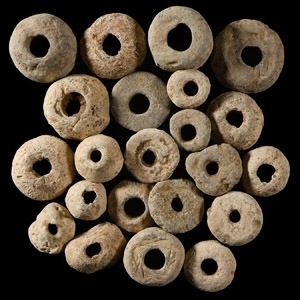
Medieval Lead Spindle Whorl Weight Group
Circa 14th-16th century A.D.Sold for (Inc. bp): £13
Annular, biconvex, plano-convex and other types. 696 grams total, 18-29 mm
Found Hertfordshire, UK. -
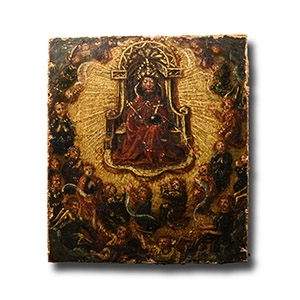
Medieval God the Father Enthroned Oil on Panel
Netherlands, probably Brussels, circa 1520 A.D.Sold for (Inc. bp): £390
Rectangular wooden panel with gessoed surface, painted miniature of enthroned Jehovah with crown, orb and sceptre in a blaze of radiant light, surrounded by worshipper. 8.1 grams, 69 mm
Ex central London gallery.
