
Loading, please wait...
LOT 1592
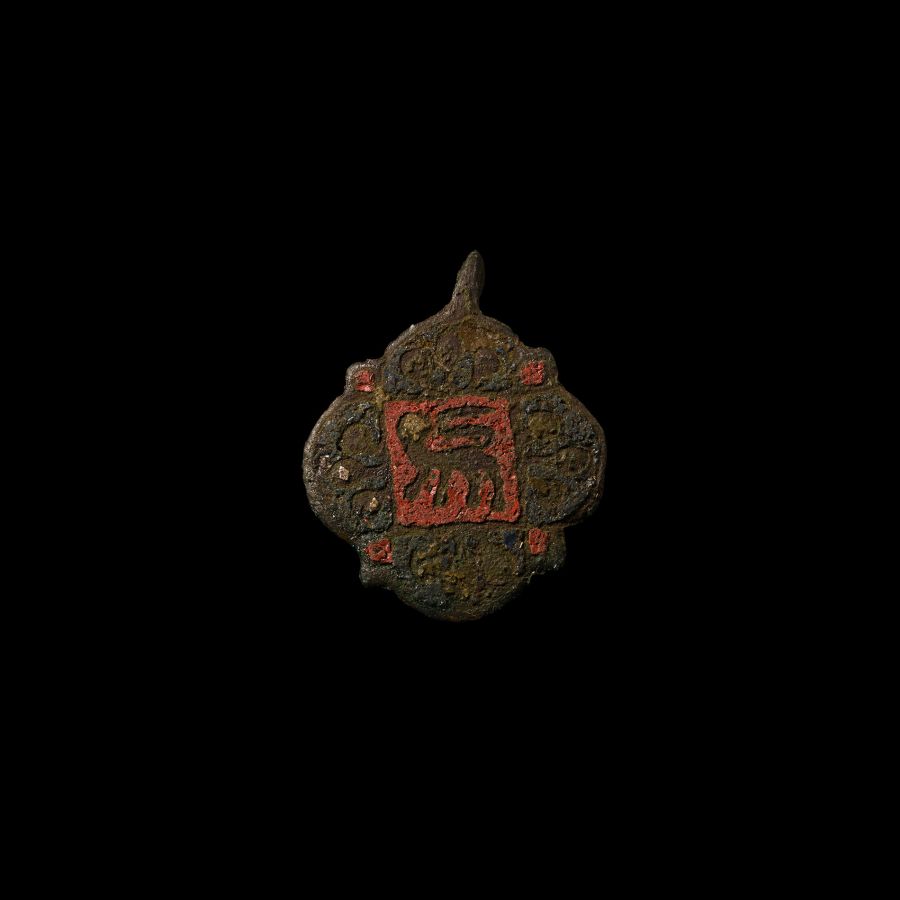
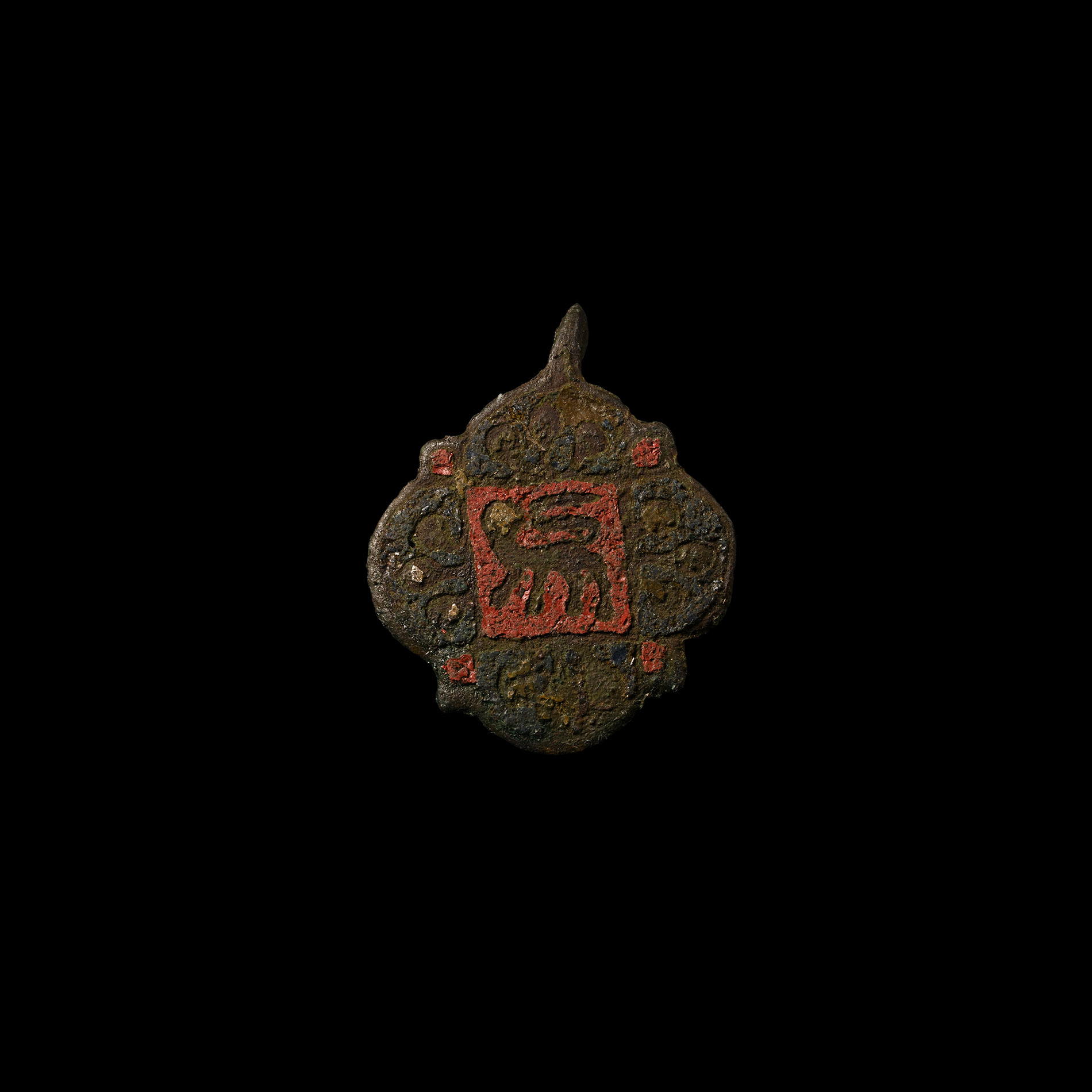
Medieval Bronze Knight's Heraldic Horse Harness Pendant with Royal Lion
14TH-15TH CENTURY A.D.
1 1/2 in. (12.4 grams, 38 mm).
Quatrefoil-type with low-relief leaf detailing, pellets between the leaves with red enamel fill, central rectangular panel with red enamel fill and reserved lion passant; integral suspension lug. [No Reserve]
ProvenanceFound Farnborough, Kent, UK, circa 1987.
LiteratureCf. Ashley, S., Medieval Armorial Horse Furniture in Norfolk, East Anglian Archaeology 101, Dereham, 2002, item 205, for type.
CONDITIONTimeLine Auctions follows a vetting process to ensure the authenticity and legality of all items, reinforcing our commitment to integrity and responsible trading. Each antiquity, antique, and coin lot undergoes thorough examination by a vetting committee of at least ten external specialists, professional trade association members, scientists, and archaeologists: Our Vetting Process
AUCTIONS:
TimeLine is a leading auction house specialising in antiquities, ancient art, collectables, natural history, coins, medals, and books. Our auctions offer museums, collectors, historians, and enthusiasts the opportunity to acquire unique and historically significant pieces.
LOT 1592
Medieval Bronze Knight's Heraldic Horse Harness Pendant with Royal Lion
Sold for (Inc. bp): £260
-
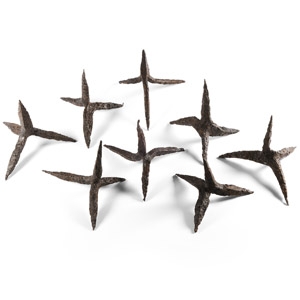
Medieval Iron Anti-Cavalry Caltrop Group
13th-15th century A.D.Sold for (Inc. bp): £234
Comprising eight caltrops, hand-forged with square-section spikes. 439 grams total, 88-95 mm
Acquired 1971-1972. From the collection of the vendor's father. Property of a London, UK, collector.
Caltrops were scattered on battlefields in an effort to stop or slow advancing enemy cavalry or foot soldiers; regardless of how a caltrop lands, one spike is always facing upwards. In 1082, Emperor Alexios Komnenos used caltrops against the Norman cavalry in the Balkans but the Normans avoided them by flanking the Roman line. -
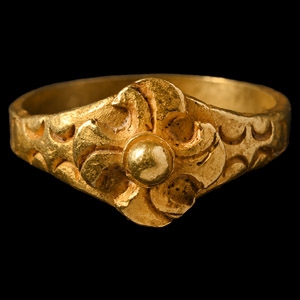
Medieval Gold Quatrefoil Ring
Circa 15th century A.D.Sold for (Inc. bp): £715
Rectangular-section hoop and flared shoulders, punched crescent detailing, raised quatrefoil with central collar and knop. 4.41 grams, 22.92 mm overall, 16.27 mm internal diameter (approximate size British L 1/2, USA 6, Europe 11.87, Japan 11)
Acquired 1970-2010. Collection of a late Japanese gentleman. -
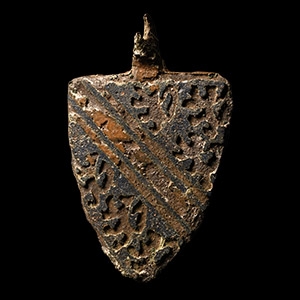
Medieval Bronze 'de Bohun Family' Knight's Heraldic Horse Harness Pendant
14th-15th century A.D.Sold for (Inc. bp): £182
Of heater shield type with suspension lug, bend cotised between six lions rampant, remains of enamel, arms of the de Bohun family. 13.3 grams, 45 mm
Found UK. Acquired on the UK art market after 2000. Ex Stratford collection, Suffolk, UK.
