
Loading, please wait...
LOT 1783
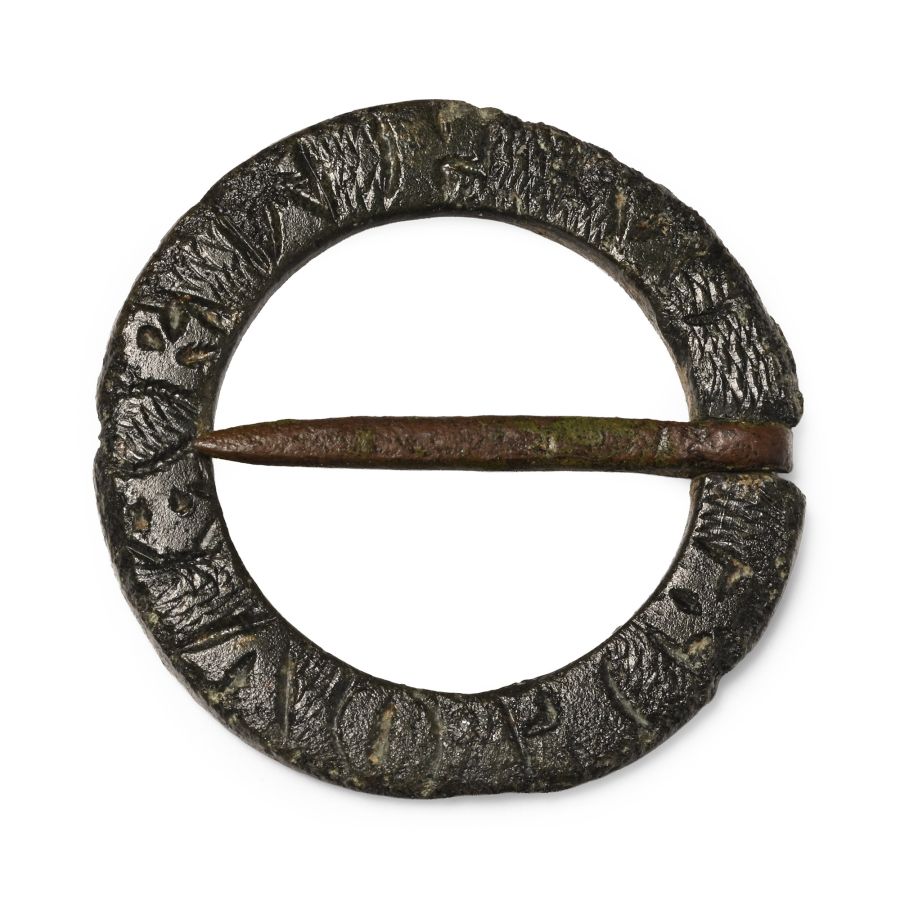
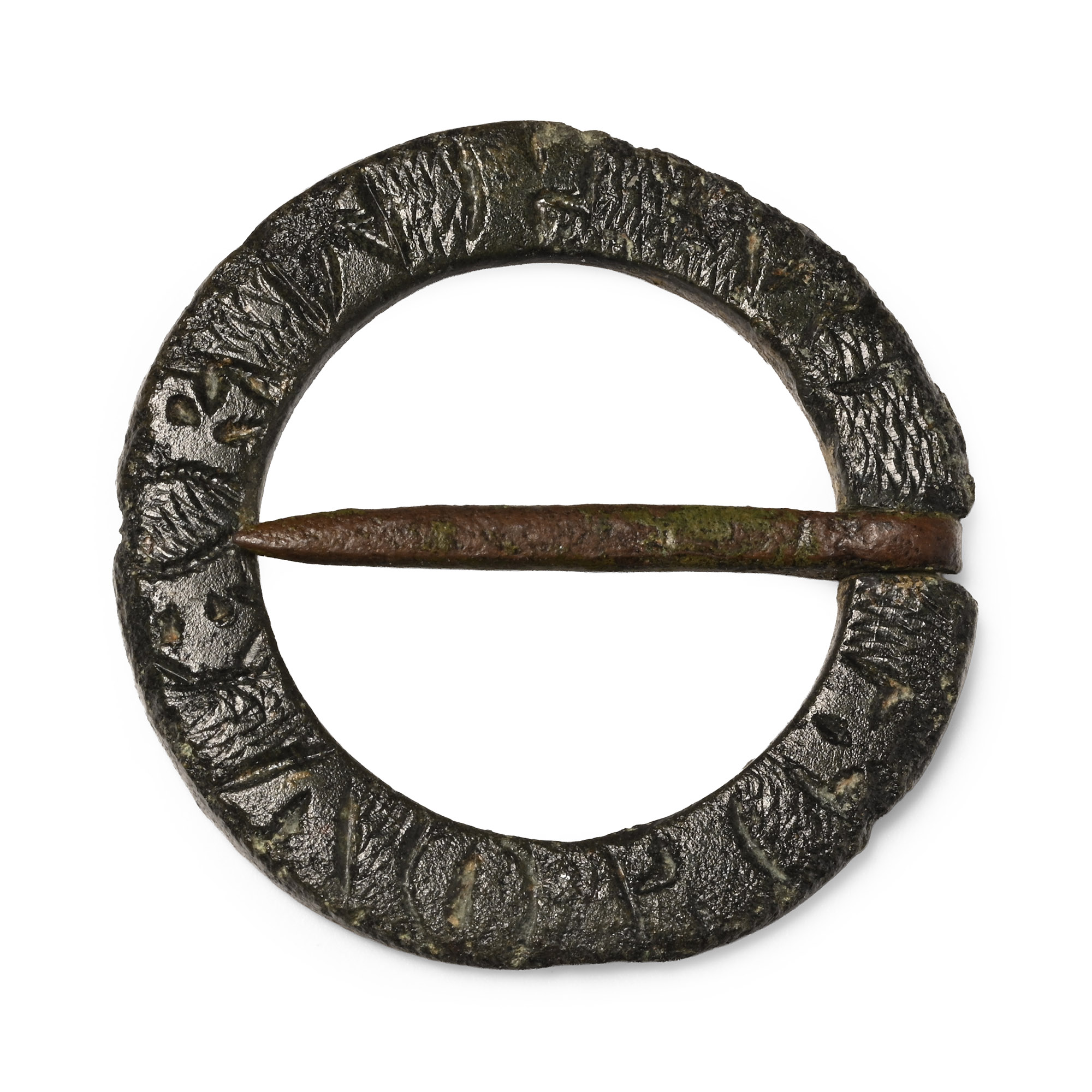
Medieval Bronze Inscribed Ring Brooch
14TH-15TH CENTURY A.D.
1 1/4 in. (6.36 grams, 30 mm).
Flat-section hoop with legend to obverse 'X POVERT PA'. [No Reserve]
ProvenanceEx Graham Slater collection, Cambridge, 1980s-1990s.
FootnotesThis popular ring-brooch legend is the beginning of a proverb [Whiting P334: poverty parts company] found in 15th century manuscripts, which the
brooches may well antedate – see, for example, PAS database SF-84C91E, i.e. the perhaps cynical observation that if one loses one’s money, one loses one’s friends.
TimeLine Auctions follows a vetting process to ensure the authenticity and legality of all items, reinforcing our commitment to integrity and responsible trading. Each antiquity, antique, and coin lot undergoes thorough examination by a vetting committee of at least ten external specialists, professional trade association members, scientists, and archaeologists: Our Vetting Process
AUCTIONS:
TimeLine is a leading auction house specialising in antiquities, ancient art, collectables, natural history, coins, medals, and books. Our auctions offer museums, collectors, historians, and enthusiasts the opportunity to acquire unique and historically significant pieces.
-
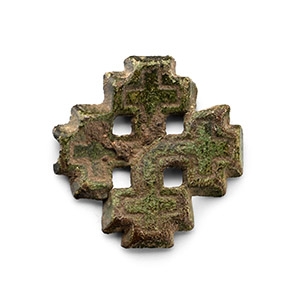
Medieval Bronze Knight's Holy Sepulchre Badge
Circa 13th-14th century A.D.Sold for (Inc. bp): £52
Formed as a cross-crosslet, the symbol of the Knights of the Holy Sepulchre, with punched-point border. 0.85 grams, 20 mm
From various collections, acquired circa 1950-early 2000s. From the property of a late Lincolnshire, UK, gentleman.
The 'Equestrian Order of the Holy Sepulchre of Jerusalem' was an order of knighthood under the protection of the Pope, formed around 1099 AD by Duke Godfrey of Bouillon, the leader of the First Crusade. It was established for the protection of pilgrims travelling to the Holy Land and was recognised by a Papal Bull in about 1113 AD. -
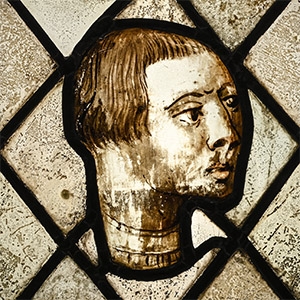
Medieval Stained Glass Head of a Man
Netherlands, Brabant, 1500-1520 A.D.Sold for (Inc. bp): £1,170
Square composite panel with brown-hued vitreous enamel and pink pigment, irregular profile bust set into the diamond quarries. 838 grams, 30.3 x 27 cm
Ancient Arms and Armour, Stained Glass, Coffrets and Furniture. Property from a New York Collection, American Art Association, New York, 23 November 1923, no.110 (as Flemish XV-XVI). The Monastery Stained Glass, 2004. Accompanied by a previous cataloguing document.
The loose, fluid brushwork and fine touches of pink sanguine pigment on this male head place him firmly in the first decades of the sixteenth century, a dating supported further by the visible hemline of the fashionable pleated shirt covering his neck. These are all characteristic features of Southern Netherlandish stained glass from this period, and parallels offered by programs such as the early sixteenth-century windows in Antwerp Cathedral, the c. 1500 glazing scheme at Sint Gummarus church in Lier just outside Antwerp, as well as at sites such as Notre Dame du Sablon in Brussels, suggest an artist working in Brabant in the early years of the century. -
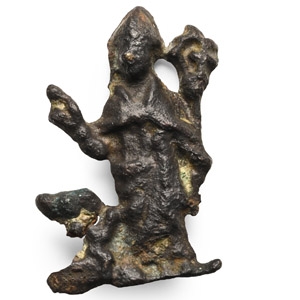
Medieval 'Thames' St. Thomas Becket Lead-Alloy Pilgrim's Badge
Late 13th-14th century A.D.Sold for (Inc. bp): £39
Depicted standing on the back of a peacock with his right hand extended in a gesture of benediction, crozier in his left hand. 2.2 grams, 24 mm
Found on the Thames foreshore at Chiswick, London, UK. Acquired on the UK antiques market between 1974-1985. Ex Albert Ward collection, Essex, UK.
