Loading, please wait...

Use mousewheel to zoom in and out, click to enlarge

Details

LOT 1775

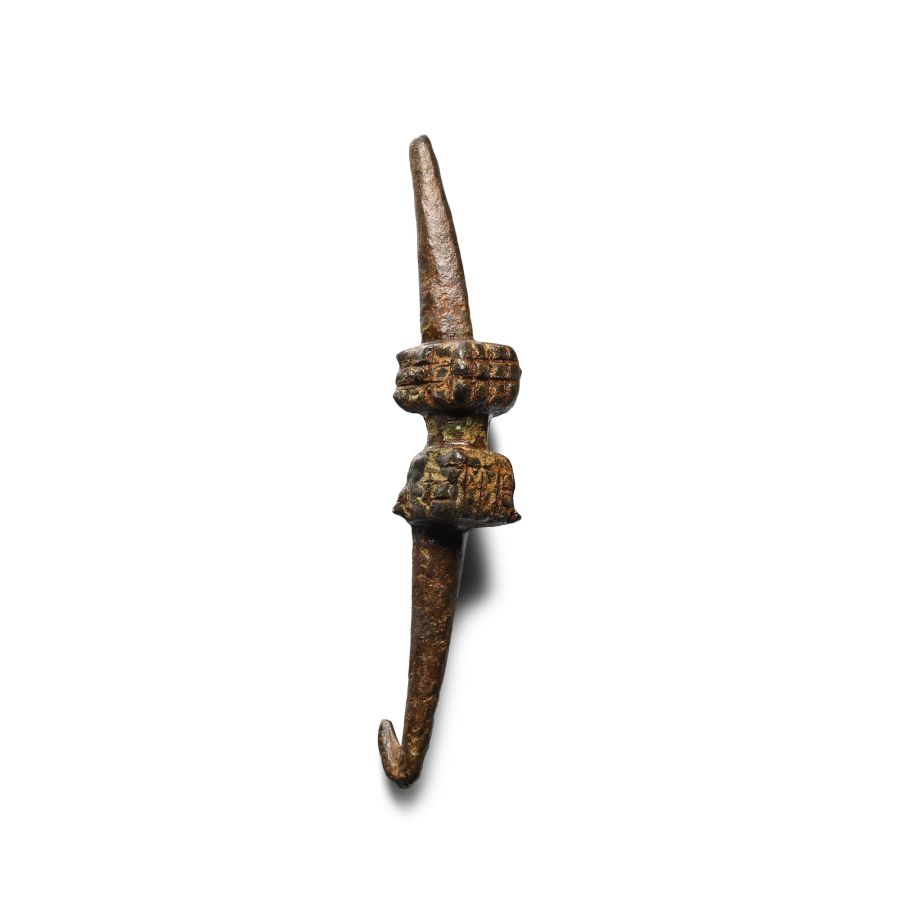
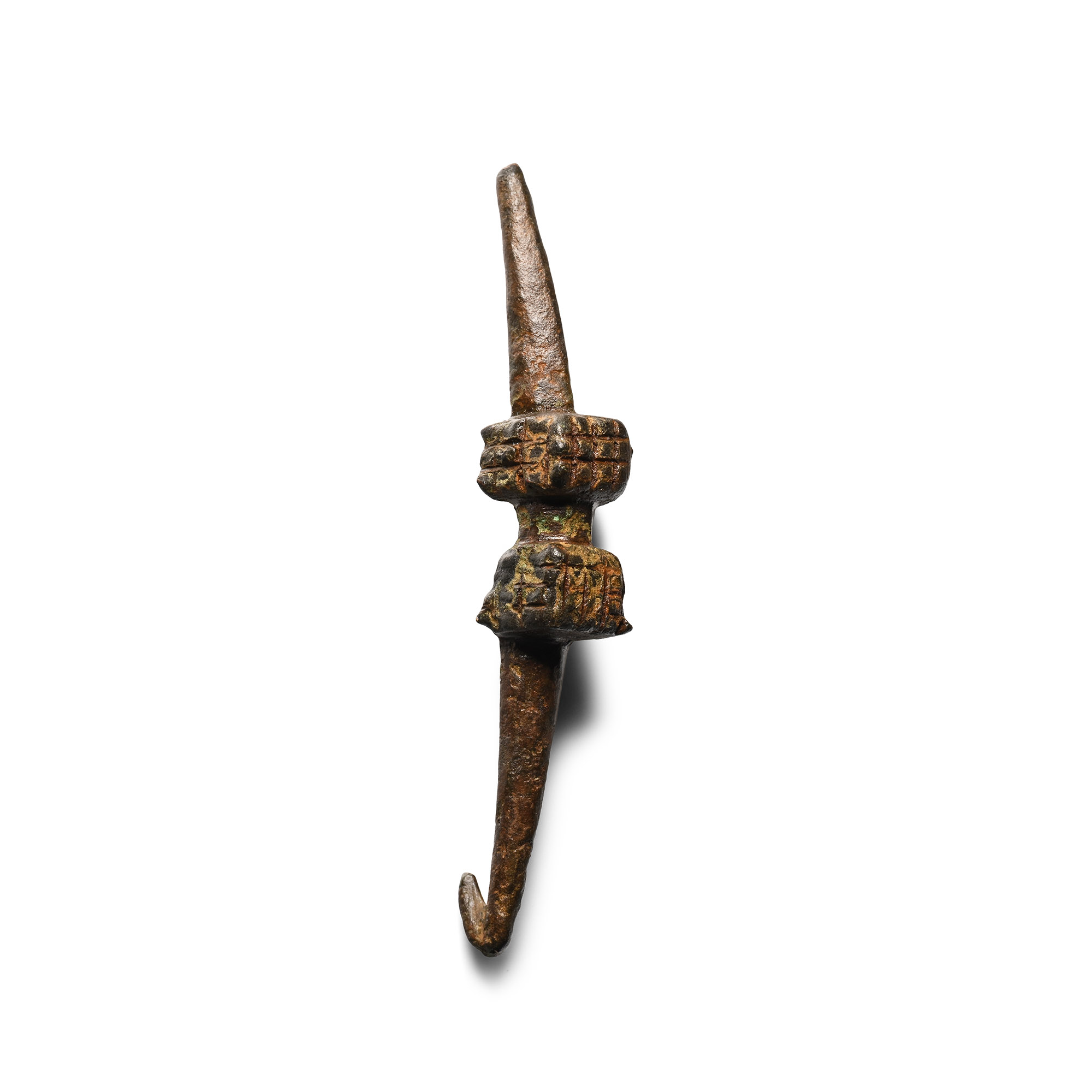
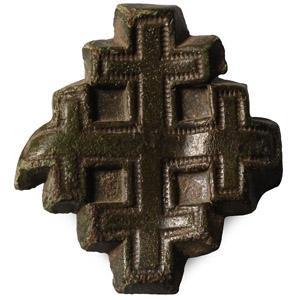
Medieval Bronze 'Havette' Tenterhook

13TH-16TH CENTURY A.D.

2 1/8 in. (8.57 grams, 56 mm).

With two tapering square-section shanks flanking a waisted rectangular median block; each shank with returned hook finial (one absent). [No Reserve]

Provenance

Found near Skirpenbeck, Yorkshire, UK, in 2017.
From an old Yorkshire, UK, collection.

Accompanied by a copy of the British Museum's Portable Antiquities Scheme (PAS) report no.YORYM-BB1A93.
This lot is accompanied by an illustrated lot declaration signed by the Head of the Antiquities Department, Dr Raffaele D'Amato.

Footnotes

Tenterhooks were used to secure cloth and skins on a drying frame.

CONDITION

VETTING:

TimeLine Auctions follows a vetting process to ensure the authenticity and legality of all items, reinforcing our commitment to integrity and responsible trading. Each antiquity, antique, and coin lot undergoes thorough examination by a vetting committee of at least ten external specialists, professional trade association members, scientists, and archaeologists: Our Vetting Process


AUCTIONS:

TimeLine is a leading auction house specialising in antiquities, ancient art, collectables, natural history, coins, medals, and books. Our auctions offer museums, collectors, historians, and enthusiasts the opportunity to acquire unique and historically significant pieces.

LOT 1775

Medieval Bronze 'Havette' Tenterhook

Sold for (Inc. bp): £33

Print page

RELATED LOTS

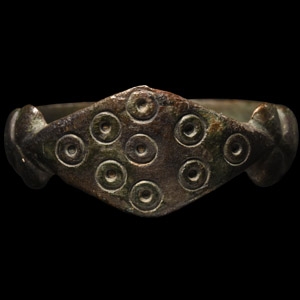
  • Medieval Bronze Ring with Cross in Lozenge
    Medieval Bronze Ring with Cross in Lozenge
    14th-16th century A.D.

    Sold for (Inc. bp): £104

    Comprising a D-section hoop and large discoid bezel with piecrust edge and fluted underside, incised cross within a lozenge to the centre. 9.49 grams, 24.37 mm overall, 17.77 mm internal diameter (approximate size British P, USA 7 1/2, Europe 16.23, Japan 15)


    Ex German art market, 2000s. Acquired from an EU collector living in London. From the collection of a Surrey, UK, gentleman. This lot is accompanied by an illustrated lot declaration signed by the Head of the Antiquities Department, Dr Raffaele D'Amato.

    Lot Details

  • The Great Holland Medieval Gold Black Letter I Desire to Serve You Posy Ring
    Disclaimed Treasure
    'The Great Holland' Medieval Gold Black Letter 'I Desire to Serve You' Posy Ring
    House of Lancaster, 1400-1450 A.D.

    Sold for (Inc. bp): £4,680

    With rectangular cross-section, the exterior engraved with a black letter inscription reading '+ Je decir vovs cervir' translating to 'I desire to serve you' with an elaborate sprig of leaves on each side of the word 'vous'. 2.15 grams, 19.55 mm overall, 16.73 mm internal diameter (approximate size British M, USA 6, Europe 12.46, Japan 12)


    Found near Great Holland, Frinton and Walton, Essex, on Thursday 2nd March 2023 by Paul Sheedy. Declared as treasure under the Treasure Act with reference no.2023 T585, and disclaimed and disclaimed by the Crown. Accompanied by a copy of the British Museum's Portable Antiquities Scheme (PAS) report no.ESS-AFFADD. Accompanied by a copy of an email from PAS explaining that the Crown's interest in the ring has been disclaimed with reference no.2023 T585. Accompanied by a copy of two photographs of the ring taken at the time of finding. Accompanied by a copy of an article about the finding of this ring in the Daily Gazette and Essex County Standard. This lot has been checked against the Interpol Database of stolen works of art and is accompanied by a search certificate number no.12738-234089. This lot has been cleared against the Art Loss Register database, and is accompanied by an illustrated lot declaration signed by the Head of the Antiquities Department, Dr Raffaele D'Amato.

    Passage from Dr Jones's essay referencing this ring (The Beautiful Game: Courtly Love Posies in Anglo-Norman Inscribed on Jewellery and Seals, 2023, pp.17-18) explains further regarding the inscriptions on courtly rings: 'The courtly lover wishes only amer et seruir (to love and serve), as attested on a ring found in East Sussex. The same legend appeared, according to an inventory of his jewels made c. 1420, on a pendant owned by Louis d’Anjou (d. 1384), but as it is described as being in the form of a cross, it is perhaps religious love and service that is at issue here. There can be no doubt, however, about a ring found recently in Essex, which reads je decir vovs ceruir (I desire to serve you). A hefty 15th-century ring in the V&A is inscribed iaym servir (I love to serve) on the exterior and voeil obeir (I wish to obey)inside the hoop, while a ring found in Yorkshire reads simply ie vueil servir (I wish to serve). The assumption is that these were rings worn by male lovers who wished to serve their ladies — vueil plein[men]t a vous servir, the slightly fuller version on a ring recorded by Evans, is not quite as fulsome as the legend on a ring found recently in the West Midlands: tant que murai vous seruire [published as seroire] (Till I die I will serve you), or as florid as Deus me octroye de vous seruir / a gree com moun couer desire (God grant me to serve you / acceptably as my heart desires).'

    Lot Details

  • Medieval Limestone Gargoyle of a Smiling Horned Devil
    Medieval Limestone Gargoyle of a Smiling Horned Devil
    Circa 15th century A.D.

    Sold for (Inc. bp): £2,210

    Modelled with a threatening expression, his half-open mouth visibly contracted into an evil grin with exposed teeth, short beard to the chin and wavy locks of hair resting on the forehead with two small horns, large goat horns framing the face on both sides; mounted on a custom-made display stand. 8.4 kg total, 30.5 cm high including stand


    From a collection acquired on the UK art market. Property of a West Midlands, UK, private collector. This lot is accompanied by an illustrated lot declaration signed by the Head of the Antiquities Department, Dr Raffaele D'Amato.

    From the Romanesque era onwards, images of demons, often carved on the external sides of cathedrals and churches, were strongly linked to the fantastical and monstrous creatures of ancient myth and legend. For theologians, supernatural creatures which could not otherwise be explained were not of God and therefore had to be demonic: their incorporation in the ecclesiastic structures showed that their malevolent powers could be kept under control only through the protection of the church. This origin of Christian demons is likely to have influenced the visual representation in medieval culture as hybrid and monstrous, especially given the increased interest in Greek works from the twelfth century onwards in the West.

    Lot Details

Stay up-to-date with the latest from TimeLine Auctions by joining our mailing list