
Loading, please wait...


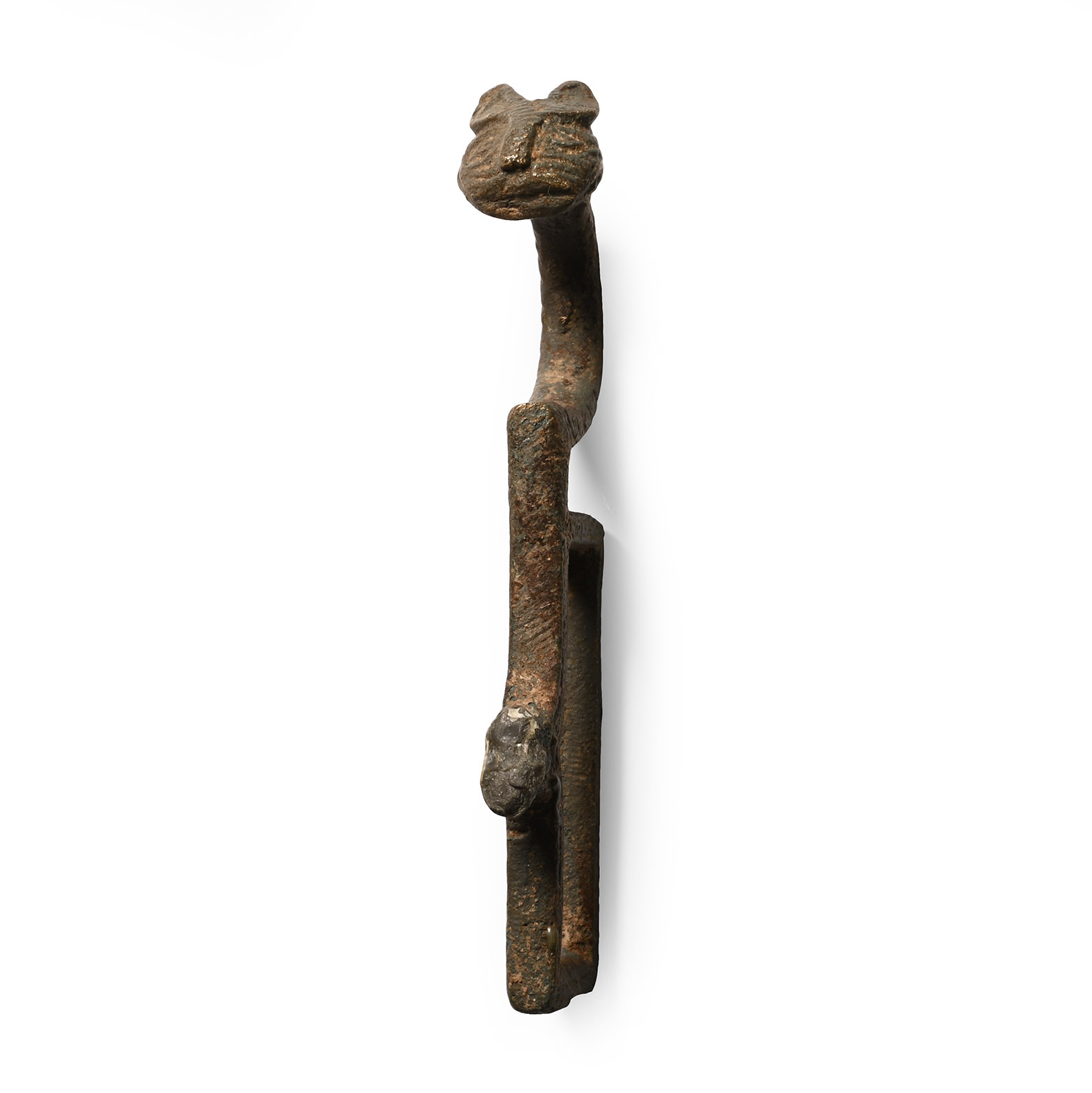
LOT 1908
Medieval Bronze Fitting with Lion Finial
12TH-15TH CENTURY A.D.
4 3/8 in. (82 grams, 11.1 cm).
Comprising a rectangular loop with remains of a stud, stylised lion's head finial with a long curved neck.
ProvenanceAcquired on the UK art market before 2000.
Property of an Essex, UK, gentleman.
TimeLine Auctions follows a vetting process to ensure the authenticity and legality of all items, reinforcing our commitment to integrity and responsible trading. Each antiquity, antique, and coin lot undergoes thorough examination by a vetting committee of at least ten external specialists, professional trade association members, scientists, and archaeologists: Our Vetting Process
AUCTIONS:
TimeLine is a leading auction house specialising in antiquities, ancient art, collectables, natural history, coins, medals, and books. Our auctions offer museums, collectors, historians, and enthusiasts the opportunity to acquire unique and historically significant pieces.
-
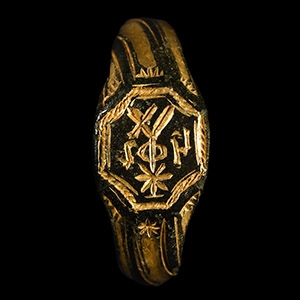
Large Medieval 'Published' Gilt Bronze Merchant's Monogram Glove Ring
15th century A.D.Sold for (Inc. bp): £4,680
With wreath detailing to the shank, octagonal plaque bezel with merchant's mark and blackletter 'i h' flanking. 9.96 grams, 29.40 mm overall, 23.90 mm internal diameter (approximate size British Z+2 1/2, USA 13 3/4, Europe 32.01, Japan 30)
From the collection of the famous author, writer and speaker, Gordon Bailey, Essex, UK; formed since 1968. This lot has been checked against the Interpol Database of stolen works of art and is accompanied by a search certificate number no.12293-219669. -
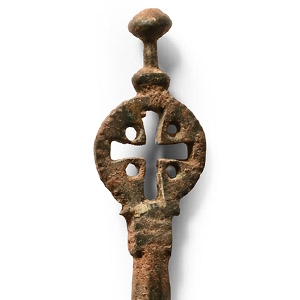
Norman Bronze Key Shank with Cross
Late 11th century A.D.Sold for (Inc. bp): £52
Octagonal in section with pierced discoid bow and knop finial; openwork cross with pellets in the spandrels, rectangular bolster. 15.7 grams, 11.1 cm
Acquired on the UK art market. Property of an Essex, UK, gentleman. -
.jpg)
Framed Medieval Lead Seal Matrix of Thomas Son of Walter
13th-14th century A.D.Sold for (Inc. bp): £46
Discoid in shape with central eight-petalled flower within a roundel, surrounding 'S’ THOME FIL WALTE = SEAL OF THOMAS SON OF WALTER' legend. 95 grams, 12.5 x 12.5 cm
From the collection of the famous author, writer and speaker, Gordon Bailey, Essex, UK; formed since 1968.
During the medieval period the use of seals on documents, letters and packages became widespread. Lead was cheap to use and easy to engrave, and from the late 12th until the end of 13th century seals of this type, with very conventional central designs, were important possessions amongst the lower classes.
