
Loading, please wait...
_900x900.jpg "Medieval Bronze Dividers")
_200x200.jpg "Medieval Bronze Dividers")
.jpg "Medieval Bronze Dividers")
LOT 1631
Medieval Bronze Dividers
14TH-15TH CENTURY A.D.
2 1/8 in. (5.41 grams, 55 mm).
A compass composed of two articulate arms, the lower bodies with a triangular cross-section. [No Reserve]
ProvenanceEuropean collection, 1990s.
Property of a Cambridgeshire, UK, gentleman.
TimeLine Auctions follows a vetting process to ensure the authenticity and legality of all items, reinforcing our commitment to integrity and responsible trading. Each antiquity, antique, and coin lot undergoes thorough examination by a vetting committee of at least ten external specialists, professional trade association members, scientists, and archaeologists: Our Vetting Process
AUCTIONS:
TimeLine is a leading auction house specialising in antiquities, ancient art, collectables, natural history, coins, medals, and books. Our auctions offer museums, collectors, historians, and enthusiasts the opportunity to acquire unique and historically significant pieces.
-
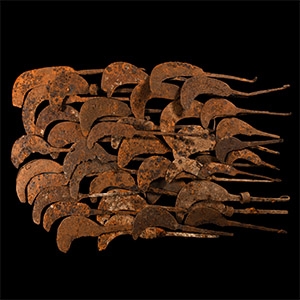
Medieval Iron Scythe Group
15th century A.D. and laterSold for (Inc. bp): £52
With various blade profiles and tangs. 1.75 kg total, 9.5-23.5 cm
Acquired 1990s-early 2000s. East Anglian private collection. -
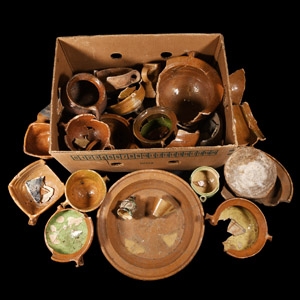
Medieval Pottery Group
Circa 15th-16th century A.D.Estimate: £100 - 140 (+bp*)
Opening Bid: £40
Mainly comprising glazed vessels, repaired vessels and fragments including skillets, handled pots and bowls, vessels with polychrome glaze, chargers, tankards, pouring bowls and others. 12.2 kg total, 3-34 cm
Acquired 1990s-early 2000s. East Anglian private collection. -
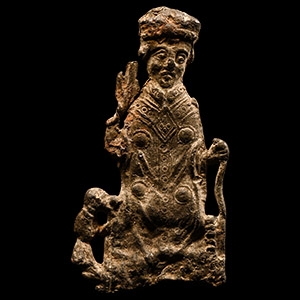
Medieval Pewter Pilgrim Badge of a Bishop
Circa 1300 A.D.Sold for (Inc. bp): £338
Standing figure facing wearing a mitre; right hand raised in sign of blessing, left hand emerging from the robe at the hip to grasp a staff; vestment with low-relief detail to front and back including four bosses and a broad collar; rectangular base with small supplicant to one side. 8.59 grams, 50 mm
From the Forgeais (1822-1878) collection, France, thence by family descent. with Gallery 51, 21 June 2013, lot 79.
