Loading, please wait...

Use mousewheel to zoom in and out, click to enlarge

Details

LOT 1829

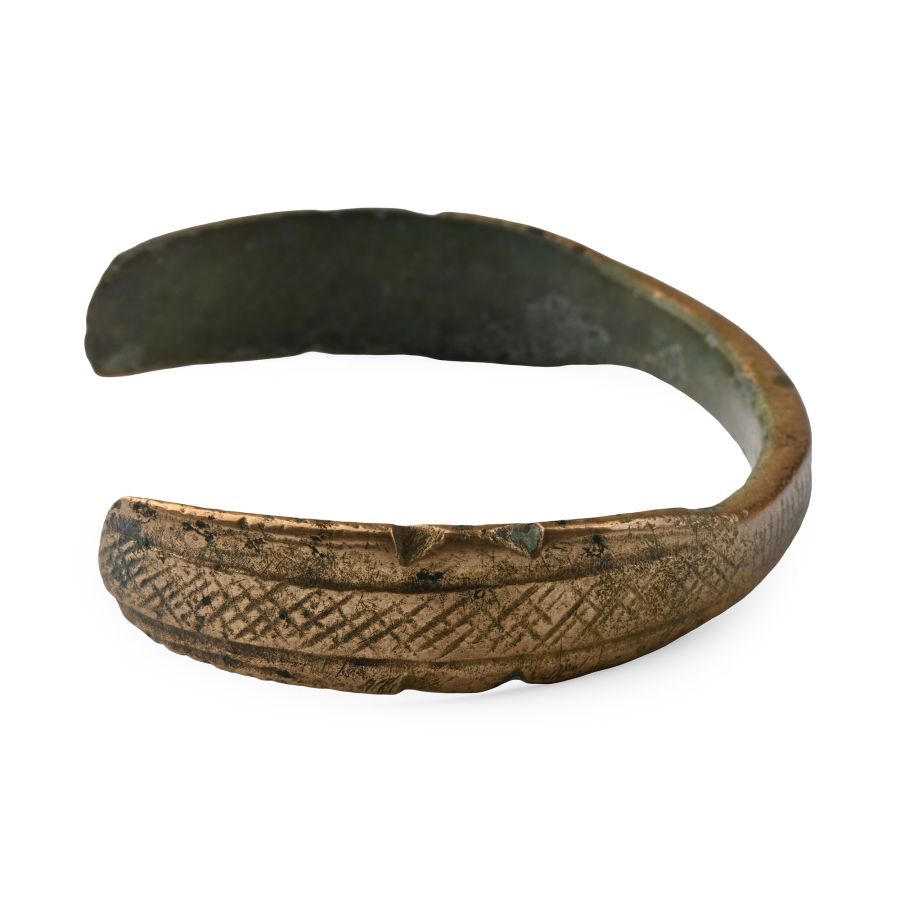
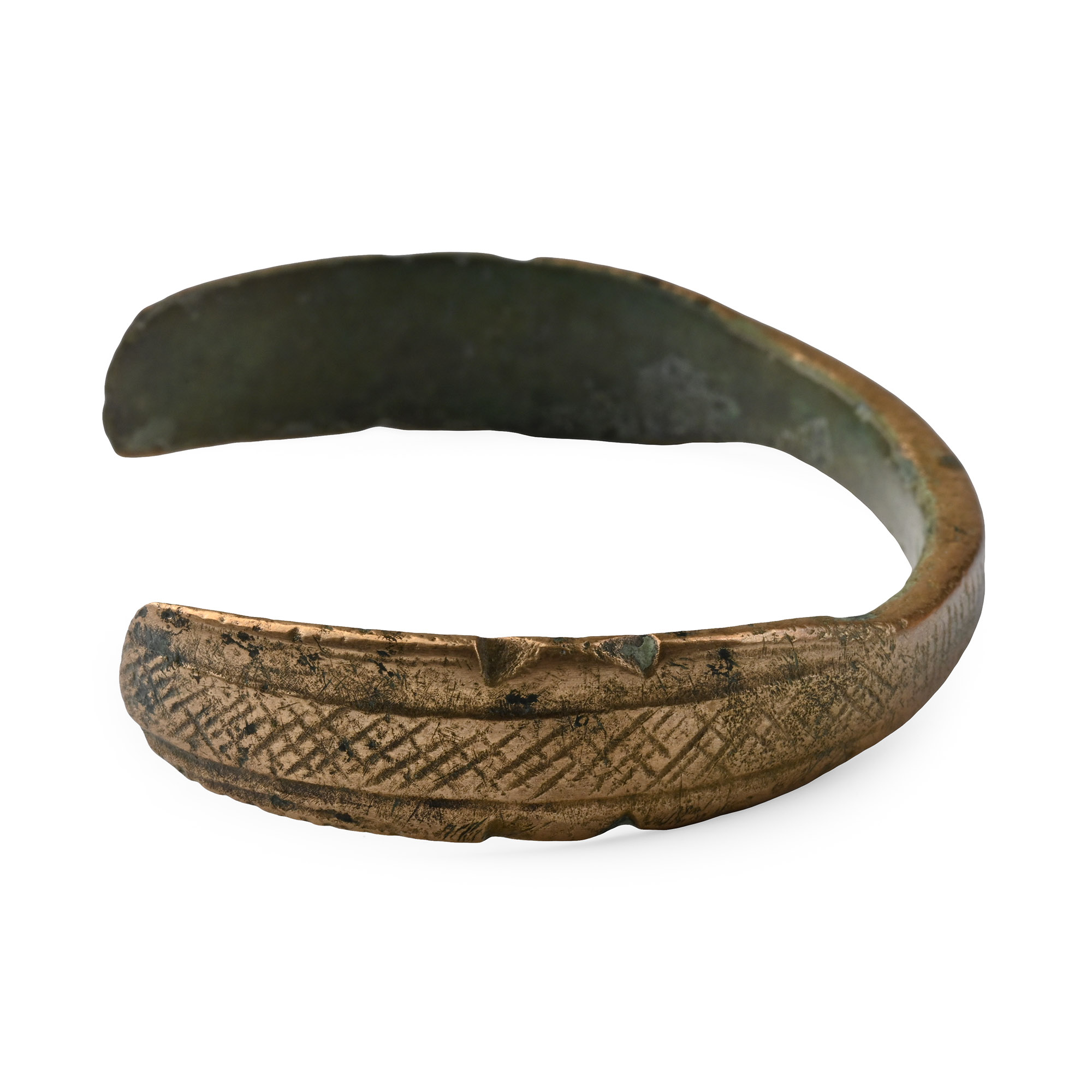
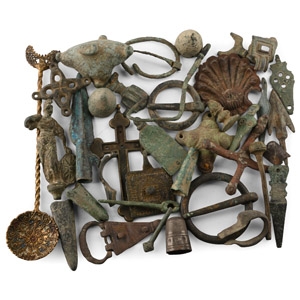
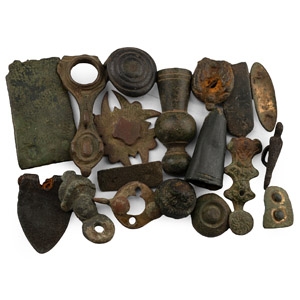
Medieval Bronze Decorated Bracelet

14TH-16TH CENTURY A.D.

2 3/8 in. (26 grams, 62 mm).

Penannular in form with lobe finials, hatched median band. [No Reserve]

Provenance

From an old Lincoln, UK, collection, 1950s-1970s.
From the property of a late Lincolnshire, UK, gentleman.

CONDITION

VETTING:

TimeLine Auctions follows a vetting process to ensure the authenticity and legality of all items, reinforcing our commitment to integrity and responsible trading. Each antiquity, antique, and coin lot undergoes thorough examination by a vetting committee of at least ten external specialists, professional trade association members, scientists, and archaeologists: Our Vetting Process


AUCTIONS:

TimeLine is a leading auction house specialising in antiquities, ancient art, collectables, natural history, coins, medals, and books. Our auctions offer museums, collectors, historians, and enthusiasts the opportunity to acquire unique and historically significant pieces.

LOT 1829

Medieval Bronze Decorated Bracelet

Sold for (Inc. bp): £13

Print page

RELATED LOTS

  • Medieval Gold Ring Brooch with Garnets and Let us Live as One Soul’ Posy Inscription
    Medieval Gold Ring Brooch with Garnets and 'Let us Live as One Soul’ Posy Inscription
    13th-14th century A.D.

    Sold for (Inc. bp): £7,020

    An annular brooch with pelletted edges, six garnet cabochons adorning the brooch, each in a tall closed setting; inscribed on the front 'VIVAMTINVNOANI', the reverse inscribed with 'AMORIVNTVANVNTVI' divided between two palmettes. 8.76 grams, 38 mm


    Private English collection, formed between the late 1970s and early 1990s. Private collection, UK. This lot has been checked against the Interpol Database of stolen works of art and is accompanied by search certificate number no.12989-245987.

    Both inscriptions can be interpreted differently according to the order of their reading; the front can be read ‘IN JUNO ANI VIVAM TI’, which roughly translates as ‘May I live for you in the fastening’, alternatively ‘VIVAM[vs] IN VNO ANI[mo]’ which roughly translates as ‘Let us live as one soul’. The back reads: 'AMORIVNTVANVNTVI' ‘AMOR[is]    IVN[c]T[i]    ANVNTIV[s]’ which roughly translates as ‘a message of joint love’. The inscriptions on the brooch serve as metaphors, linking its function of fastening materials to the binding of lovers in medieval romance. Gift-giving was central to courtly love, and the brooch symbolised both affection and protection, reminding the wearer of the giver’s love while also warding off unwanted advances.

    Lot Details

  • Medieval Knights Enamelled Bronze Horse Harness Pendant
    Medieval Knight's Enamelled Bronze Horse Harness Pendant
    13th-14th century A.D.

    Sold for (Inc. bp): £91

    Comprising a central disc with eight radiating lobes, each with a shallow recess to accept enamel, incised ring enclosing a perching bird; integral loop. 7.09 grams, 37 mm


    Found Gloucestershire, UK.

    Lot Details

  • Medieval Gold Ring Brooch with Sapphires
    Medieval Gold Ring Brooch with Sapphires
    France, 14th century A.D. or later

    Sold for (Inc. bp): £1,950

    An annular brooch set with six cabochon sapphires, the spaces in between engraved with annulets, diamonds and a fleur-de-lis at the centre, a flower motif on each side of the pin. 6.11 grams, 20 mm


    Private English collection, formed between the late 1970s and early 1990s. Private collection, UK.

    In medieval jewellery, sapphires were revered not only for their beauty but for their rich symbolic and spiritual meaning. Associated with the heavens, they embodied divine wisdom, purity, and truth, often worn by clergy and royalty as signs of piety and authority. Believed to protect against envy, poison, and deceit, sapphires were also thought to reveal dishonesty by losing their brilliance, making them symbols of fidelity and integrity. Frequently gifted as tokens of loyal love, they were valued for their supposed healing properties, particularly for ailments of the eyes and mind. In 14th-century jewellery, the fleur-de-lis symbolised a blend of royal allegiance, religious devotion, and noble identity. As the emblem of the French monarchy, it signified loyalty to the crown and noble lineage, while its association with the Virgin Mary evoked purity and spiritual grace. Common in courtly and devotional contexts, it also reflected chivalric ideals such as honour, fidelity, and moral virtue.

    Lot Details

Stay up-to-date with the latest from TimeLine Auctions by joining our mailing list