
Loading, please wait...
LOT 1754
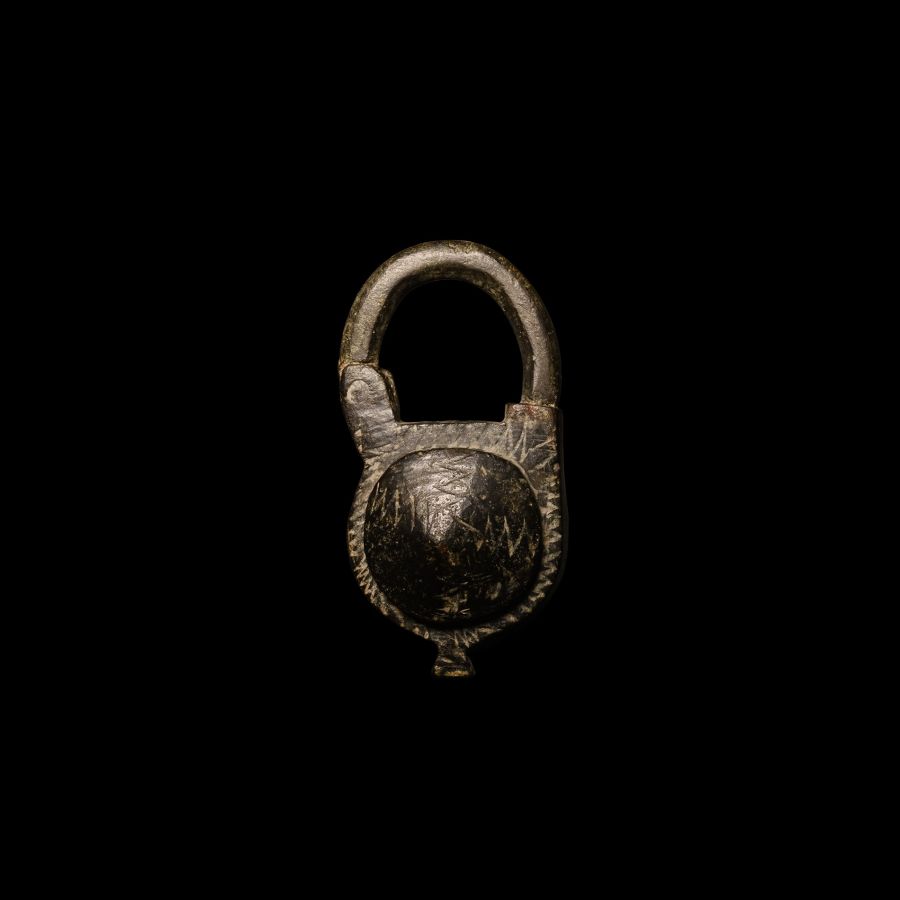
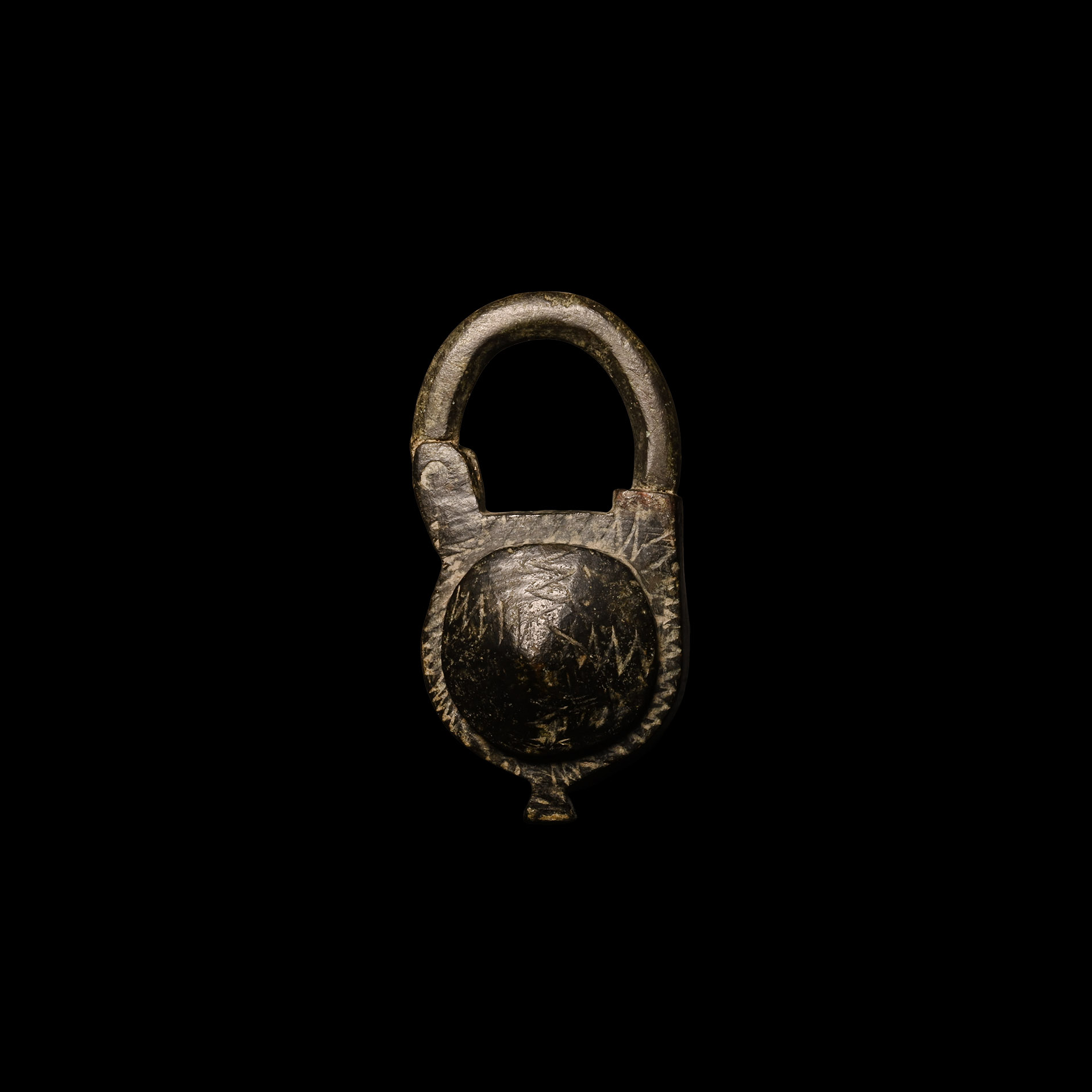
Medieval Bronze Casket Padlock
CIRCA 15TH CENTURY A.D.
3 in. (18.8 grams, 76 mm).
The body decorated with chevrons; the hinged, semi-circular hoop retained within the body of the lock; the keyhole protected by a sliding panel; complete. [No Reserve]
ProvenanceEx property of a North London gentleman.
From the collection of a North American gentleman.
TimeLine Auctions follows a vetting process to ensure the authenticity and legality of all items, reinforcing our commitment to integrity and responsible trading. Each antiquity, antique, and coin lot undergoes thorough examination by a vetting committee of at least ten external specialists, professional trade association members, scientists, and archaeologists: Our Vetting Process
AUCTIONS:
TimeLine is a leading auction house specialising in antiquities, ancient art, collectables, natural history, coins, medals, and books. Our auctions offer museums, collectors, historians, and enthusiasts the opportunity to acquire unique and historically significant pieces.
-
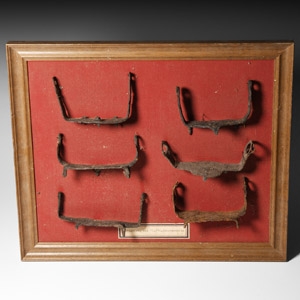
Medieval Early Iron 'Ice Crampon' Collection
15th-16th century A.D.Sold for (Inc. bp): £33
Mounted on a framed back board for display. 1 kg, 38.5 x 32 cm
Acquired 1960s-1990s. Late Alison Barker collection, a retired London barrister. -
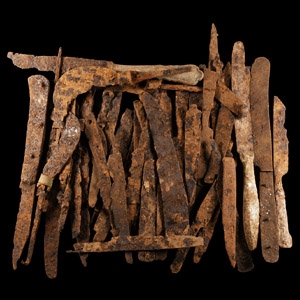
Medieval Iron Artefact Group
14th-16th century A.D.Sold for (Inc. bp): £20
Mainly comprising knife blades and handles of various styles and dates, including folding knives. 1.37 kg total, 9-23.5 cm
Acquired 1990s-early 2000s. East Anglian private collection. -
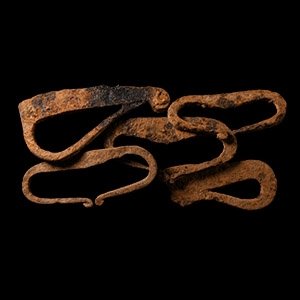
Medieval Iron Fire Starter Group
Circa 15th century A.D.Estimate: £100 - 140 (+bp*)
Opening Bid: £40
Including fire steels of various types with ornamental shaping. 118 grams total, 56-75 mm
Acquired 1990s-early 2000s. East Anglian private collection.
