
Loading, please wait...
LOT 1637
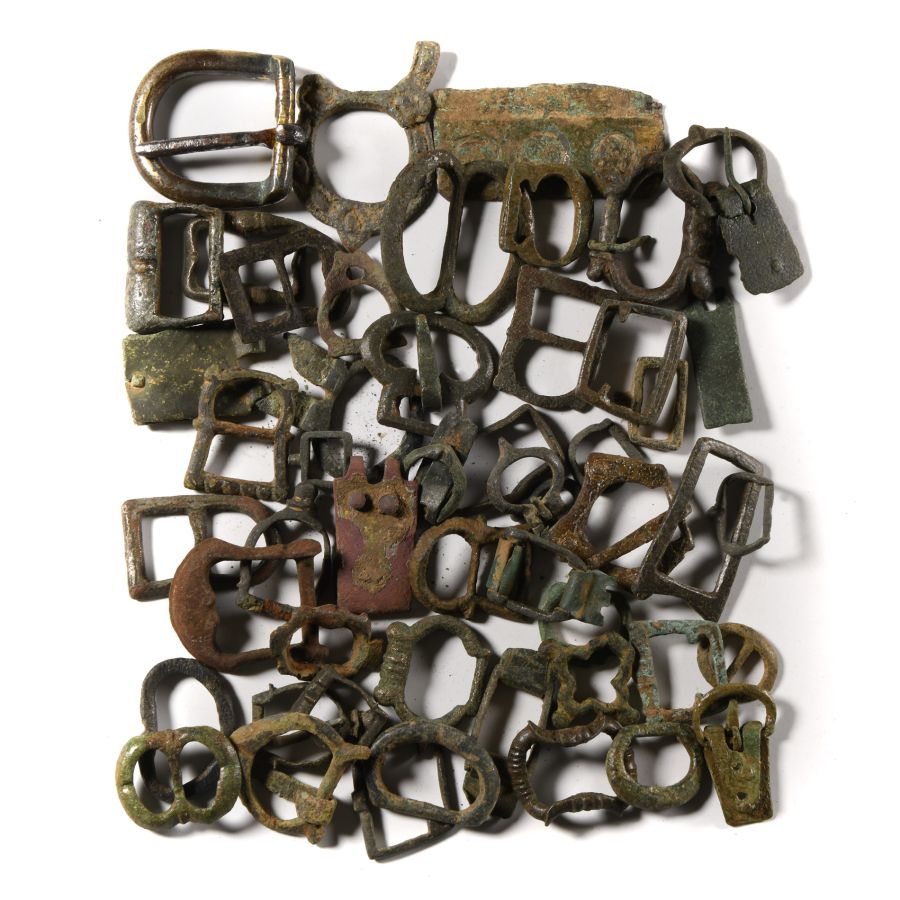
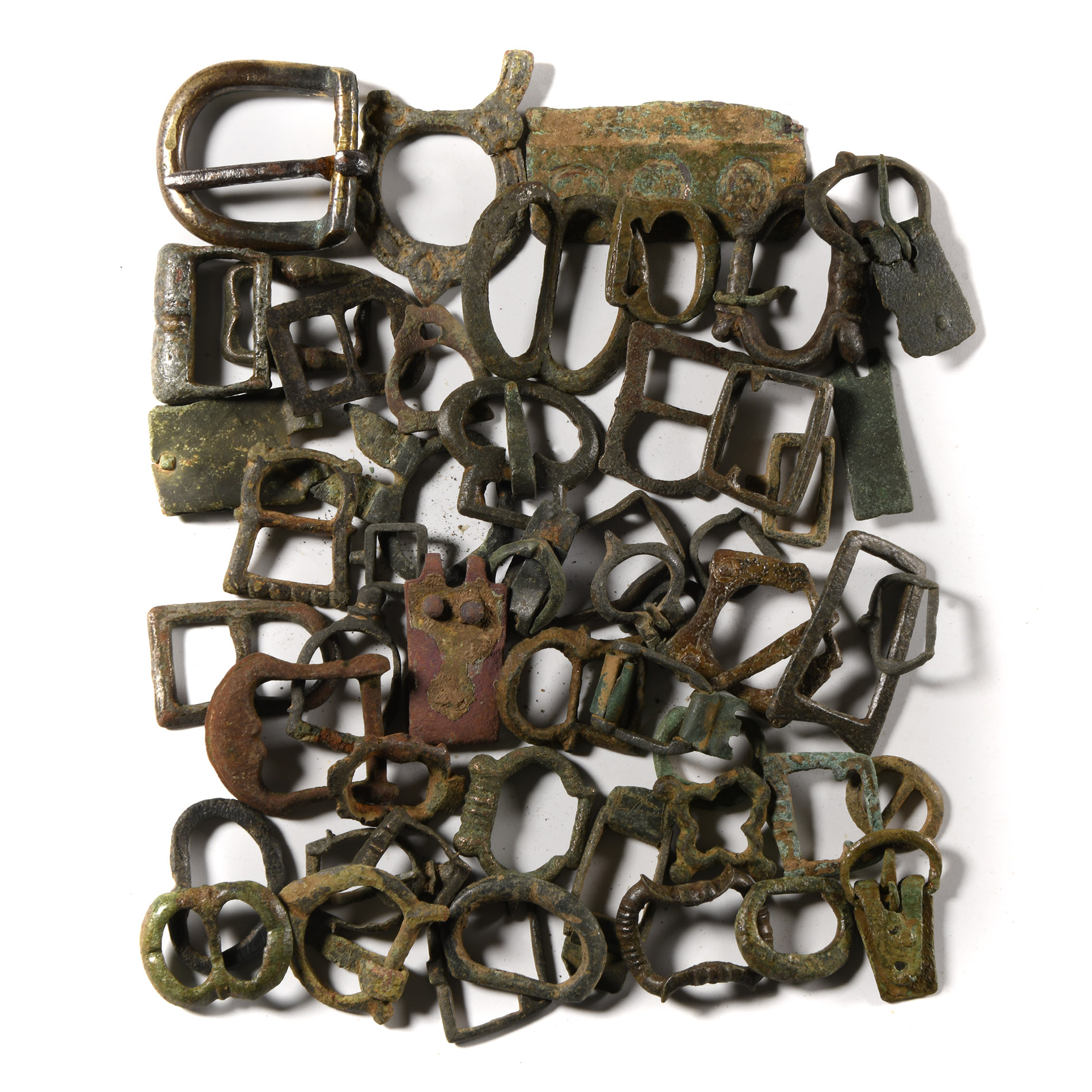
Medieval Bronze Buckle Collection
12TH-16TH CENTURY A.D.
1/2 - 1 5/8 in. (161 grams total, 13-42 mm).
Mixed group of mainly bronze buckles, buckle plates and buckle loops, some with mounting tags. [51, No Reserve]
ProvenanceFound near York, UK.
CONDITIONTimeLine Auctions follows a vetting process to ensure the authenticity and legality of all items, reinforcing our commitment to integrity and responsible trading. Each antiquity, antique, and coin lot undergoes thorough examination by a vetting committee of at least ten external specialists, professional trade association members, scientists, and archaeologists: Our Vetting Process
AUCTIONS:
TimeLine is a leading auction house specialising in antiquities, ancient art, collectables, natural history, coins, medals, and books. Our auctions offer museums, collectors, historians, and enthusiasts the opportunity to acquire unique and historically significant pieces.
-
Medieval to Post Medieval Artefact Group
14th-20th century A.D.Sold for (Inc. bp): £52
Mixed group including crotal bells, thimbles, finger rings, furniture fittings and other items. 1.25 kg total, 6-78 mm
Found Hertfordshire, UK. -
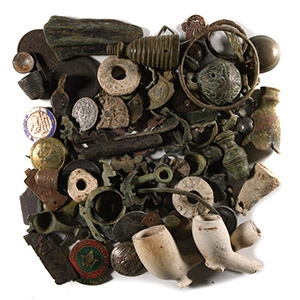
Medieval and Later Artefact Collection
12th-19th century A.D.Sold for (Inc. bp): £59
Mixed group of artefacts including coins, badges, buttons, pipe bowls, a crotal bell and other items. 902 grams total, 12-52 mm
Found near York, UK. -
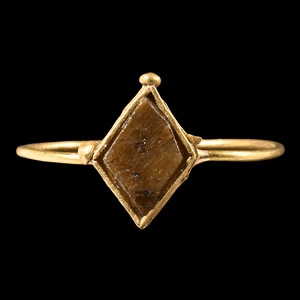
Medieval Gold Ring with Inlay
14th-16th century A.D. and laterSold for (Inc. bp): £182
Lozenge-shaped bezel with granules to the angles and inset glass cloison, with later slender hoop. 0.69 grams, 18.23 mm overall, 16.52 mm internal diameter (approximate size British J 1/2, USA 5, Europe 9.32, Japan 9)
From a gentleman's collection, Surrey, UK.
