
Loading, please wait...
LOT 1712
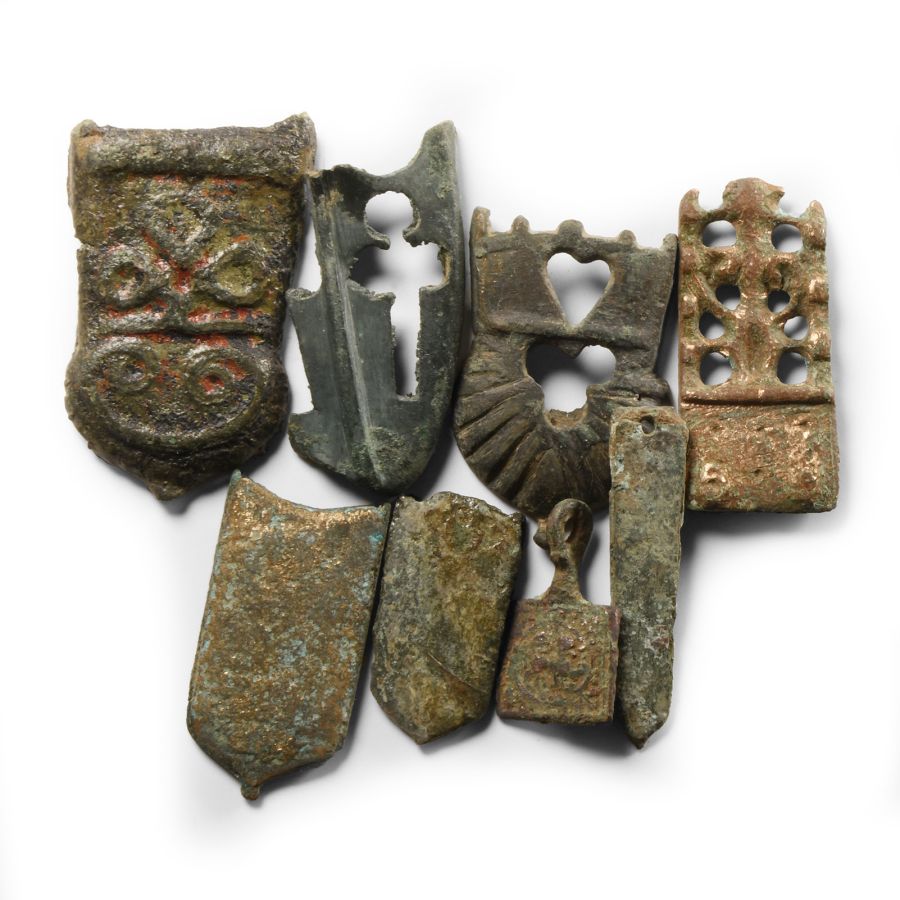
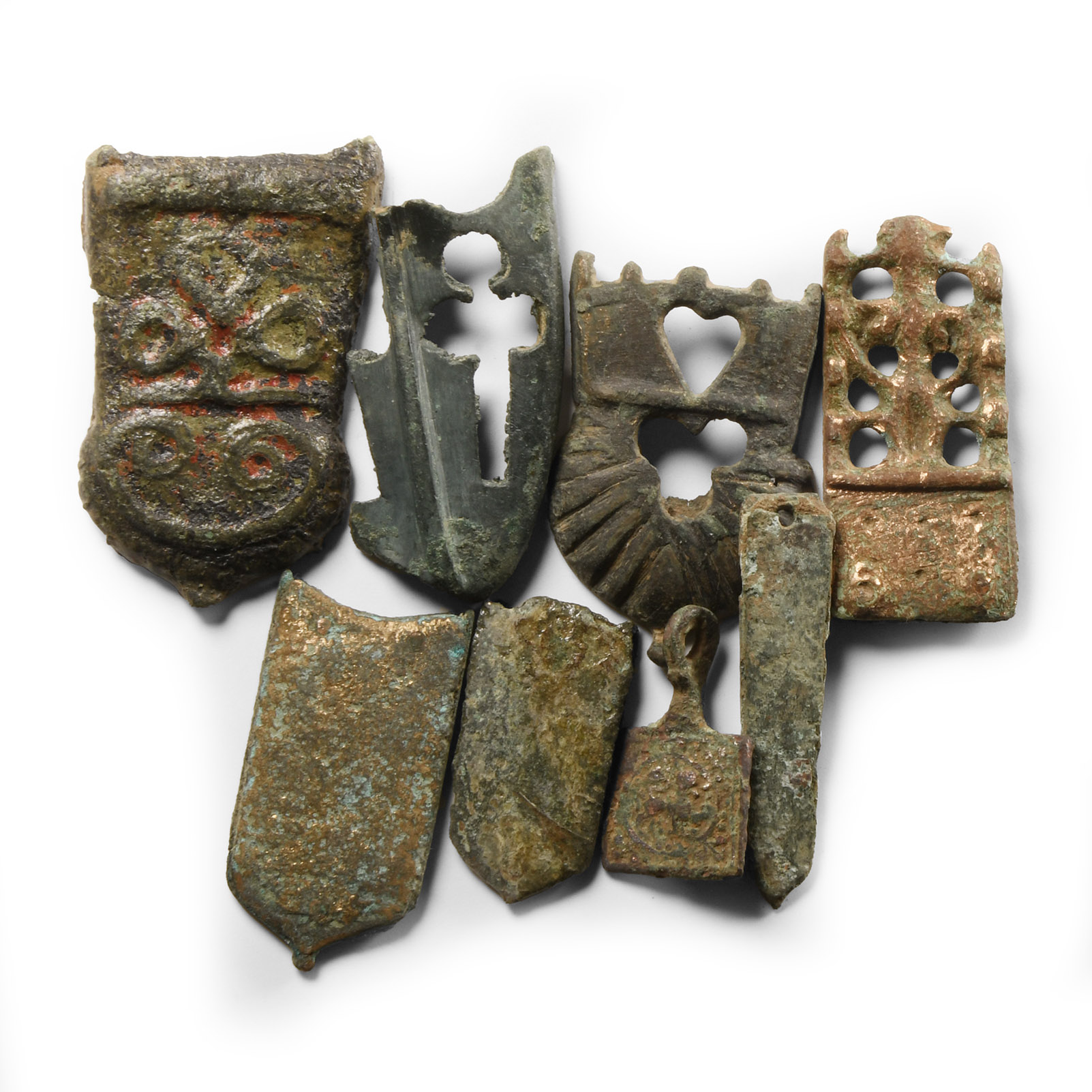
Medieval Bronze Artefact Collection
1100-1500 A.D.
1 - 1 5/8 in. (43.8 grams total, 24-42 mm).
Including heater-shaped belt-plates, scallop-shaped scabbard chape and other items. [8, No Reserve]
ProvenanceFound North Yorkshire, UK.
CONDITIONTimeLine Auctions follows a vetting process to ensure the authenticity and legality of all items, reinforcing our commitment to integrity and responsible trading. Each antiquity, antique, and coin lot undergoes thorough examination by a vetting committee of at least ten external specialists, professional trade association members, scientists, and archaeologists: Our Vetting Process
AUCTIONS:
TimeLine is a leading auction house specialising in antiquities, ancient art, collectables, natural history, coins, medals, and books. Our auctions offer museums, collectors, historians, and enthusiasts the opportunity to acquire unique and historically significant pieces.
-
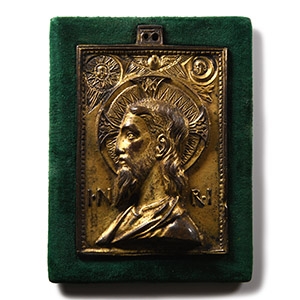
Medieval Gilt Bronze Plaque of the True Face of Christ
Italy, circa 1500 A.D.Sold for (Inc. bp): £1,820
With raised rim, nimbate bust of Christ in profile with long beard and shoulder-length hair, folded collar to the mantle; dove above with wings spread between sun and moon, each with a facing mask; inscription I.N.R.I. visible on either side of the portrait; mounted on a velvet-covered stand. 216 grams, 10.1 x 6.6 cm
with Pierre-Richard Royer, 2010. Ex central London gallery.
The icon represents the profile bust of Christ found on a Byzantine emerald, whence it is known as an 'Emerald Icon'. The emerald was one of the several holy objects sent to Pope Innocent VIII in the 1490's by the Turkish Sultan Bajazet II. The icon was considered one of the Christianity's most precious relics. The letters "I N R I" stand for 'Iesus Nazarenus Rex Iudaeorum,' i.e.' Jesus of Nazareth, King of the Jews' This is the inscription that, according to the Evangelist John, Pilate had written on the plaque above Christ's head on the cross. The sun and moon allude to the cosmic significance of his sacrifice. -

Medieval Knight's Enamelled Bronze '1st Baron Roger de Montalt' Heraldic Horse Harness Pendant with Lion Rampant
13th century A.D.Sold for (Inc. bp): £286
Shield-shaped, azure with a lion rampant argent, the arms of Roger de Montalt. 13.6 grams, 45 mm
Found near Lincoln, Lincolnshire, UK. Accompanied by copies of typed catalogue information slips.
Roger de Montalt was the first Baron Montalt, who rebelled against Henry III of England. He was one of the defenders of Cambridge for Henry III and during the reign of Edward I, he served overseas in the Gascon wars. -
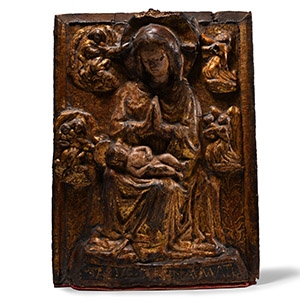
Medieval Gilt Wooden Relief with Enthroned Virgin and Child Surrounded by Angels
Italian, Lombardy, circa 1480 A.D.Sold for (Inc. bp): £3,900
Rectangular panel with cartapesta relief of Virgin and Child carved in the half-round; Mary seated, nimbate with hands pressed together in prayer, infant lying across her lap, flanked by four winged angels in poses of adoration; gilt surface with pink flesh tones; inscribed to base 'SALVE REGINA MATE[R MISERICORDIAE]' (Hail Mother the Queen). 1.07 kg, 36.5 x 27 cm
German private collection, 2019. Ex central London gallery. This lot has been checked against the Interpol Database of stolen works of art and is accompanied by a search certificate number no.12056-217445.
Like all the ancient and medieval statues, this artwork was also originally lavishly painted and most of the colours are still visible with gold and red and light blue being the main colours used for Saint Mary. Interestingly, the inscription recalls the three first words of the Cluny prayer to the Virgin Mary: SALVE REGINA, MATER MISERICORDIAE (Hail Holy Queen Merciful Mother), used by the Templars as a war song.
