
Loading, please wait...
LOT 1181
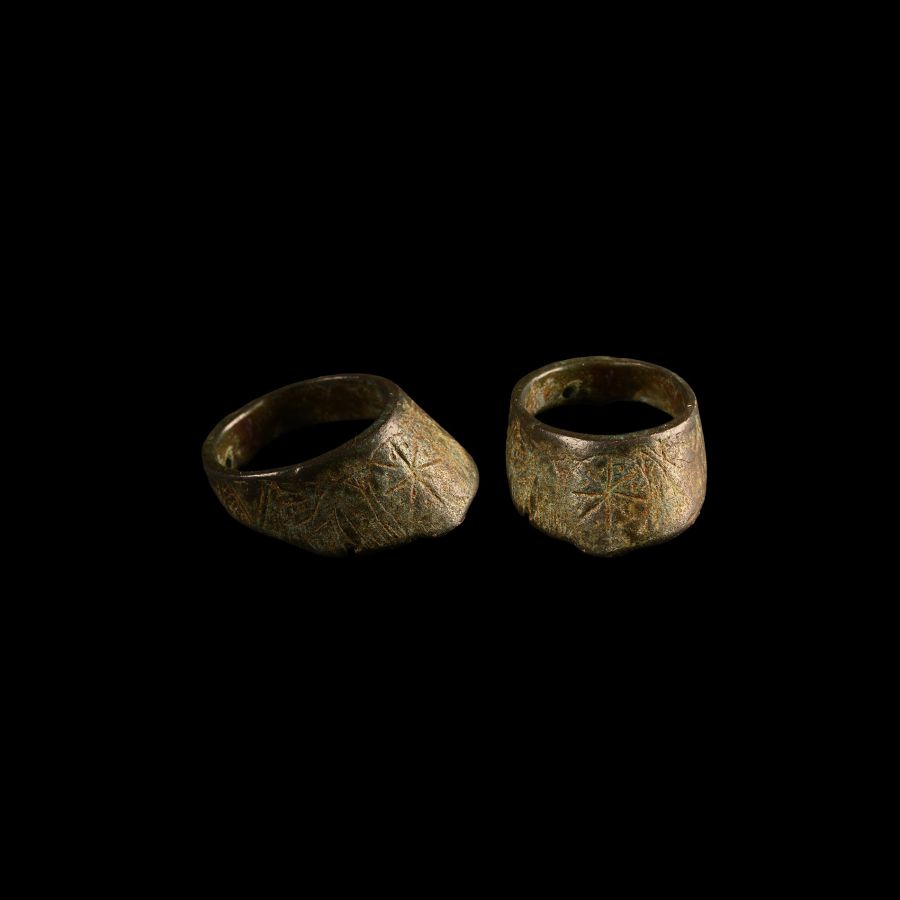
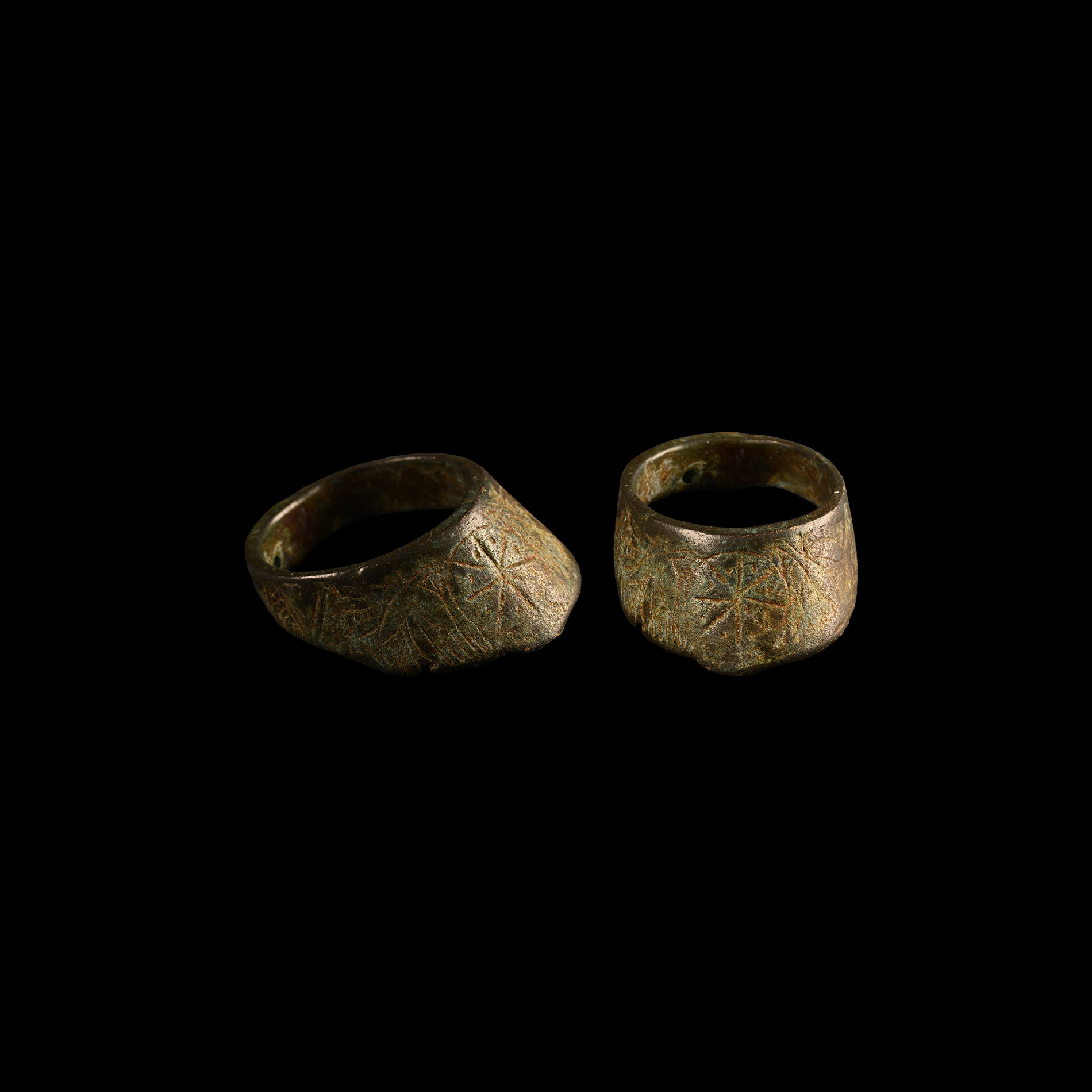
Medieval Bronze Archer's Ring
13TH-15TH CENTURY A.D.
1 3/8 in. (10.19 grams, 34.62 mm overall, 20.76 mm internal diameter (approximate size British W 1/2, USA 11 1/4, Europe 25.66, Japan 24)).
Incuse geometric detail to the hoop, flange with wheel motif. [No Reserve]
ProvenanceEnglish collection, early 2000s.
Ex central London gallery.
TimeLine Auctions follows a vetting process to ensure the authenticity and legality of all items, reinforcing our commitment to integrity and responsible trading. Each antiquity, antique, and coin lot undergoes thorough examination by a vetting committee of at least ten external specialists, professional trade association members, scientists, and archaeologists: Our Vetting Process
AUCTIONS:
TimeLine is a leading auction house specialising in antiquities, ancient art, collectables, natural history, coins, medals, and books. Our auctions offer museums, collectors, historians, and enthusiasts the opportunity to acquire unique and historically significant pieces.
-
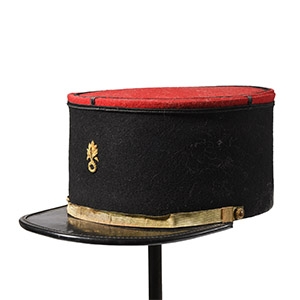
French Foreign Legion Kepi
Circa 1930-1940s A.D.Sold for (Inc. bp): £104
Black and red cloth with gold-coloured banding and 'button'; red lining and typed label reading 'Sergent BUYUKISPIR Haluk 1o R.E. Quartier Viénot C.S.L.E./S.I.H.L.E....'. 197 grams, 24.5 cm wide
Acquired from Czerny's Auctions, Italy, lot 104, 2016. The Kusmirek Collection, UK. Accompanied by copy of Czerny's invoice and information. -
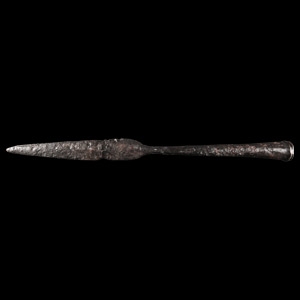
Massive Viking Age Finno-Ugrian Spearhead
Circa 12th-13th century A.D.Sold for (Inc. bp): £169
Comprising a leaf-shaped blade and long tubular socket. 388 grams, 42.2 cm
UK collection since the 1990s. Property of a Sussex, UK, teacher.
The more common weapons of Finno-Ugrian people were axes commonly found from all Finnic areas, as well as spears. Among Baltic-Finnic people, especially in Finland and Karelia, knives called 'puukko' were common, as well as axes, spears, flat bows and long bows, while swords were usually imported from Germanic areas, Sweden or from elsewhere Scandinavia, some having often typically Scandinavian animal ornaments, although there are some Finnish made finds too. -
.jpg)
Belgian Simonis 12 Shot Pinfire Revolver
1877-1890 A.D.Estimate: £1,000 - 1,400 (+bp*)
Opening Bid: £472
Single and double action twelve shot 9mm calibre revolver with 13cm (5¼") round barrel with extractor rod mounted at right and hinged loading gate with Liege proof marks and marked 'CAL 9mm' to right frame with serial number 2676; fitted with plain wood scale grips and lanyard ring (usually fitted to revolvers intended for military use); action working well. 975 grams, 25 cm
Acquired from Bolk Antique Arms, Netherlands, 2016. The Kusmirek Collection, UK. Accompanied by Bolk invoice and details.
Sold as an exempt item under Section 58 (2) of the Firearms Act, 1968, to be held as a curiosity or ornament. No license required but buyer must be over 18 years of age. Overseas bidders should note that, due to UK regulations governing export of all firearms, overseas buyers will need to make arrangements for shipping this lot out of the UK directly, by air freight, with a specialist company or agent.
