
Loading, please wait...
LOT 1749
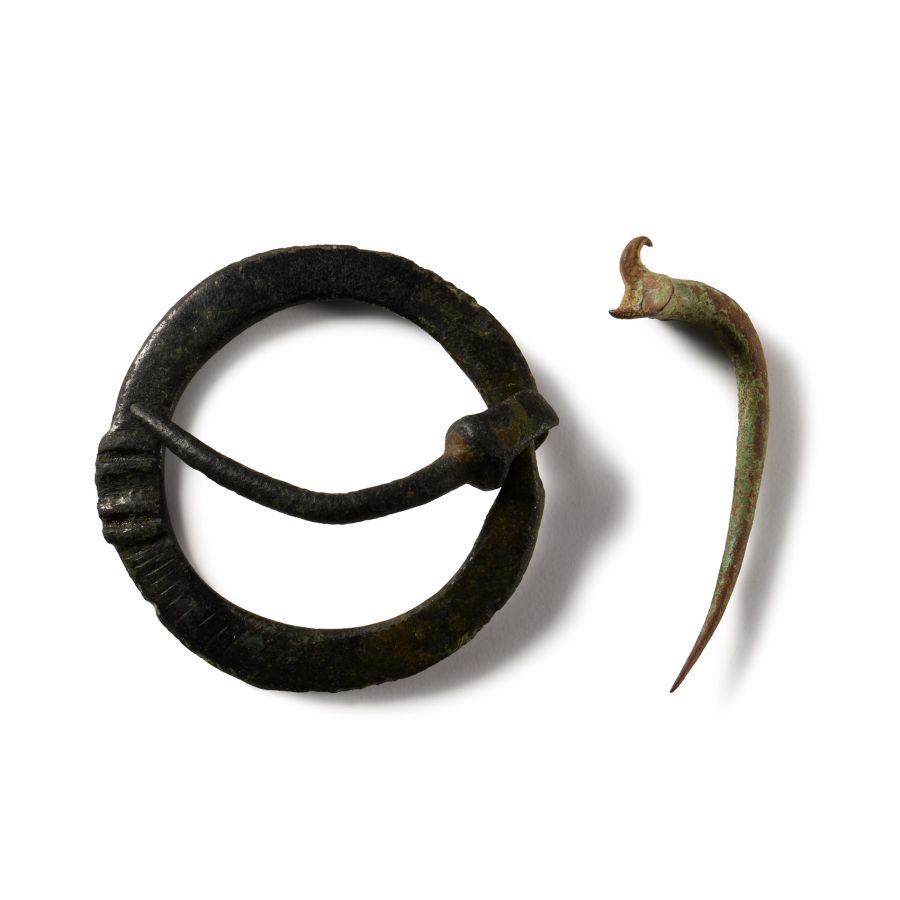
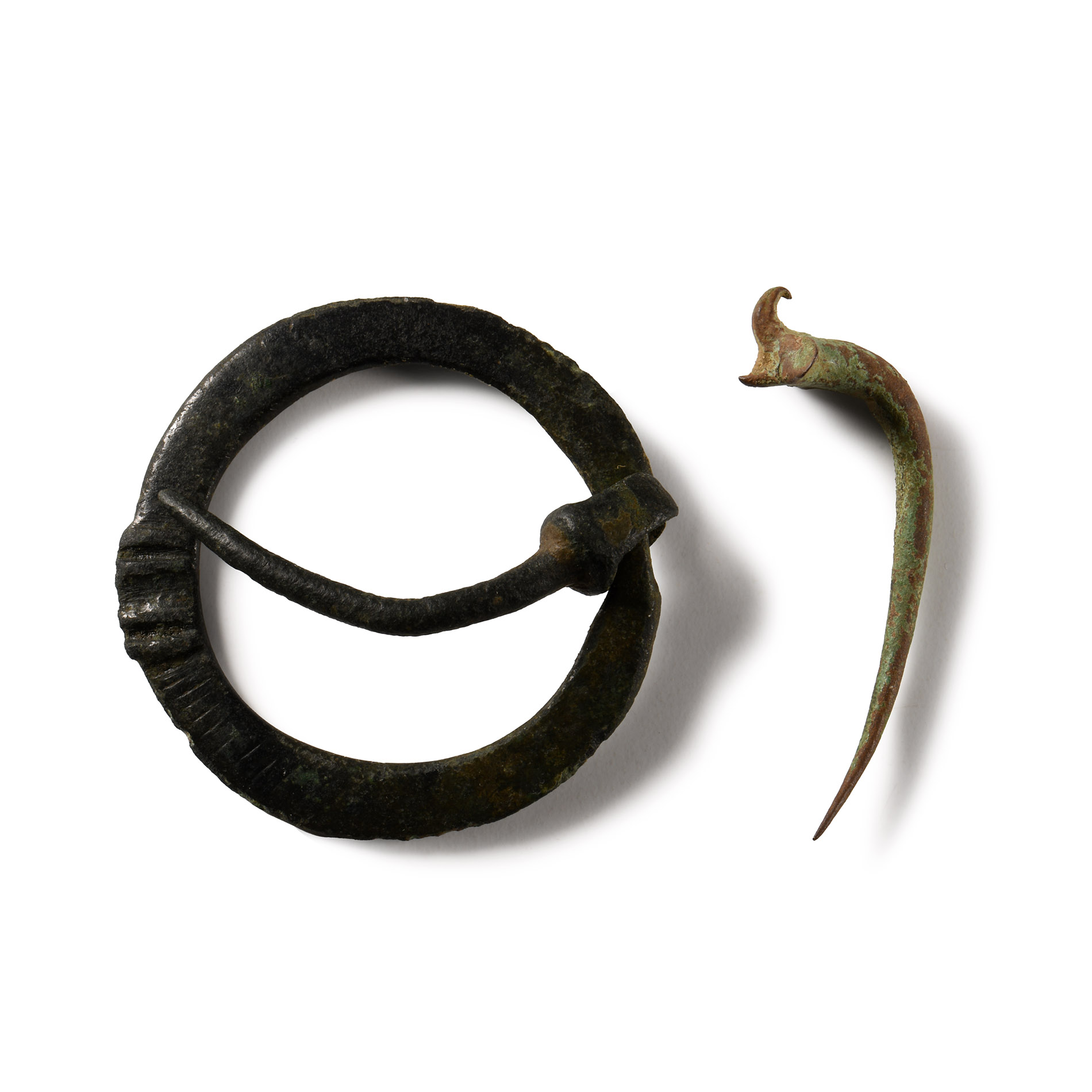
Medieval Bronze Annular Brooch
CIRCA 12TH-14TH CENTURY A.D. AND EARLIER
1 1/2 in. (10.2 grams total, 38 mm).
Comprising a ring brooch with a flat-section body and free-running pin; accompanied by a 1st century Iron Age fibula without a pin. [2, No Reserve]
ProvenanceFound Norfolk, UK.
CONDITIONTimeLine Auctions follows a vetting process to ensure the authenticity and legality of all items, reinforcing our commitment to integrity and responsible trading. Each antiquity, antique, and coin lot undergoes thorough examination by a vetting committee of at least ten external specialists, professional trade association members, scientists, and archaeologists: Our Vetting Process
AUCTIONS:
TimeLine is a leading auction house specialising in antiquities, ancient art, collectables, natural history, coins, medals, and books. Our auctions offer museums, collectors, historians, and enthusiasts the opportunity to acquire unique and historically significant pieces.
-
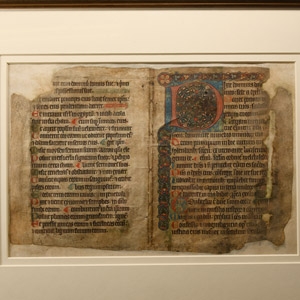
Medieval Bifolium from a Dismembered Psalter
England, circa 1340 A.D.Sold for (Inc. bp): £1,690
Vellum 'two-page spread' with stitching holes flanking the central column; left page with dense bastarda script in black ink with green and red versals and ornament; right page with large initial majuscule 'D' and floral panels extending across the upper edge of the text and down the left margin, the bow of the 'D' filled with dense leaf, tendril and floral detailing, text of Psalm 110. 2.65 kg, 60 x 45 cm
with Sotheby's, London, 7 December 1999, no.9. -
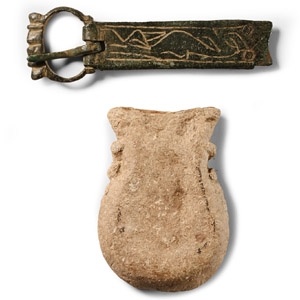
Medieval 'Westminster' Bronze Buckle and Plate and Lead Pilgrim's Ampulla
Circa 14th century A.D.Sold for (Inc. bp): £52
Buckle with knuckles to outer edge of the loop and strap with incised tendril design; ampulla with lateral loops bent over. 63 grams total, 46-62 mm
Found Westminster, London, UK. Property of a Gloucestershire, UK, collector. Property of an East Sussex, UK, gentleman. -
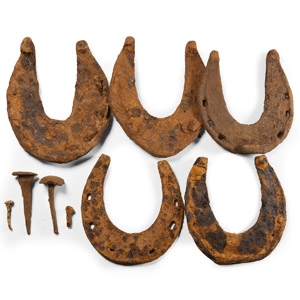
Medieval Iron Horseshoe Group
Circa 15th-16th century A.D.Sold for (Inc. bp): £59
Mainly formed with broad plate and countersunk rectangular nail-holes. 1.2 kg total, 2.5-13.5 cm
From the collection of B. Posey, Germany 1990s.
