
Loading, please wait...
LOT 0370
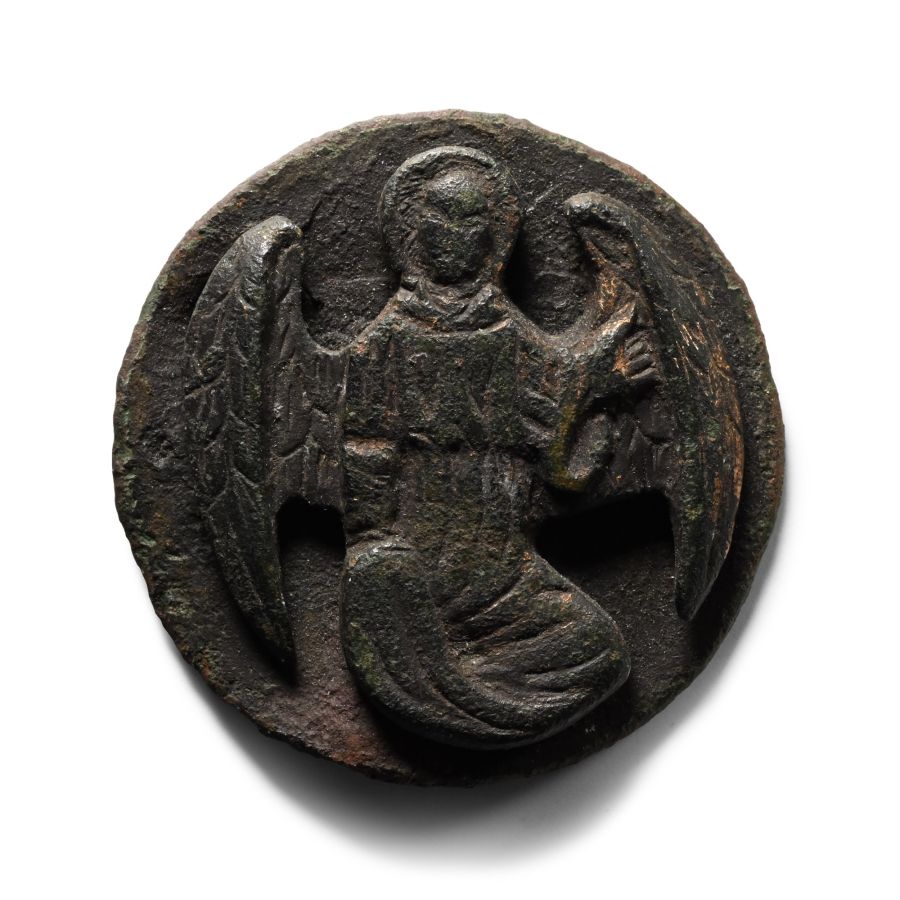
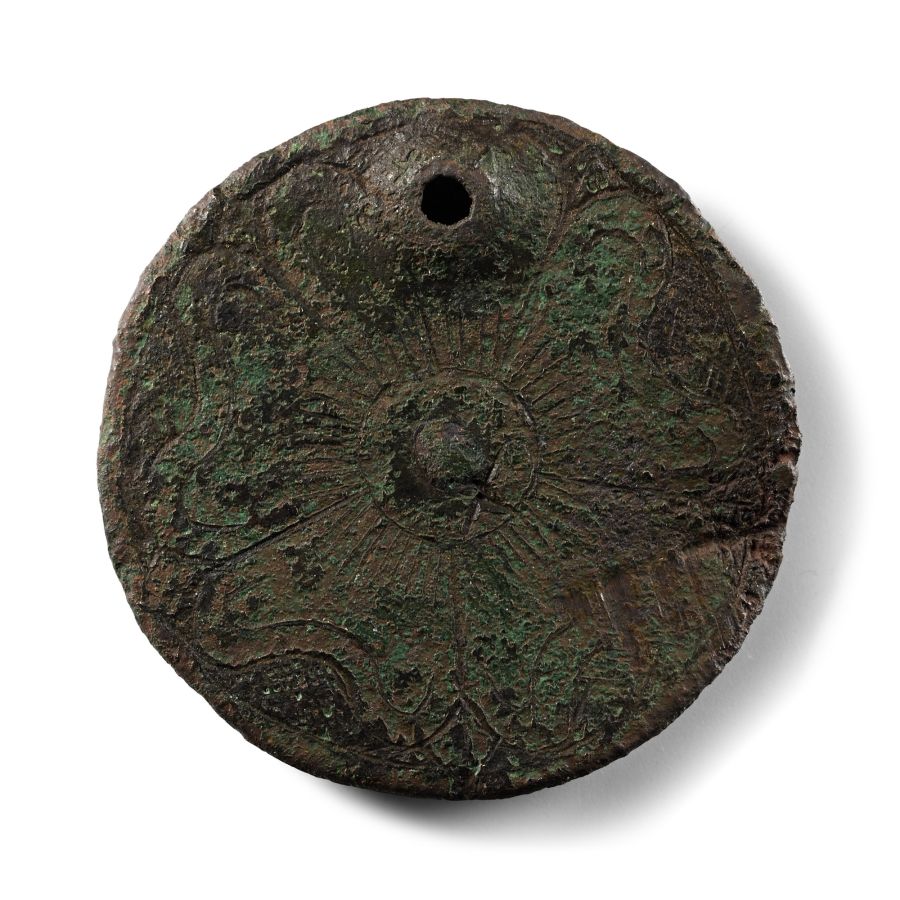
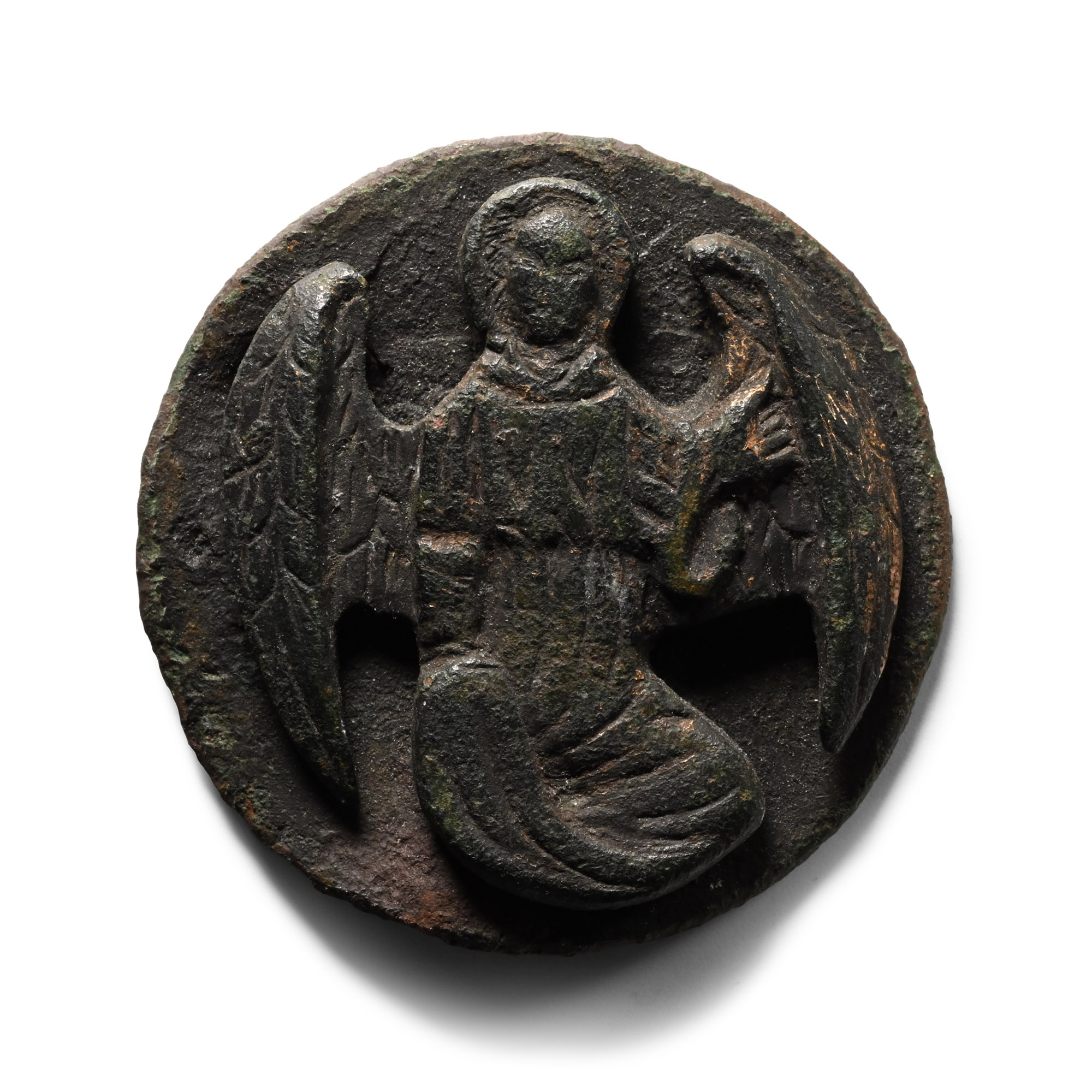
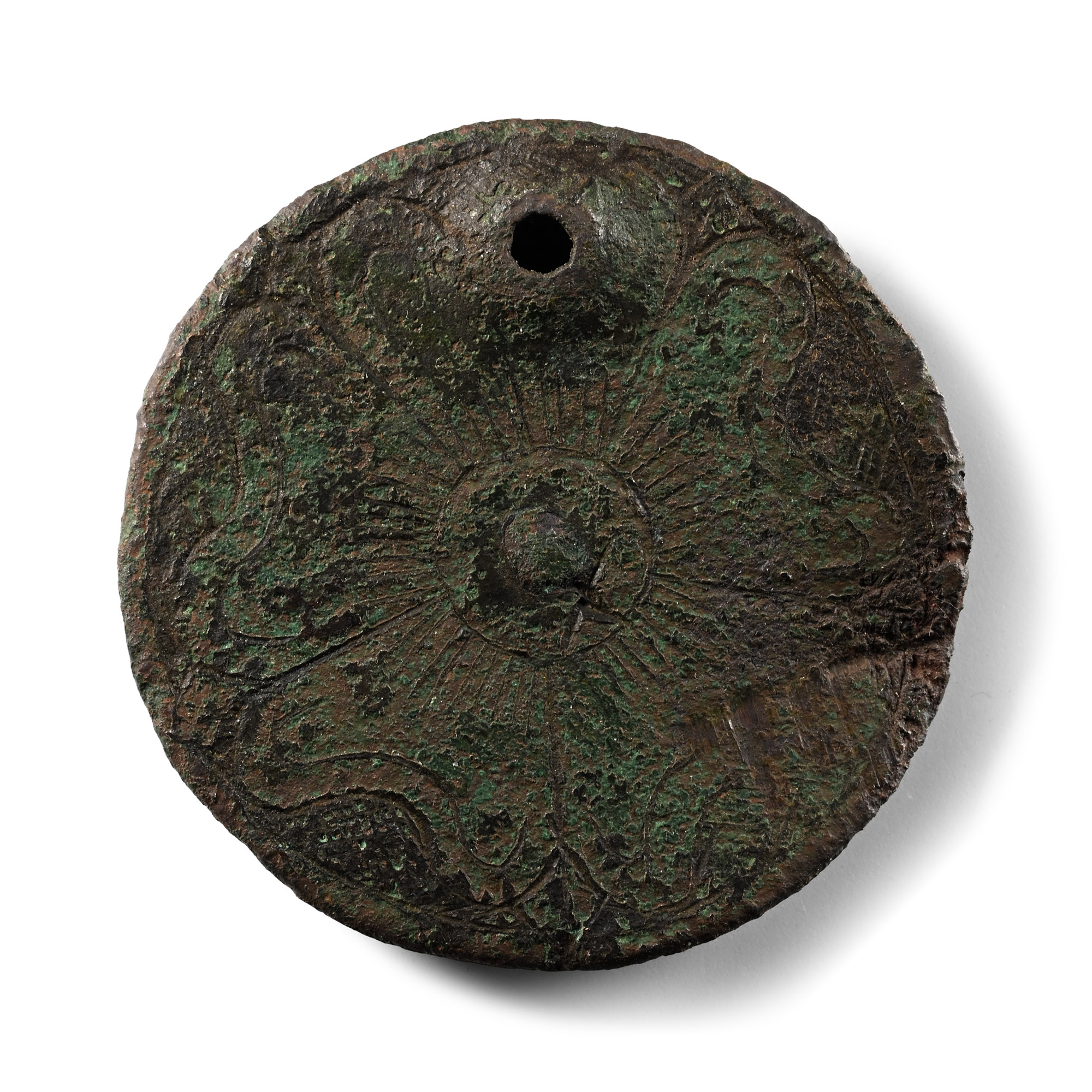
Medieval Bifacial Gilt Bronze Altar Cross Mount
14TH-15TH CENTURY A.D.
1 7/8 in. (56.2 grams, 48 mm).
Roundel with low-relief enamelled rosette to one face, to the other an applied high-relief figure of an angel with wings spread, nimbus to the head, holding the hem of his robe in his right hand; secondary piercing behind the angel's wing. [No Reserve]
ProvenanceFound near Horsham St. Faith, Norfolk, UK.
From an old private collection of Norfolk, UK, gentleman, formed since 1998.
Accompanied by a copy of the British Museum's Portable Antiquities Scheme (PAS) report no.NMS-EED2A2.
TimeLine Auctions follows a vetting process to ensure the authenticity and legality of all items, reinforcing our commitment to integrity and responsible trading. Each antiquity, antique, and coin lot undergoes thorough examination by a vetting committee of at least ten external specialists, professional trade association members, scientists, and archaeologists: Our Vetting Process
AUCTIONS:
TimeLine is a leading auction house specialising in antiquities, ancient art, collectables, natural history, coins, medals, and books. Our auctions offer museums, collectors, historians, and enthusiasts the opportunity to acquire unique and historically significant pieces.
-
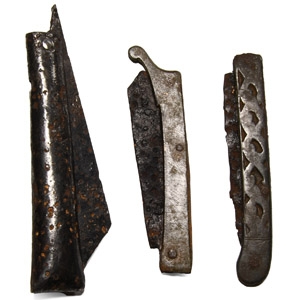
Medieval and Later Folding Knife Collection
15th-17th century A.D.Sold for (Inc. bp): £117
Including one with folded tubular handle and another shaped like a ship with curved prow. 116 grams total, 8.9-11.3 cm
From the collection of the famous author, writer and speaker, Gordon Bailey, Essex, UK; formed since 1968. -
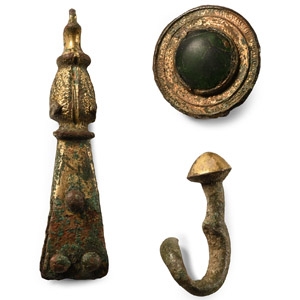
Anglo-Norman and Medieval Gilt Bronze Artefact Collection
6th-15th century A.D.Sold for (Inc. bp): £85
Comprising: a 6th century Dark Age round gilded brooch; a 15th century medieval bronze swivel hook with domed shaped gilded top; and a 11th-12th century copper-alloy chape with plain top half, the lower part ending in a wolf’s head covered with small indentations and raised ears, with a small suspension loop on the snout. 35 grams total, 27-65 mm
From the collection of the famous author, writer and speaker, Gordon Bailey, Essex, UK; formed since 1968.
Most of the strap ends recovered in Britain date from the 12th century onwards, this being the period when they were widely used by both men and women. The strap end was made from various metals including bronze, copper (normally gilded, silvered or tinned) pewter, tin, silver, gold and iron. Our specimen, probably dated to 11th-12th century A.D., continue the style of the Anglo-Viking beast mounts of the previous centuries. -
.jpg)
Medieval Period Bronze Equine Strap Slide and Mount Group
Circa 13th-15th century A.D.Sold for (Inc. bp): £65
Domed and rosette types with dentilled rim. 107 grams total, 22-44 mm
Property of the vendor's grandfather, thence by family descent, circa 1985. From the private collection of a New York, USA gentleman.
