
Loading, please wait...
LOT 1893
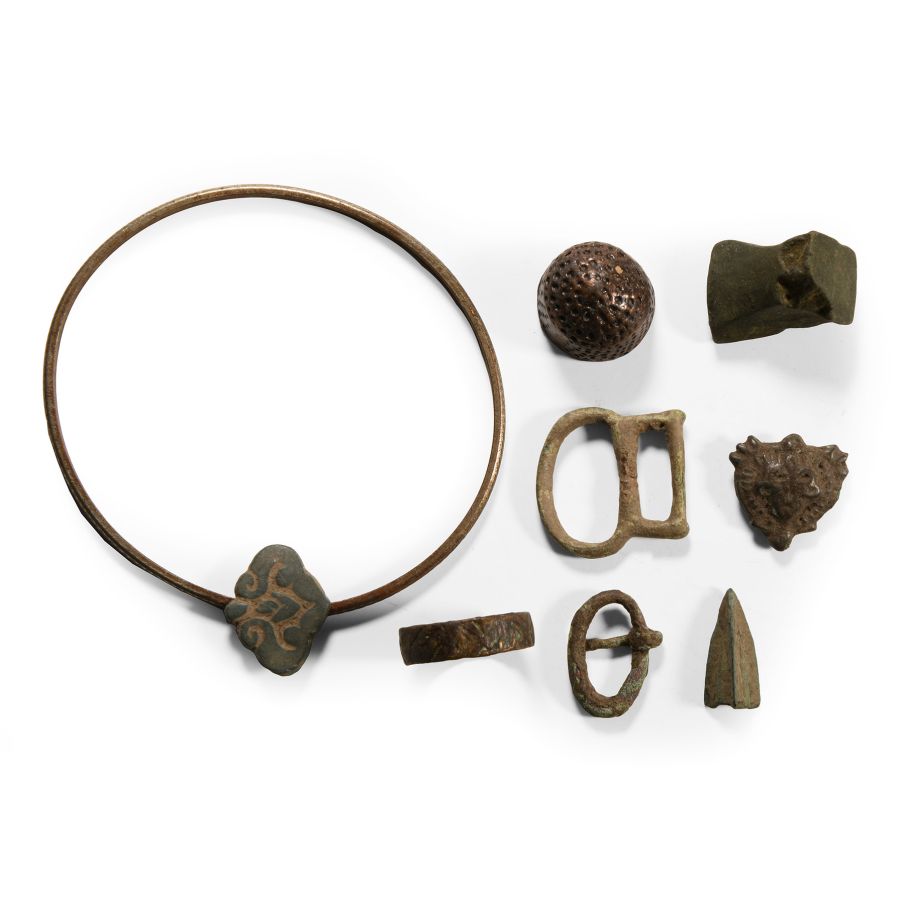
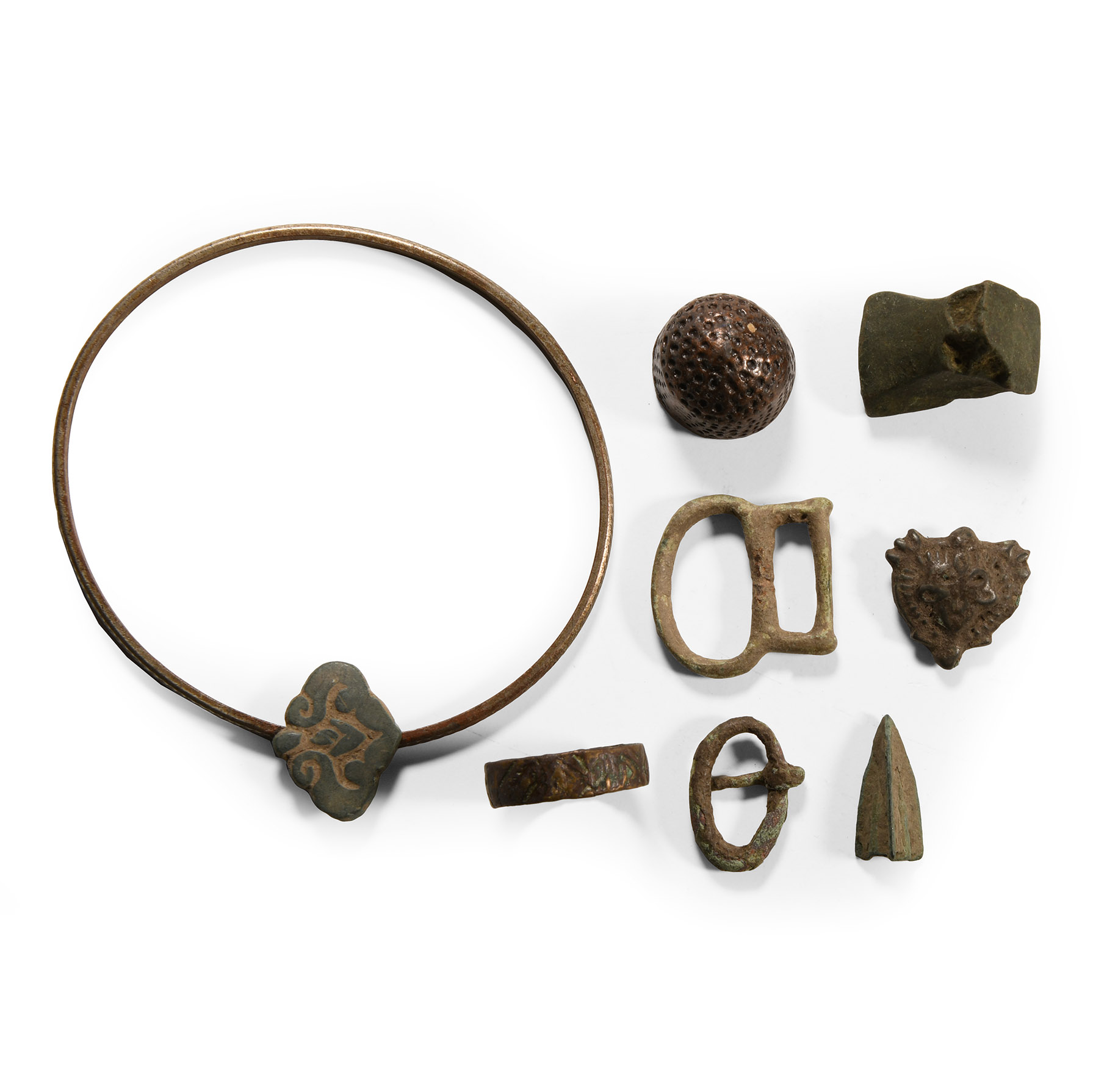
Medieval and Other Bronze Artefact Group
CIRCA 4TH CENTURY B.C.-20TH CENTURY A.D.
3/4 - 2 7/8 in. (54 grams total, 19 - 72 mm).
Including a flat-section finger ring, buckle-loop, triangular-section arrowhead, belt mount and other items; accompanied by a reproduction bronze beehive thimble. [9, No Reserve]
ProvenanceAcquired on the UK art market.
Property of a Essex, UK, collector.
Accompanied by an old handwritten information slip.
TimeLine Auctions follows a vetting process to ensure the authenticity and legality of all items, reinforcing our commitment to integrity and responsible trading. Each antiquity, antique, and coin lot undergoes thorough examination by a vetting committee of at least ten external specialists, professional trade association members, scientists, and archaeologists: Our Vetting Process
AUCTIONS:
TimeLine is a leading auction house specialising in antiquities, ancient art, collectables, natural history, coins, medals, and books. Our auctions offer museums, collectors, historians, and enthusiasts the opportunity to acquire unique and historically significant pieces.
-
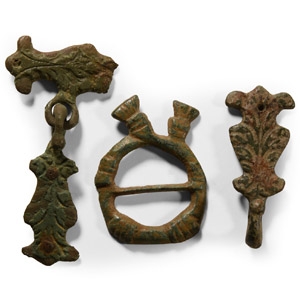
Medieval Bronze Annular Buckle and Sword Belt Hanger Group
15th-16th century A.D.Sold for (Inc. bp): £13
Comprising an annular ring-tie with fringed ends, and two belt-hooks with a ring and plate attached. 34.4 grams total, 45-72 mm
Found whilst searching in Somerset, UK. -
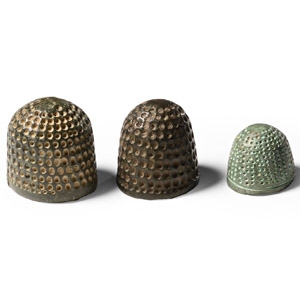
Medieval 'Published' Beehive Thimble Collection
Circa 14th-15th century A.D.Sold for (Inc. bp): £169
Including beehive and annular types. 24 grams total, 13-22 mm
From the collection of the famous author, writer and speaker, Gordon Bailey, Essex, UK; formed since 1968.
In England thimbles first occurred around 1300, probably under the influence of the Hispano-Moresque examples. However, it wasn't until around 1350 that thimbles became objects of everyday use in England. -
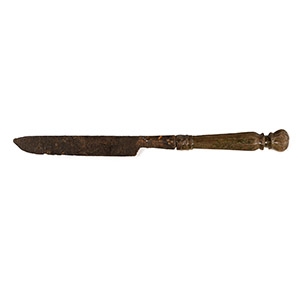
Medieval Iron Knife with Bronze Handle
15th-16th century A.D.Estimate: £100 - 140 (+bp*)
Opening Bid: £50
Straight-backed single-edged blade in a Regency-pattern ribbed handle with collar and knop finial; traces of maker's mark to the blade. 84 grams, 19.5 cm
Ex German art market, 2000s. Acquired from an EU collector living in London. From the collection of Surrey, UK, gentleman.
