
Loading, please wait...
LOT 1691
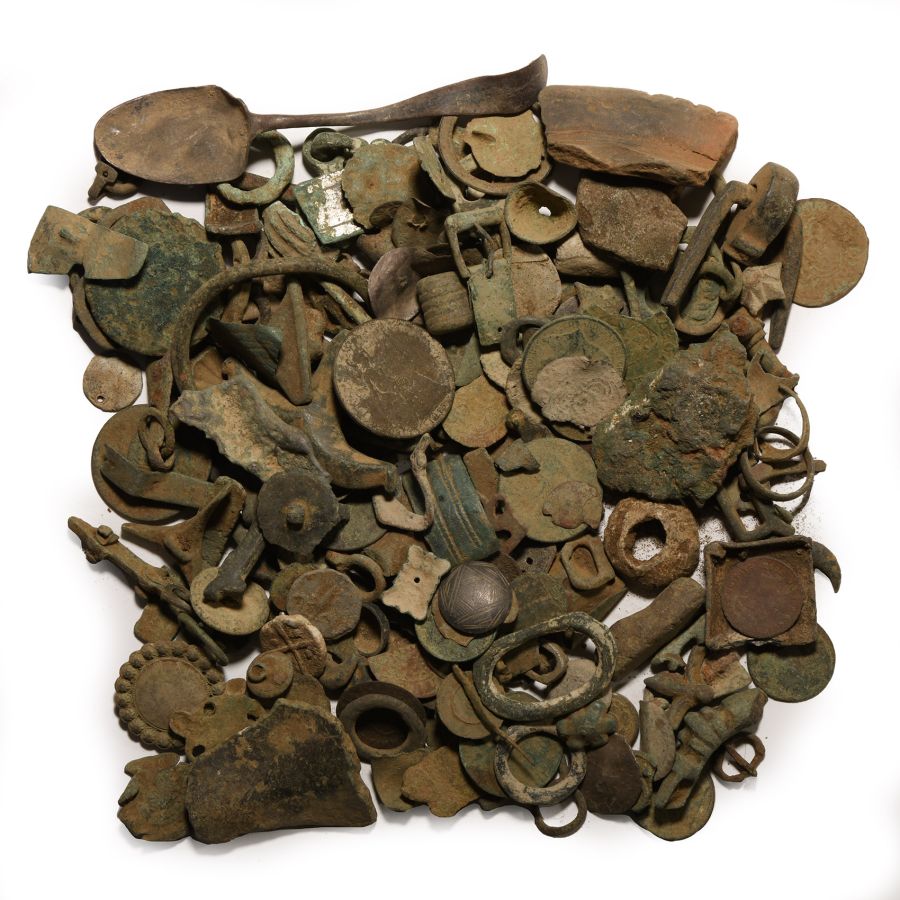
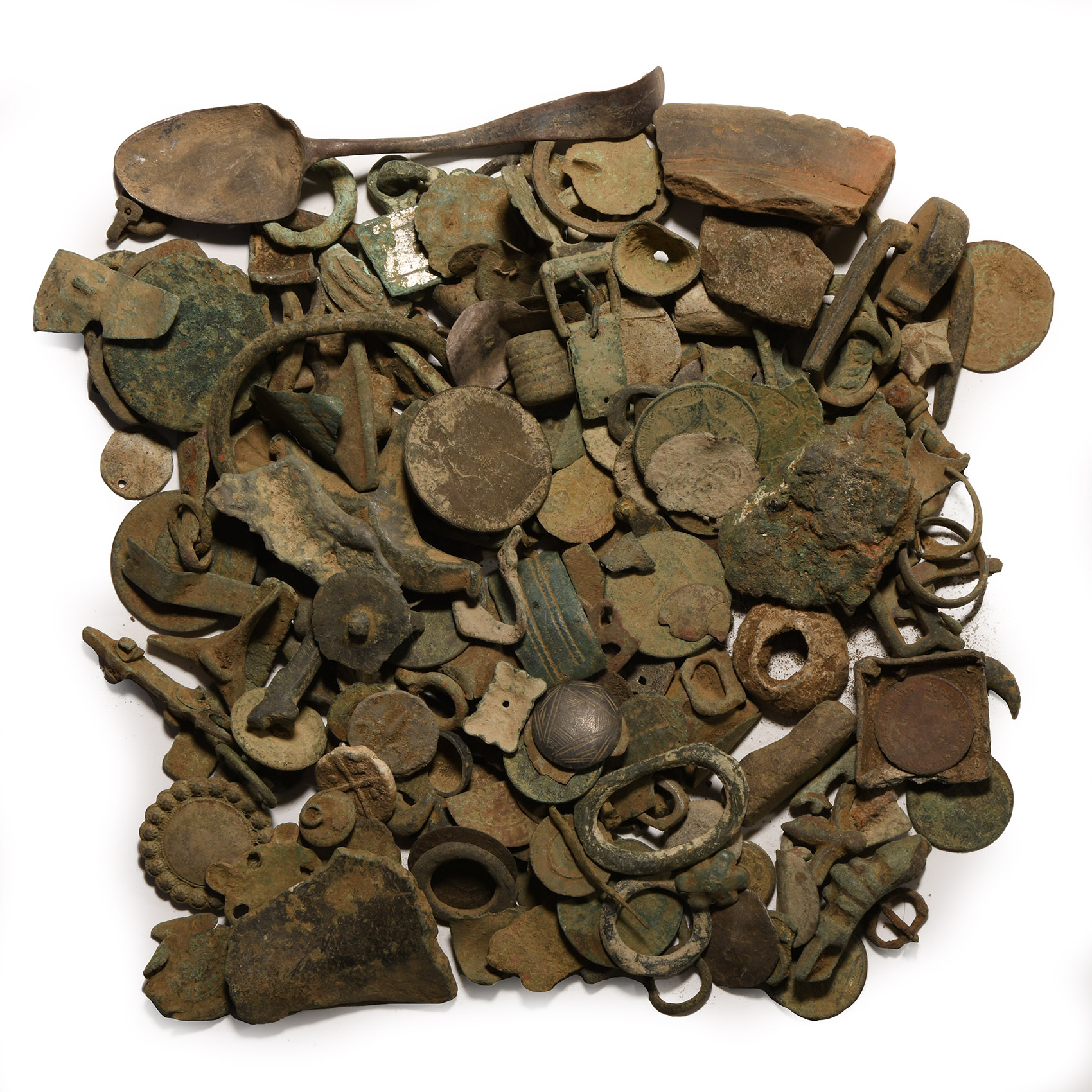
Medieval and Other Artefact Group
1ST-20TH CENTURY A.D.
1/2 - 4 3/8 in. (846 grams total, 1.2-11.1 cm).
Including buckle loops and fittings, milled coins, harness mounts and other items. [190, No Reserve]
ProvenanceFound Cambridgeshire, UK.
CONDITIONTimeLine Auctions follows a vetting process to ensure the authenticity and legality of all items, reinforcing our commitment to integrity and responsible trading. Each antiquity, antique, and coin lot undergoes thorough examination by a vetting committee of at least ten external specialists, professional trade association members, scientists, and archaeologists: Our Vetting Process
AUCTIONS:
TimeLine is a leading auction house specialising in antiquities, ancient art, collectables, natural history, coins, medals, and books. Our auctions offer museums, collectors, historians, and enthusiasts the opportunity to acquire unique and historically significant pieces.
-
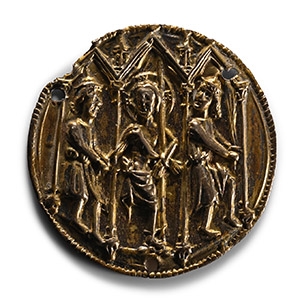
Medieval Silver Medallion with Scenes of the Flagellation
Southern Germany, circa 1300 A.D.Estimate: £2,000 - 3,000 (+bp*)
Opening Bid: £667
Disc with beaded border, repoussé scene with lancet-arch arcade, nimbate Christ being beaten by two tunicked soldiers with flails; attachment holes to the rim. 2.63 grams, 37 mm
Ex Peter Szuhay, 2005. Ex private collection, Suffolk, UK. This lot has been checked against the Interpol Database of stolen works of art and is accompanied by search certificate number no.12053-217472.
These silver-gilt medallions with scenes of the Christ's life (here the Flagellation) in repoussé, are showing Gothic architectural features characteristic of the 14th century A.D., which are often represented in artworks of the late Medieval Age including manuscript illuminations and stained glass. Interestingly, the two executioners are represented with the typical caps worn in Medieval Germany by the Jews of the same period. -
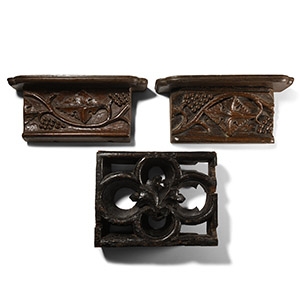
English Carved Oak Panel Group
Circa 15th century A.D.Sold for (Inc. bp): £182
Comprising: rectangular panel with carved openwork quatrefoil; two matched shelves each with a high-relief design of grapes, vine and quatrefoil leaf. 3.9 kg total, 27.1-33 cm
Acquired from various UK auction houses. Property of a Kent collector. -
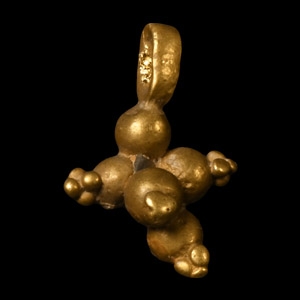
Medieval Gold Granulated Cross Pendant
14th-16th century A.D.Estimate: £100 - 140 (+bp*)
Opening Bid: £50
Cluster of larger granules with smaller granule satellites, loop above. 0.52 grams, 9 mm
Ex property of a late Japanese collector, 1970s.
