
Loading, please wait...
LOT 1797
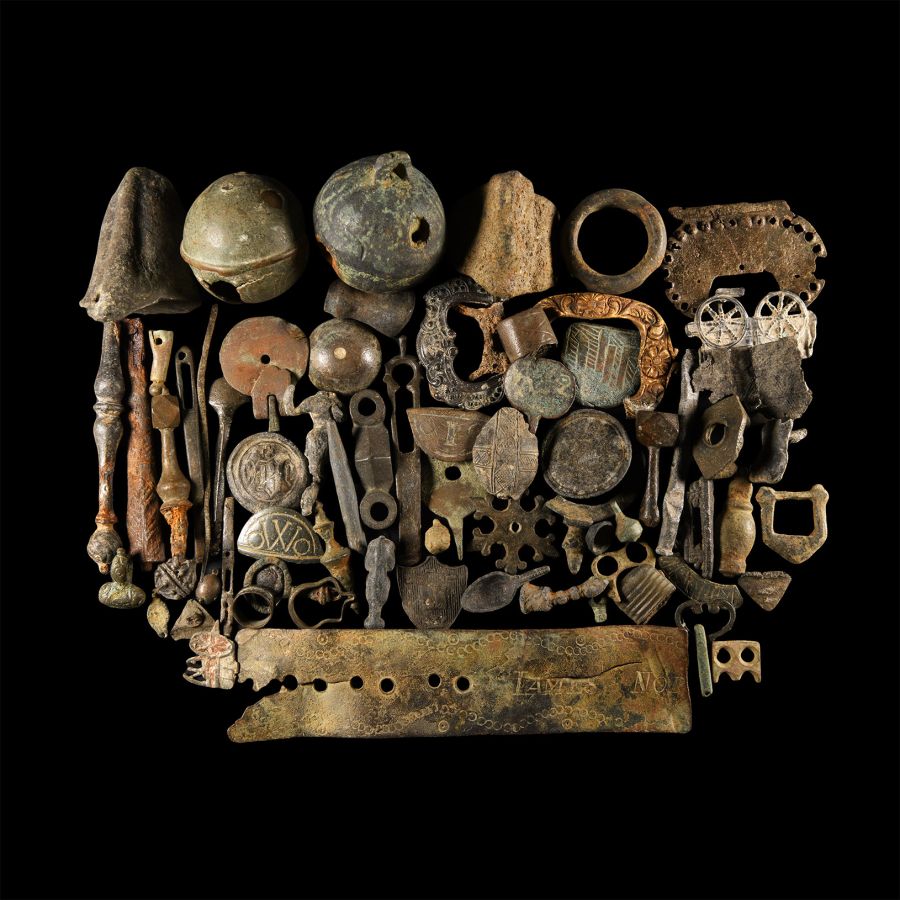
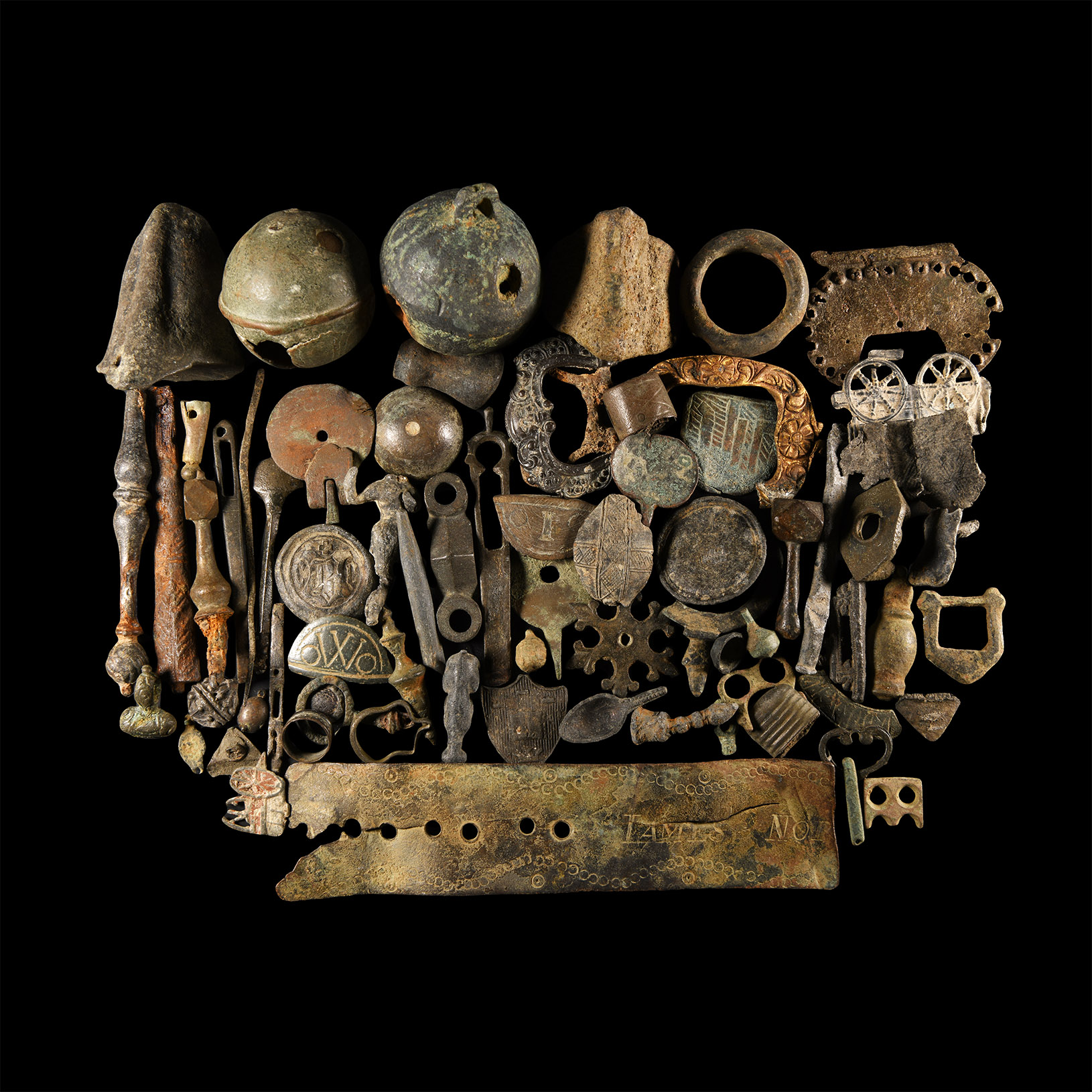
Medieval and Later 'Thames' Artefact Group
14TH-19TH CENTURY A.D.
1/8 - 5 1/2 in. (814 grams total, 0.7-14 cm).
Including crotal bells, a railway wagon appliqué, buckles, punched bronze strap with 'JAMES NOR' legend, dress pins, a snuff spoon and other items. [71, No Reserve]
ProvenanceFound Thames foreshore spoil, 1980s.
CONDITIONTimeLine Auctions follows a vetting process to ensure the authenticity and legality of all items, reinforcing our commitment to integrity and responsible trading. Each antiquity, antique, and coin lot undergoes thorough examination by a vetting committee of at least ten external specialists, professional trade association members, scientists, and archaeologists: Our Vetting Process
AUCTIONS:
TimeLine is a leading auction house specialising in antiquities, ancient art, collectables, natural history, coins, medals, and books. Our auctions offer museums, collectors, historians, and enthusiasts the opportunity to acquire unique and historically significant pieces.
-
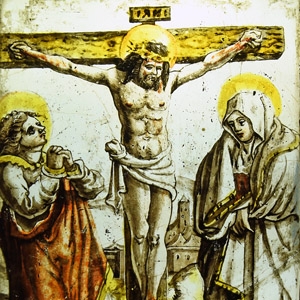
Medieval Stained Glass Panel with The Crucifixion
Netherlands, circa 1500 A.D.Sold for (Inc. bp): £494
Two nimbate figures standing either side; polychrome detailing; panel within a lead came border with repair and two modern suspension loops to top edge. 269 grams, 20.2 cm
Private collection, Paris. -
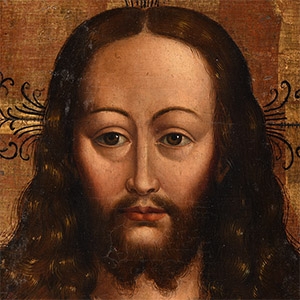
Medieval Wooden 'True Face of Christ' Icon
Castile, circa 1500-1520 A.D.Sold for (Inc. bp): £1,560
Depicting an idealised image of Christ on a gilt background, stylised cross behind; wide eyebrows and double-pointed beard; the hair falling on the shoulders in neat locks; wearing a red tunic with gold embroidery reading 'REX + REGUM' for 'king of kings', pearled edge. 1.28 kg, 28.5 cm
Excellent condition
with Ansorena, 10 November 2014, lot 456. Ex central London gallery. Accompanied by an academic report by Dr Raffaele D’Amato. This lot has been checked against the Interpol Database of stolen works of art and is accompanied by search certificate number no.11742-202064.
The crimson tunic of our painting is clearly derived from the Van Eyck model, where crimson is associated with the Majesty of Christ. Christ is in fact shown here as the Saviour of the World (Salvator Mundi), a popular image in 15th century paintings. -
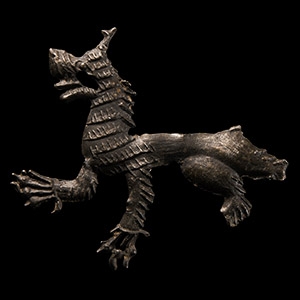
Large Medieval Pewter Lion Retainer's Badge
14th-15th century A.D.Sold for (Inc. bp): £780
The lion standing left, with detailing to its shaggy mane and forepaws. 6.3 grams, 64 mm
European collection, 1990s. Property of a Cambridgeshire, UK, gentleman.
